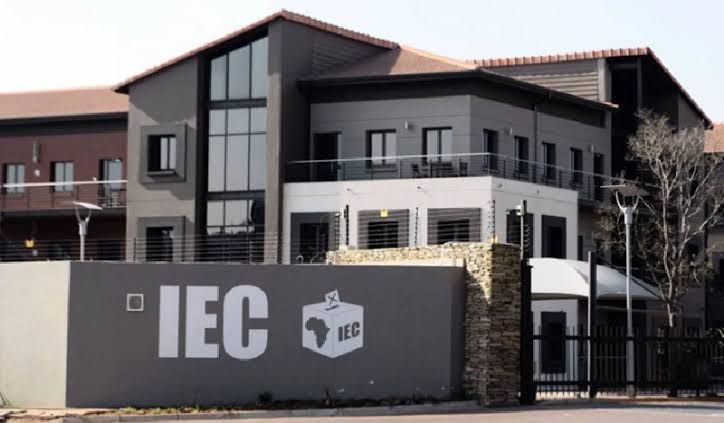
CENTURION, Monday 7 September 2026 — The Electoral Commission has finalised new rules requiring political parties and candidates to report suspected online disinformation within 36 hours and rapidly correct false material circulated on their behalf, tightening South Africa’s campaign framework less than two months before the 4 November local government elections.
The final Electoral Code of Conduct on Countering Disinformation also requires synthetic content generated using artificial intelligence to be appropriately labelled, bars deceptive use of fake accounts and automated bots, and places responsibility on parties for communications issued by people acting under their authority or for reward.
The code represents a material change from the draft framework the IEC published for public comment earlier this year.
The July draft proposed a 24-hour period to retract or correct false material disseminated by a party or candidate and a separate 72-hour deadline for reporting suspected online disinformation.
Under the final rules, both obligations have been set at 36 hours.
The IEC said parties and candidates must report online disinformation or suspected disinformation within 36 hours of becoming aware of it.
Where false or misleading information has been distributed by a party, candidate or someone acting on their behalf, they must also take reasonable steps within that period to publicly retract and correct the information and censure the person responsible.
The commission has designated Real411, the digital complaints platform developed by Media Monitoring Africa, as the mechanism for reporting suspected online disinformation.
Real411 has previously been used by the IEC to process election-related complaints.
During the 2024 national and provincial elections, the IEC reported using the platform as part of its Directorate of Electoral Offences, while an expert panel considered 289 complaints concerning digital disinformation and related online conduct.
The new code applies to election campaigning online and offline and covers both paid and unpaid political communication.
It places a direct obligation on parties and candidates to ensure information distributed by them or on their behalf is substantiated and checked for accuracy.
They are also expected to exercise oversight over communications platforms under their control and promote compliance among representatives, members and supporters.
The rules explicitly address generative artificial intelligence.
AI-generated or other synthetic audio, images, video and text must be appropriately labelled before being distributed where doing so is necessary to prevent uncertainty about whether the content is authentic.
Political advertisements must likewise clearly identify the party or candidate responsible for them.
Parties and candidates also undertake not to use, sponsor or encourage fake accounts, automated bots or deceptive content intended to manipulate political discussion or voter opinion.
The provisions cover fabricated or stolen material, cyberbullying and targeted falsehoods using confidential or sensitive personal information.
The requirements are potentially significant during an election expected to involve an unusually large number of political actors and candidates.
The IEC said last week that hundreds of political parties have submitted nominations for the November elections, while Johannesburg alone has 80 parties seeking proportional-representation seats.
Tshwane has 72 PR contestants, eThekwini 70 and Ekurhuleni 69.
The scale of the contest increases the number of official party accounts, candidates, campaign organisations and associated digital platforms operating simultaneously during the election period.
The IEC had signalled for several months that it intended to strengthen its response to misinformation and disinformation.
When launching the 2026 local election campaign in May, the commission said social media increased political participation but could also be manipulated in ways that undermined information integrity and electoral credibility.
It announced then that a dedicated code would be developed and published for public comment.
The draft was subsequently published in the Government Gazette on 30 June and opened for public submissions.
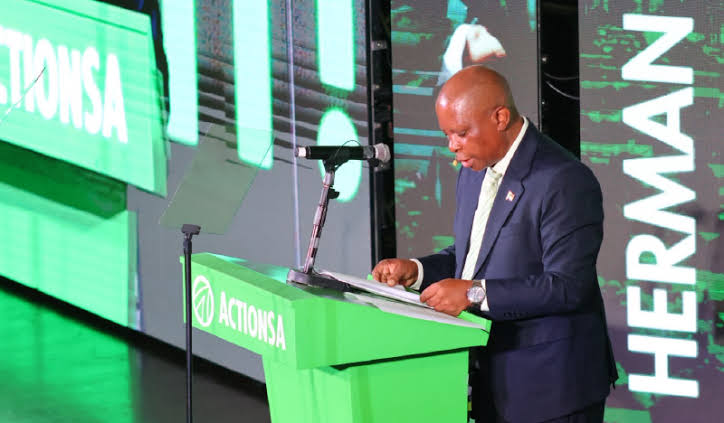
ActionSA was among the parties that responded publicly, welcoming the proposed regulation while calling for clearer compliance timeframes, greater transparency and explicit protection for legitimate political speech, satire and parody.
The final code retains safeguards for freedom of expression.
It states that its provisions should not be interpreted as restricting lawful criticism, opinion, commentary, fair reporting, satire, parody or legitimate democratic debate where those forms of expression are constitutionally protected.
That distinction is important because the code is aimed at deliberately false or misleading election-related information rather than political claims merely because they are disputed or strongly contested.
The IEC defines the relevant disinformation as false information published knowingly, or without reasonable grounds for believing it to be true, with the intention of disrupting an election, creating hostility or fear to influence electoral conduct, or influencing an election’s outcome.
The final framework also means parties will need to respond more quickly than contemplated in parts of the original draft.
A suspected disinformation incident that previously would have carried a proposed 72-hour reporting window will now need to reach the IEC through Real411 within 36 hours.
At the same time, parties are required to monitor their own or associated platforms, preserve relevant records and act to limit the further spread of false material.
The code is binding from its publication until the election results are declared.
Its practical effectiveness will therefore depend on how quickly complaints can be assessed, how political parties apply the obligations to candidates and campaign structures, and how the IEC deals with contested cases during an increasingly intense campaign.
The first significant test could come well before election day.
With candidate disputes, coalition contests and closely fought metropolitan campaigns already generating competing claims online, the new rules establish a formal standard against which digital campaigning will now be measured through the remainder of the 2026 local government election campaign.