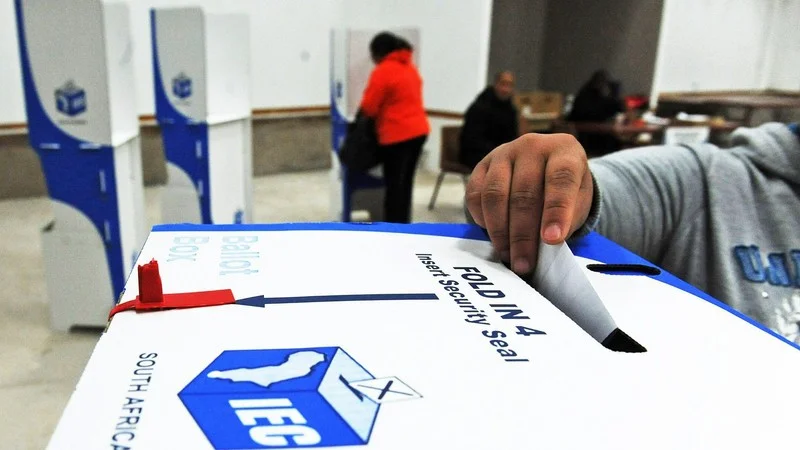
South Africa’s local government elections determine who will sit on the municipal councils responsible for governing the country’s cities, towns and local communities.
While national elections determine the composition of Parliament and provincial elections determine provincial legislatures, local elections determine the political make-up of municipal councils.
That matters because municipalities exercise both executive and legislative authority over a range of services and functions that residents encounter in their everyday lives.
What does a local election decide?
At a local government election, voters elect councillors to municipal councils.
Depending on the municipality, some councillors are elected directly to represent geographic wards, while others enter the council through proportional representation, commonly known as PR.
The Constitution requires the municipal electoral system to provide for proportional representation, either on its own or together with ward representation. Where wards are used, voters therefore influence both who represents their immediate area and the overall political composition of the council.
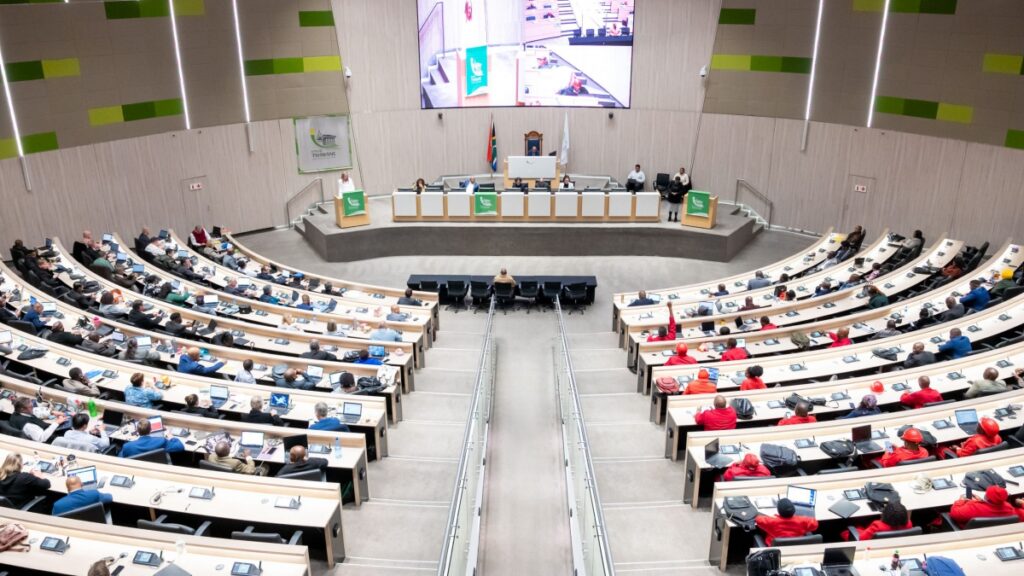
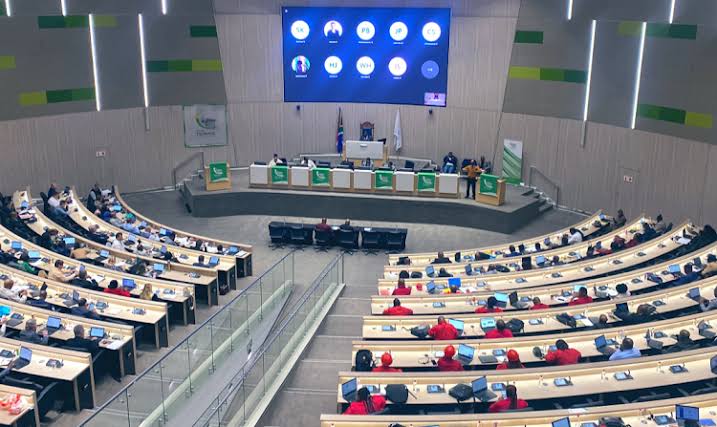
Once elected, the municipal council becomes the municipality’s political decision-making body.
Section 151 of the Constitution places the executive and legislative authority of a municipality in its Municipal Council.
What decisions do municipalities make?
Municipalities are responsible for a range of functions that can directly affect residents.
These include services and functions such as electricity distribution, water and sanitation, refuse removal, municipal roads, stormwater systems, street lighting, municipal planning and firefighting. The Constitution also lists gas reticulation as a municipal function, although piped gas services are not available in most areas.
Exactly which authority is responsible for a particular service can differ, especially where responsibilities are shared between local and district municipalities or where another sphere of government is involved.
Local elections nevertheless determine the councillors responsible for political oversight and decision-making within the municipality.
What does the Constitution expect from local government?
The Constitution sets out several objectives for local government.
These include providing democratic and accountable government for local communities, ensuring sustainable service provision, promoting social and economic development, promoting a safe and healthy environment and encouraging community involvement in local government.
Municipalities are also required to structure their administration, budgets and planning processes in a way that gives priority to the basic needs of communities.
This means a municipal election is not only about choosing individual councillors. It also determines the political composition of the council that will consider budgets, policies, by-laws and other decisions affecting the municipality.
Ward representation and proportional representation
South Africa’s municipal electoral system combines two important ideas.
The first is geographic representation.
A ward councillor is elected by voters in a defined ward. The candidate receiving the most votes in that ward is elected as its ward councillor.
The second is proportional representation.
Voters also cast a vote for a political party. These votes are used as part of the process that determines how many seats parties should hold in the council.
The PR component helps make the overall political composition of the council more representative of the support received by political parties across the municipality.
This is why the ward and PR votes perform different functions, even though both ultimately contribute to the composition of the same municipal council.
Are voters directly electing the mayor?
Generally, no.
Municipal voters elect councillors.
The councillors elected to the municipal council then participate in the process of electing political office-bearers, including the mayor where the relevant municipal system provides for one.
This becomes particularly important where no political party wins enough seats to control the council on its own.
In those councils, agreements between political parties or other voting arrangements may determine who becomes mayor and how the municipality is governed.
Why can one ward matter?
A ward election determines only one seat in the council, but that seat can still affect the balance of power.
In closely divided councils, a change of one or two seats can affect whether a party has a majority, whether a coalition is required, or whether a grouping of parties has enough votes to elect or remove municipal office-bearers.
This is also why municipal by-elections can sometimes have consequences beyond the individual ward being contested.
The key point
Local government elections determine both local representation and the political composition of municipal councils.
Voters are therefore making decisions at two levels: who will represent their geographic community and how political representation should be distributed across the council.
Understanding that distinction makes it easier to understand ward contests, PR lists, coalition negotiations and the council arithmetic that follows an election.