A ward committee is one of the formal ways residents can participate in local government between elections.
It links residents in a municipal ward with their elected ward councillor and, through that councillor, with the municipal council.
But a ward committee is not a second council, and its members do not have the same powers as councillors.
What is a ward committee?
The Municipal Structures Act provides for ward committees in certain metropolitan and local municipalities.
Where a municipality chooses to establish a ward committee system, it must establish a committee for each ward covered by that system.
The Act says the purpose of a ward committee is to enhance participatory democracy in local government.
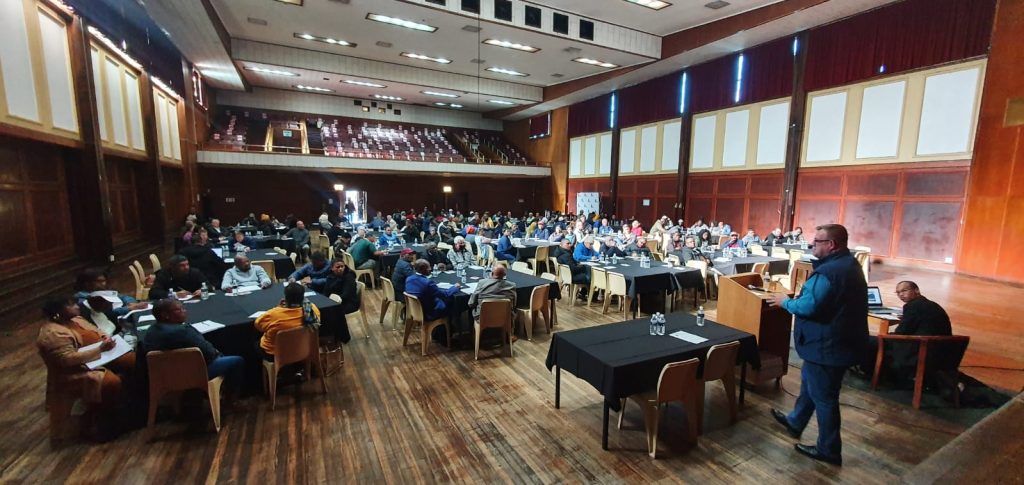
A ward committee consists of the councillor elected to represent that ward, who serves as the committee’s chairperson, and no more than 10 other people.
The municipal council determines how those additional members are elected and how frequently the committee meets. The rules must take account of equitable representation of women and the need for different interests within the ward to be represented.
What does the committee actually do?
The committee acts mainly as an advisory and communication structure.
It can identify problems affecting the community, discuss development priorities and make recommendations about matters affecting the ward.
Those recommendations can be made to the ward councillor or, through the ward councillor, to the municipal council, executive mayor, executive committee or another relevant municipal structure.
COGTA describes ward committees as an institutionalized channel through which communities can participate in matters such as municipal planning, the Integrated Development Plan (IDP) and the municipal budget.
A ward committee can therefore provide residents with a structured way to raise concerns rather than relying only on individual complaints to the municipality.
Can the ward committee make municipal decisions?
Generally, no.
Ward committees are primarily advisory bodies.
They can make recommendations and a municipal council may delegate certain duties or powers to them, but a ward committee does not automatically have executive authority simply because it represents a community.
It cannot, for example, independently approve a municipal budget, instruct a municipal department to repair a road or pass a municipal by-law.
Those powers belong elsewhere in the municipal system.
Is the ward councillor in charge of the committee?
The ward councillor is legally the chairperson of the ward committee.
That gives the ward councillor a specific statutory role that a PR councillor does not automatically have.
This is one of the clearest distinctions between a ward councillor and a PR councillor working in the same area.
A PR councillor can engage residents, raise municipal problems and perform constituency work, but cannot simply replace the elected ward councillor as chairperson of the statutory ward committee.
Are ward committee members councillors?
No.
The additional members of a ward committee are community representatives, not municipal councillors.
Being elected or selected to serve on the committee does not give someone a seat or vote in the municipal council.
The municipal council remains the municipality’s legislative and political decision-making body.
What kinds of issues can residents raise?
Ward committees can consider a broad range of matters affecting their communities.
These can include service-delivery concerns, infrastructure priorities, municipal planning, development proposals, community facilities and issues that residents believe should be considered in municipal budgets or the IDP.
COGTA says ward committees are intended to help create communication between communities and municipalities and enable residents to influence municipal planning according to community needs.
Does every ward committee work in exactly the same way?
No.
National legislation establishes the framework, but municipalities make their own rules governing matters such as the election of committee members, meeting frequency and procedures.
Residents should therefore also check their municipality’s ward committee policy or rules.
The key point
A ward committee gives residents a formal channel into local government.
It can raise issues, make recommendations and participate in municipal planning and consultation, but it does not replace the municipal council or administration.
And while the ward councillor chairs the committee, the committee is intended to represent the broader interests of the community rather than operate simply as an extension of a political party.