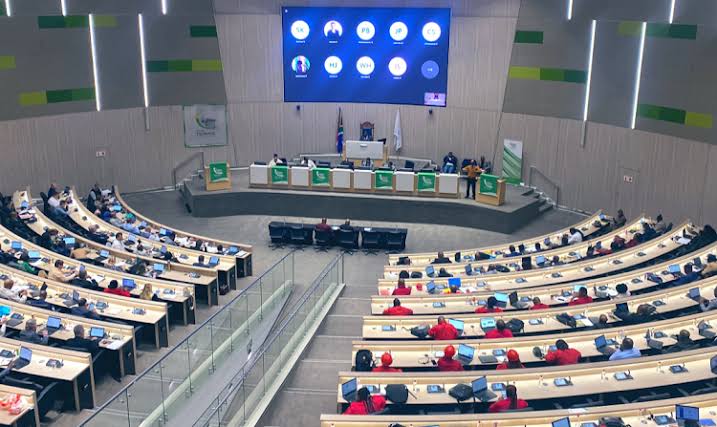
South African municipal councils can include both ward councillors and proportional representation councillors, commonly referred to as PR councillors.
Both are members of the same municipal council, but they arrive there through different electoral routes and have different representative roles.
Understanding that distinction is particularly important when residents want to know who represents them, who they should contact about a local issue and whether a PR councillor can work within a particular ward.
How is a ward councillor elected?
A ward councillor represents a geographically defined ward.
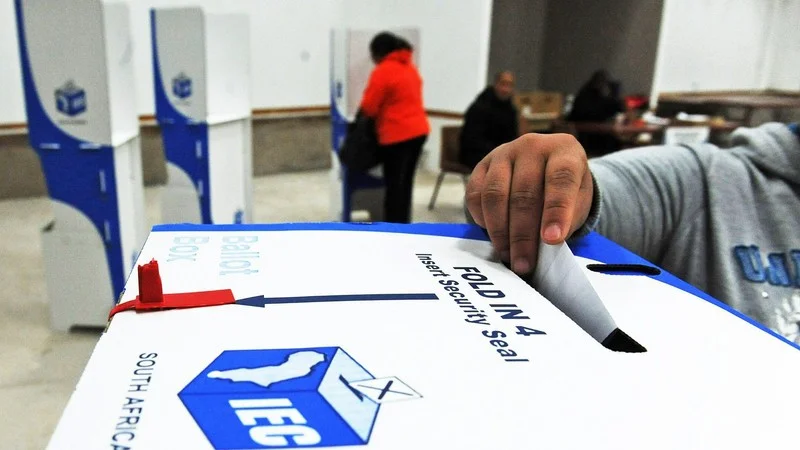
During a municipal election, voters living in that ward receive a ballot containing the candidates contesting the seat.
The candidate who receives the most votes becomes the elected ward councillor.
The ward councillor therefore has a direct electoral relationship with the residents of that ward.
Part of the role is to bring community concerns into municipal structures and communicate council matters back to residents.
Government guidance developed with input from COGTA and SALGA describes ward councillors as representatives expected to understand community needs and raise service delivery and development concerns on behalf of residents.
How does a PR councillor get elected?
A PR councillor does not win an individual ward contest.
Instead, voters cast a proportional representation vote for a political party.
Political parties submit lists of candidates, and the number of seats allocated through proportional representation determines which candidates from those lists enter the council.
The Constitution specifically provides for municipal proportional representation through party candidate lists and requires the electoral system to result, in general, in proportional representation.
The purpose is to ensure that council representation more closely reflects political support across the municipality as a whole.
Is a PR councillor a real councillor?
Yes.
A PR councillor is a member of the municipal council just as a ward councillor is.
The distinction describes how the councillor obtained the seat and the nature of their representative role. It does not create a separate, inferior class of council membership.
PR councillors can participate in council structures, serve on committees and perform the duties assigned to councillors within the municipality.
Their political party may also allocate or deploy them to work in particular communities or wards.
What is specifically different about a ward councillor?
The ward councillor has a specific geographic constituency.
The most obvious example of a role specifically attached to the ward councillor is the ward committee.
Government’s ward committee guidance identifies the elected ward councillor as the chairperson of the ward committee.
The ward committee is intended to strengthen community participation and provide a structured route through which issues affecting the ward can be raised.
A PR councillor does not become the elected ward councillor simply because their party has allocated them to work in that area.
They cannot simply take over the ward councillor’s statutory position as chairperson of the ward committee.
What does a PR councillor do in a ward?
This is where confusion often arises.
Being a PR councillor does not mean that a councillor is prohibited from doing constituency or community work.
Government’s ward committee handbook expressly envisages PR councillors playing a supporting role in wards. It describes the PR councillor as being assigned to support the ward councillor and discusses PR councillors participating in constituency work and community matters.
A PR councillor may therefore be involved in community meetings, raise municipal issues, communicate with residents and participate in political or oversight work.
What the PR councillor does not acquire is the status of the elected ward councillor for that area.
Can both councillors raise service-delivery problems?
Yes, although the precise communication and referral procedures can differ between municipalities.
A ward councillor is expected to raise matters affecting their ward.
A PR councillor remains a municipal councillor and may also raise problems, assist residents and engage through council or political structures.
A resident reporting a broken streetlight to a PR councillor does not somehow make the complaint invalid merely because the councillor was elected through proportional representation.
Similarly, the existence of a PR councillor working in the area does not remove the elected ward councillor’s responsibility towards that ward.
Can either councillor order municipal officials around?
Generally, no.
The national Code of Conduct for Councillors places limits on political interference in municipal administration.
Unless authorised by law, a councillor may not interfere in the management or administration of a municipal department or give instructions to municipal employees.
That restriction applies to councillors generally.
Being the elected ward councillor therefore does not automatically give someone authority to instruct municipal employees to carry out operational work.
Councillors exercise political representation, oversight and decision-making. Municipal officials perform administrative and operational functions under the municipality’s administrative structures.
Can a PR councillor work in a ward represented by another party?
In principle, yes.
A ward is an electoral constituency. It is not the exclusive political territory of the councillor who won it.
A PR councillor working with residents does not thereby become the ward councillor, but neither does the ward councillor’s election automatically prevent other councillors or political representatives from engaging with residents in the area.
Municipal standing rules, ward committee policies and public-participation procedures can, however, regulate particular official meetings or processes.
This distinction becomes especially important where different political parties are represented by the ward councillor and a PR councillor working in the same area.
Disputes over political credit or who should have been informed about an activity should therefore be distinguished from the legal question of whether another councillor was entitled to operate in the area.
Who should residents contact?
For a matter that is specifically about the ward, the elected ward councillor is an obvious starting point.
Residents are not, however, restricted to communicating only with that councillor.
They may also approach PR councillors, political parties, relevant municipal structures or the municipality’s administrative service channels.
The appropriate route will depend on the issue.
The key difference
The simplest way to understand the distinction is:
A ward councillor represents a specific geographic ward after winning an election in that ward.
A PR councillor enters council through a political party’s proportional representation list and has a broader representative role.
Both are municipal councillors.
The ward councillor has specific ward-based responsibilities and statutory functions, particularly around the ward committee.
The PR councillor does not replace the ward councillor, but that does not mean the PR councillor is prevented from working with residents or dealing with issues within the ward.