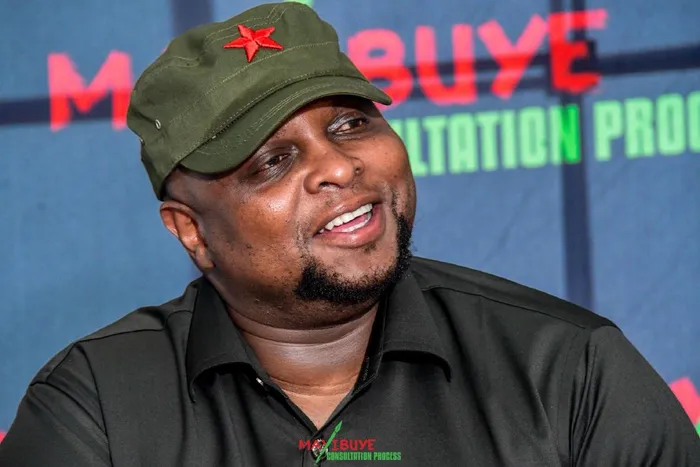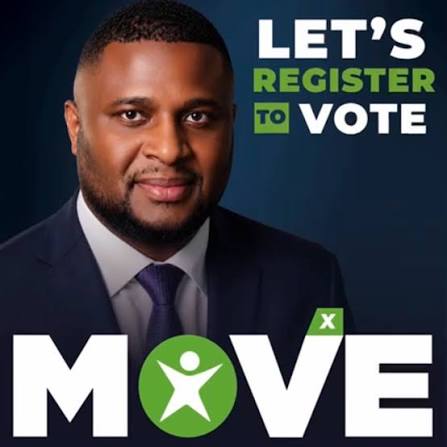
JOHANNESBURG, Sunday 6 September 2026 — Newly formed political party MOVE SA has formally launched its campaign for the 4 November local government elections, with businessman and property developer Rali Mampeule leading its Johannesburg mayoral bid as the party seeks representation in several politically contested Gauteng municipalities.
The party held its launch at the Riversands Incubation Hub in northern Johannesburg on Sunday, positioning itself as a community-driven alternative focused primarily on municipal governance, service delivery and local economic development.
MOVE says it will contest Johannesburg, Ekurhuleni and Emfuleni, three municipalities where no party can assume that it will control the council after November.
Mampeule has already publicly identified himself as MOVE’s candidate mayor for Johannesburg in campaign material ahead of the formal launch. In recent campaigning, he has placed housing, local entrepreneurship and the rehabilitation of struggling municipalities at the centre of his pitch to voters.
The party’s official leadership structure lists Mampeule as president, Zeph Makhathini as chairperson, Kennedy Mabe as chief executive officer, Victor Seshoka as spokesperson and Boitumelo Kenosi as its youth and student chapters convener.
MOVE describes itself as a social democratic movement based around five principles: putting people ahead of party interests, safer communities, equality, accountability and action.
Its launch messaging also emphasised faster municipal service delivery, employment and local economic opportunity, accountable government and greater community involvement in municipal decision-making.
Mampeule used Sunday’s event to attack what he described as the influence of undisclosed interests over established political parties.
He said MOVE would be accountable to voters rather than political funders.
That argument is a campaign position advanced by MOVE. No evidence was presented at the launch establishing that particular rival parties are controlled by undisclosed donors.
Political-party funding in South Africa is regulated through disclosure and donation rules administered by the Electoral Commission.
MOVE itself will be subject to the applicable party-funding framework.
The party did not publish a comprehensive donor list during Sunday’s launch, according to reporting from the event.
Its entry adds another contestant to an already fragmented Johannesburg election.
The IEC said last week that 80 political parties had submitted proportional-representation nominations in Johannesburg, the highest total of any municipality in the country. Tshwane followed with 72 parties, eThekwini with 70 and Ekurhuleni with 69.
Johannesburg has become one of the centrepieces of the 2026 municipal election.
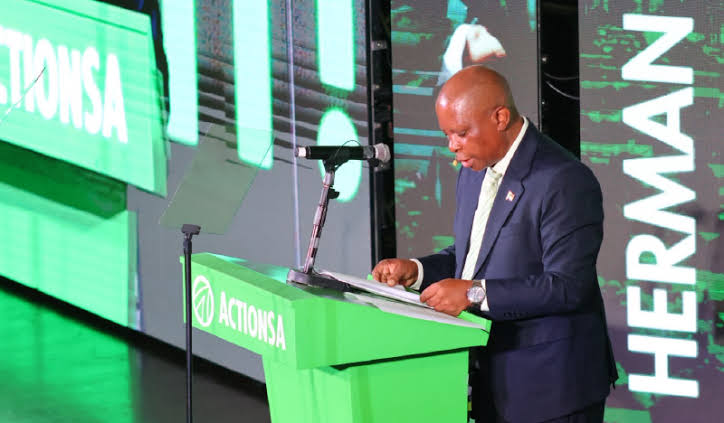
The DA is campaigning behind Helen Zille, ActionSA has selected former mayor Herman Mashaba, the EFF has nominated Tlaleng Mofokeng, the MK Party has selected former Midvaal mayor Bongani Baloyi, and the UDM on Sunday confirmed councillor Yongama Zigebe as its mayoral candidate.
Afrika Mayibuye has said it has chosen a candidate but will identify the person later in September.
The ANC has yet to announce its final Johannesburg mayoral selection.
Current mayor Dada Morero, Deputy Mayor and ANC Johannesburg regional chairperson Loyiso Masuku, and ANC veteran Frank Chikane have featured in the party’s selection process.
The expanding field reflects the increasingly fragmented nature of Johannesburg politics.
No party won an outright majority in the metro in 2021, and the current council term has been characterised by repeated changes in coalition arrangements, mayors and speakers.
South African voters do not directly elect metropolitan mayors.
Parties nominate councillor candidates, and the newly constituted council elects its mayor after the election.
A party’s mayoral candidate is therefore the person it intends to put forward for the position should the post-election numbers allow it to do so.
That distinction is particularly important for smaller and newly established parties.
A party does not necessarily need to finish first to influence who governs a hung council. A relatively small group of councillors can become relevant in coalition negotiations if larger political blocs cannot assemble a majority.
MOVE’s decision to target Johannesburg, Ekurhuleni and Emfuleni places it in three Gauteng municipalities where coalition arithmetic could again be decisive.
Ekurhuleni has experienced repeated changes to its governing arrangements since 2021 and is currently led by ANC mayor Nkosindiphile Xhakaza.
Emfuleni, meanwhile, remains politically important because of its longstanding financial, infrastructure and service-delivery problems and repeated provincial and national interventions.
MOVE has said it intends to build its municipal campaign around people who already live and organise in the communities they seek to represent.
Mampeule has also explicitly targeted people who did not participate in previous elections, arguing that politically disengaged voters could determine the outcome of the November contest.
That strategy has yet to be tested electorally.
As a new organisation, MOVE has no established municipal-election performance against which its support can currently be measured.
It also enters an exceptionally crowded electoral field.
The IEC has reported 142,072 nominations for 10,526 council seats nationally, while 547 political parties are seeking representation in the November elections.
The next significant test for MOVE will come with the IEC’s certification of candidates.
The commission is processing candidate documentation during September and is scheduled to publish final candidate lists on 16 September 2026.
Those lists will provide authoritative confirmation of which MOVE candidates have been accepted to contest individual wards and proportional-representation seats.
For Mampeule and MOVE, the political test after that will be whether a newly established organisation can translate its municipal-service and entrepreneurship message into sufficient support to secure seats — and potentially influence coalition negotiations — when Johannesburg and other Gauteng councils are reconstituted after 4 November 2026.