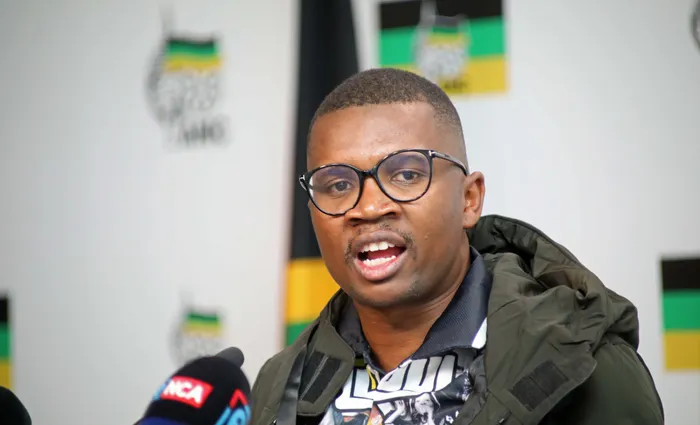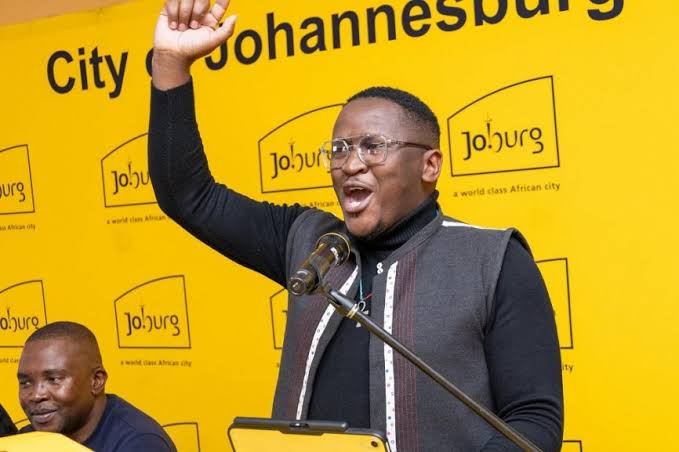
JOHANNESBURG, Sunday 6 September 2026 — The United Democratic Movement has named Yongama Zigebe as its mayoral candidate for Johannesburg, placing an incumbent city councillor and former UDM secretary-general into an increasingly crowded contest to lead South Africa’s largest metro after the 4 November local government elections.
The announcement was made on Sunday as the UDM campaigned in Alexandra, where party president Bantu Holomisa and other senior leaders were expected to set out the party’s Johannesburg programme. SABC News confirmed Zigebe’s selection as the party’s mayoral candidate.
Zigebe is already directly involved in Johannesburg municipal politics.
He was sworn in as a UDM proportional-representation councillor in July 2024 after replacing Thandi Nontenja, who moved from the council to the National Assembly following the 2024 national and provincial elections.
Zigebe subsequently stepped down as UDM secretary-general to concentrate on his responsibilities in Johannesburg.
At the time, he said the secretary-general position required full-time attention and that his municipal deployment meant he could no longer perform both roles.
He currently serves as a Johannesburg councillor and has chaired the council’s Section 79 oversight structure dealing with gender, youth and people with disabilities, according to statements published by the UDM.
Zigebe has also already tested his support within the Johannesburg council.
In July 2025, he was nominated for the position of council Speaker alongside the DA’s Alex Christians and African Independent Congress councillor Margaret Arnolds.
Arnolds won that vote with 137 votes, Christians received 68 and Zigebe received five.
The UDM’s decision to select a serving councillor gives the party a candidate with direct experience of the city’s coalition environment and council oversight structures.
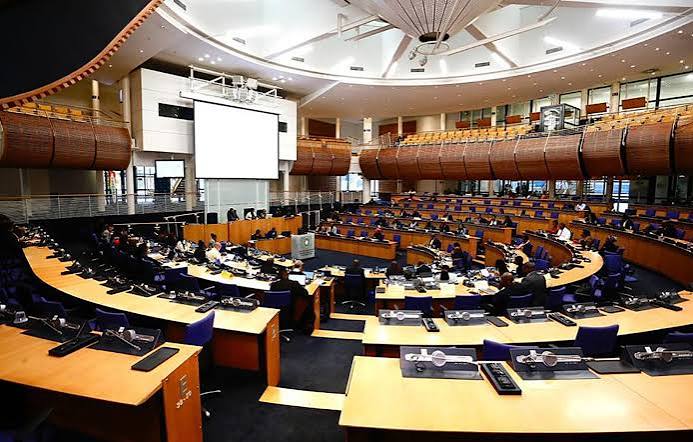
Johannesburg has experienced repeated changes in mayors, speakers and governing arrangements since the 2021 local government elections, with no party holding an outright majority.
The city is currently led by ANC mayor Dada Morero through a multiparty governing arrangement.
The November election is expected to produce another highly fragmented council, making both individual party support and post-election coalition negotiations important to determining who eventually becomes mayor.
Zigebe joins a field that already includes several nationally recognised political figures.
The DA has selected Helen Zille, ActionSA is campaigning behind former Johannesburg mayor Herman Mashaba, and the EFF has nominated former UN special rapporteur Tlaleng Mofokeng.
The MK Party has selected former Midvaal mayor Bongani Baloyi.
Afrika Mayibuye Movement leader Floyd Shivambu said this weekend that his party had also settled on a Johannesburg mayoral candidate but was withholding the person’s identity until later in September.
The ANC has yet to announce a final candidate from its Johannesburg mayoral selection process.
Its shortlist has included Morero, ANC Johannesburg regional chairperson and Deputy Mayor Loyiso Masuku, and veteran Frank Chikane.
Chikane’s potential candidacy has since become entangled in the ANC’s dispute with the Electoral Commission over candidate submissions that the party says were disrupted by technical problems.
The ANC has now taken that dispute to the Electoral Court.
The expanding Johannesburg mayoral field illustrates how fragmented the political contest has become.
Although South Africans do not directly elect metropolitan mayors, parties use mayoral candidates to identify the person they intend to nominate if they obtain enough council support after the election.
The mayor is ultimately elected by councillors.
For smaller parties such as the UDM, this means the significance of a mayoral candidate extends beyond the possibility of winning the largest share of votes.
Even a relatively small bloc of councillors could become relevant to coalition negotiations if no major party or alliance reaches a majority.
The UDM currently has only limited representation in Johannesburg, and Zigebe’s unsuccessful 2025 Speaker bid demonstrated the party’s comparatively small numerical position in the present council.
The 2026 election will therefore test whether the party can expand from that base.
The UDM has also deployed senior figures in other metropolitan contests.
In August it named deputy president Nqabayomzi Kwankwa as its Buffalo City mayoral candidate, signalling that the party intends to concentrate senior leadership in selected councils where it believes it can increase its representation.
That strategy is especially important in the Eastern Cape, historically the UDM’s strongest province, but the selection of Zigebe suggests the party is also seeking a more substantial foothold in Gauteng.
The immediate next step will be confirmation through the Electoral Commission’s certification process.
Political parties have already submitted their municipal-election nominations, but the IEC is still checking compliance before publishing the final candidate lists.
The commission is scheduled to publish the certified lists on 16 September.
Until then, party announcements identify their intended mayoral leadership but do not replace the IEC’s formal certification of individual candidates.
Zigebe’s nomination adds another experienced municipal politician to a Johannesburg race in which the eventual mayor could again be decided as much by coalition arithmetic after 4 November 2026 as by which party finishes first.