EKURHULENI, Saturday 5 September 2026 — The Democratic Alliance has unveiled candidates for all 112 wards in Ekurhuleni alongside its proportional-representation slate, completing another major part of its election team as the party seeks to regain control of one of South Africa’s most competitive metropolitan municipalities on 4 November.
DA mayoral candidate Khathutshelo Rasilingwane formally introduced the candidates at an event at Boksburg Hall on Saturday and launched a metro-wide campaign tour under the slogan “You Can Count on Khathu”.
The announcement means the DA intends to contest every ward in the City of Ekurhuleni, where 112 councillors are directly elected from wards and another 112 seats are allocated through proportional representation.
Rasilingwane said the candidate team would campaign across communities in the metro and would form the councillor base needed to implement the party’s programme should the DA be able to assemble a governing majority after the election.
“Being a councillor is not about a title or a seat in the Council Chamber,” Rasilingwane told candidates, according to Daily Sun. “It is about being there when your community needs you.”
The party has placed municipal finances, infrastructure, corruption, economic growth and public safety at the centre of its Ekurhuleni campaign.
Rasilingwane said a DA administration would prioritise restoring financial stability, improving roads and other infrastructure, expanding economic opportunities and strengthening municipal safety functions.
She also repeated a pledge to establish a whistle-blower protection unit within the first 100 days of a DA-led administration.
The corruption claims made by the DA against the existing municipal administration and officials remain political allegations unless established by investigations or courts.
The candidate launch is significant because Ekurhuleni is expected to be one of Gauteng’s closest municipal contests and has experienced repeated changes in governing arrangements since no party won an outright majority in 2021.
The ANC received 38.2% of the vote in that election and secured 86 of the 224 council seats, while the DA won 28.7% and 65 seats.
The EFF won 31 seats and ActionSA 15, making smaller parties crucial to the formation and survival of successive administrations.
Coalition arrangements have remained unstable during the current term.
The EFF withdrew from the ANC-led governing arrangement in February following a mayoral committee reshuffle by Executive Mayor Nkosindiphile Xhakaza, leaving the ANC heading a minority administration.
ActionSA also declined to enter the reconfigured coalition after its mayoral candidate, Xolani Khumalo, was offered a place on the mayoral committee.
That means the November election is not simply a contest to determine which party finishes first.
The distribution of seats among the ANC, DA, EFF, ActionSA, MK Party, smaller formations and newer entrants could determine whether any bloc can construct a stable governing coalition.
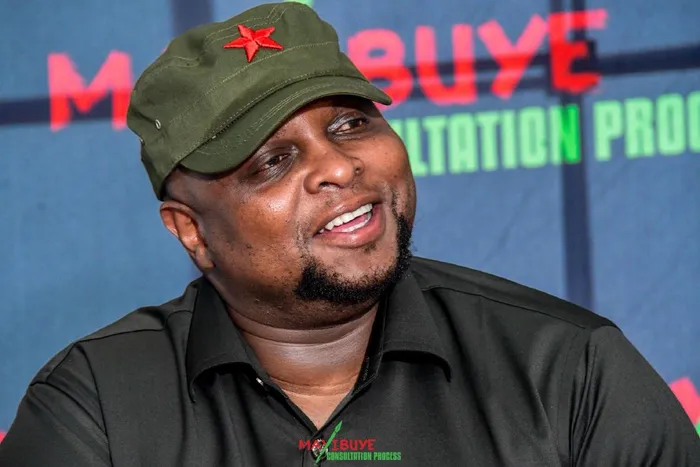
Saturday’s DA candidate launch also came on the same day that Floyd Shivambu’s Afrika Mayibuye Movement formally named Themba Lukhele as its Ekurhuleni mayoral candidate, further expanding the field contesting the metro.
Rasilingwane herself was selected as the DA’s Ekurhuleni mayoral candidate in March.
She previously served in the Ekurhuleni council and as the municipality’s MMC responsible for community safety before moving to the Gauteng Provincial Legislature.
The DA has increasingly framed Ekurhuleni as a central target in its 2026 Gauteng strategy.
Its national leader, Geordin Hill-Lewis, has repeatedly argued that the party must substantially expand its support in the metro to form a viable alternative government after the election.
The unveiling of all 112 ward candidates gives the party an organisational presence across areas where its support has historically varied considerably.
The DA performed strongest in suburban areas during the previous municipal election, while the ANC retained substantial support in townships and other parts of the metro.
How effectively parties extend beyond their traditional voter bases will therefore be important to the final result.
The DA’s complete candidate submission remains subject to the Electoral Commission’s statutory verification process, as are nominations submitted by every participating party.
The IEC is currently checking candidate nominations submitted before the 28 August deadline and is expected to certify the final candidate lists later in September.
Until that process is completed, Saturday’s unveiling represents the DA’s intended Ekurhuleni slate rather than the IEC’s final certified ballot.
The party will now take its candidates into ward-level campaigning across the metro during the remaining eight weeks before voting day.
For the DA, the strategic objective is clear: increase substantially on the 65 seats it won in 2021 and place Rasilingwane in a position to assemble enough council support to be elected mayor.
Whether that can be achieved will depend both on the DA’s own vote share and on the fragmented coalition arithmetic produced by the 4 November 2026 local government elections.