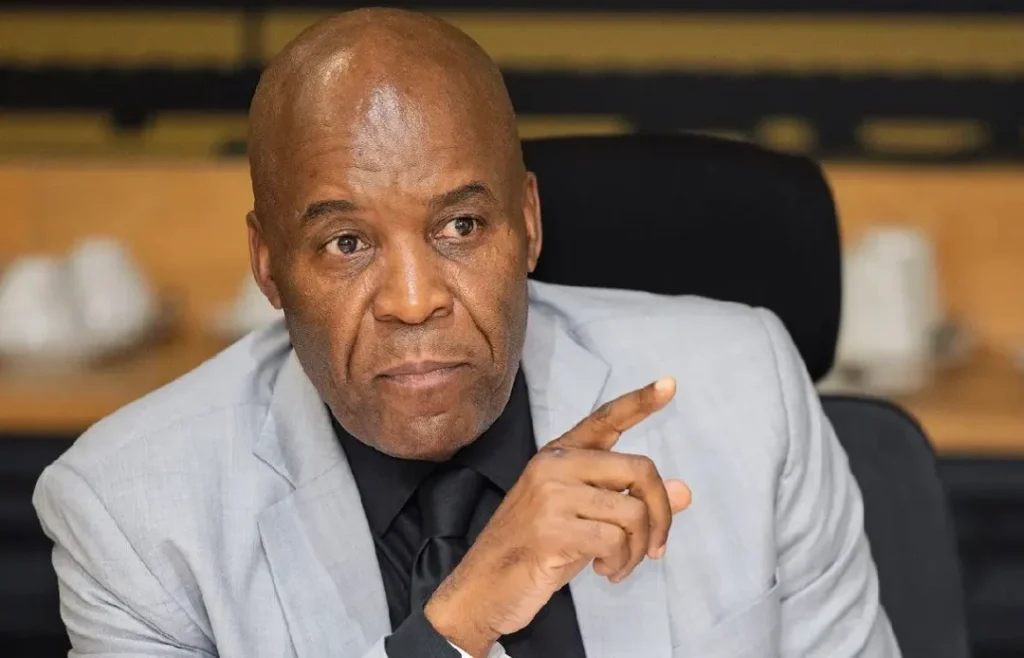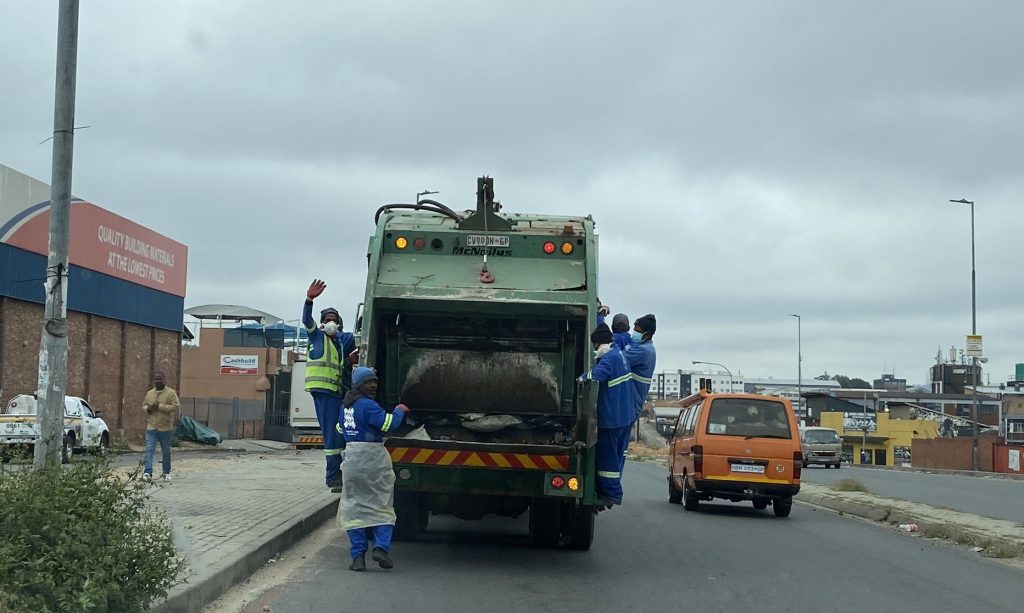
JOHANNESBURG, Sunday 13 September 2026 — Pikitup board chair Maxwell Nedzamba has blamed Johannesburg’s city-wide cash management system for worsening the municipal waste entity’s operational difficulties, saying money generated by Pikitup is pooled centrally and can be redirected to more immediate electricity and water obligations while refuse collection competes for funding.
Nedzamba said Johannesburg’s wider cash-flow pressures meant essential municipal entities were effectively competing against each other for limited resources, with payments to Eskom and Rand Water sometimes taking precedence when those creditors threatened consequences for non-payment.
The intervention is politically significant less than two months before the 4 November local government elections, with Johannesburg’s deteriorating waste services already forming part of the campaign over whether the current multiparty administration can reliably deliver basic municipal services.
Pikitup revenue goes into central city account
Johannesburg operates what Nedzamba described as a “sweeping” system in which revenues collected by municipal entities are transferred into a central account before money is redistributed according to city-wide priorities.
“If Pikitup collects R150m a week, in normal circumstances those proceeds [would] come back to the entity,” Nedzamba told the Sunday Times.
Instead, he said, the money enters the City’s main account, where competing financial obligations determine how much is subsequently allocated back to individual entities.
That arrangement means cash generated through waste services does not necessarily remain immediately available for Pikitup’s operational requirements.
Electricity and water debt compete with waste services
Nedzamba specifically identified Johannesburg’s electricity and water obligations as examples of competing priorities.
City Power has faced substantial financial pressure linked to its Eskom obligations, while Johannesburg Water relies on bulk supplies from Rand Water.
“If we have the minister of electricity threatening to cut off power because we have huge debt, the city has to prioritise that, and we get a lesser share of the funds because that need is immediate and urgent,” Nedzamba said.
He said the same principle applied if Rand Water threatened restrictions because of unpaid accounts.
The board chair’s remarks amount to an unusually direct acknowledgement from the leadership of a municipal entity that Johannesburg’s broader financial position is affecting the resources available for frontline services.
City financial reports show extent of entity imbalances
Johannesburg’s own financial reporting provides context for the pressures Nedzamba described.
A City Section 71 report showed City Power with an overdrawn sweeping-account position of approximately R16.77 billion at the end of August 2025, while Pikitup at that stage held a positive balance of about R1.8 billion within the same municipal cash-management structure.
Those figures are historical rather than current balances and should not be interpreted as representing the City’s position in September 2026.
They do, however, demonstrate how the centralised system transfers cash management across Johannesburg’s separate municipal entities rather than treating each entity’s collections as isolated funds.
Waste disruptions have hit multiple depots
Nedzamba acknowledged that Pikitup itself has experienced significant operational problems.
He cited labour unrest, disruption at depots, fleet reliability, supply-chain cash constraints and accumulated collection backlogs among the factors affecting services.
Recent disruptions have affected areas serviced by Marlboro, Central Camp, Randburg, Roodepoort, Selby and Midrand depots.
Casual workers employed through service providers have also protested over demands for permanent employment within the municipality.
Pikitup says the entity employs approximately 4,500 permanent workers, while contractors supply additional capacity for frontline refuse collection.
Insourcing demand creates another financial pressure
Workers involved in recent protests argue that some contract employees perform substantially similar duties to permanent Pikitup staff despite receiving lower remuneration and benefits.
Nedzamba said he understood those concerns but warned that Pikitup’s current financial position limited its ability to absorb workers permanently.
The dispute creates a difficult policy choice for the City.
Insourcing workers could address long-running labour grievances and potentially improve workforce stability, but doing so would place additional recurring salary and benefit costs on an already financially constrained entity.
The use of contractors, meanwhile, has itself periodically generated instability when contracts change or workers demand direct employment.
Johannesburg says services have been recovering
The City has previously acknowledged serious waste-service disruption.
During an Alexandra clean-up operation in August, City Manager Floyd Brink said Pikitup had resumed operations in most parts of Johannesburg but that unresolved labour problems were still affecting some services.
He said the municipality was working with Pikitup management to restore reliable collections while resolving labour matters “in a lawful and sustainable manner”.
The City has also attempted to address fleet constraints.
On 26 August, Pikitup announced that nine new refuse-compactor trucks had entered service as part of a longer-term fleet-renewal programme.
Twelve trucks had been added during the previous financial year and six during 2023/24.
Fleet investment does not resolve cash-flow structure
The new vehicles address one component of the operational problem but not the financing structure identified by Nedzamba.
The board chair said Pikitup ultimately needed to reconsider its workforce model, fleet, contracts, infrastructure, finances and operating systems rather than simply clear individual backlogs.
His argument is that reliable refuse collection depends partly on whether Pikitup can access sufficient cash when required rather than on how much revenue the entity nominally generates.
That raises broader questions about Johannesburg’s system of centralised municipal cash management.
Changing the model could allow entities greater control over their own income, but could also make it harder for the City to move resources between financially stronger and weaker services when urgent payments arise.
Waste crisis becomes an election issue
The timing gives the disclosure particular political importance.
Johannesburg is one of the country’s most closely contested metros, with no major polling model currently pointing confidently to a single-party majority after 4 November.
An Ipsos survey released this month placed the ANC on approximately 31% in Johannesburg and the DA on about 28%, with ActionSA and several smaller parties positioned to play important roles in another fragmented council.
Polling remains uncertain and should not be treated as an election forecast.
But repeated failures involving refuse collection, water, electricity, roads and municipal finances are central to competing parties’ arguments about who should govern the City.
Current administration faces service-delivery test
Johannesburg is presently governed through a multiparty arrangement led by the ANC, with Mayor Dada Morero heading the administration.
The DA, ActionSA, EFF, MK Party and smaller parties are all campaigning to increase their representation or influence in the next council.
The waste crisis gives opposition parties a visible service-delivery issue, while the current administration can point to fleet investment and recovery operations as evidence that stabilisation efforts are under way.
Nedzamba’s comments complicate that defence because they identify a structural financial problem extending beyond individual depots, workers or broken refuse trucks.
Structural reform may outlast election
The board chair says Pikitup is currently working to restore normal collections but argues that returning to the previous operating model would not be enough.
“Our responsibility now is not simply to return to normal,” he said. “We need to use this period to address the structural weaknesses that made the system vulnerable in the first place.”
For Johannesburg residents, the immediate measure of success remains straightforward: whether refuse is collected consistently.
For the next council, however, the larger problem may be more difficult.
It will inherit a waste entity whose chair says the crisis is partly rooted in the way South Africa’s largest city manages money across its entire municipal system — meaning any sustainable fix could require changes extending well beyond Pikitup itself.