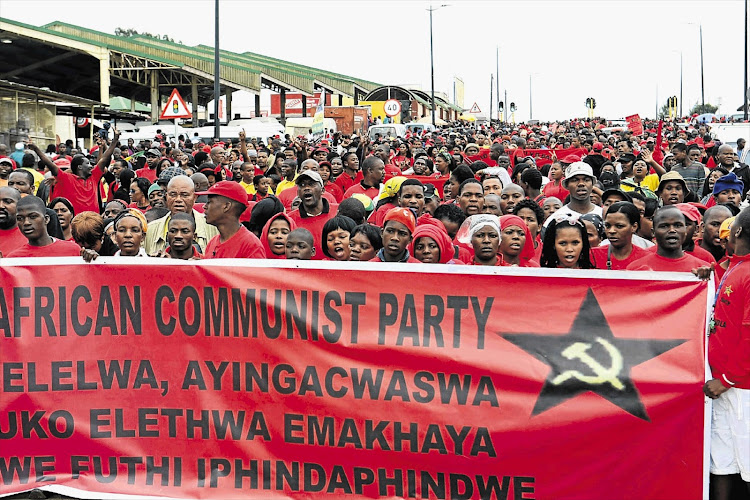
JOHANNESBURG, Sunday 30 August 2026 — The South African Communist Party has submitted 4,118 ward candidates for the 4 November local government elections and says it will also contest proportional-representation seats nationwide, confirming the scale of its first broad electoral challenge to its longstanding alliance partner, the ANC.
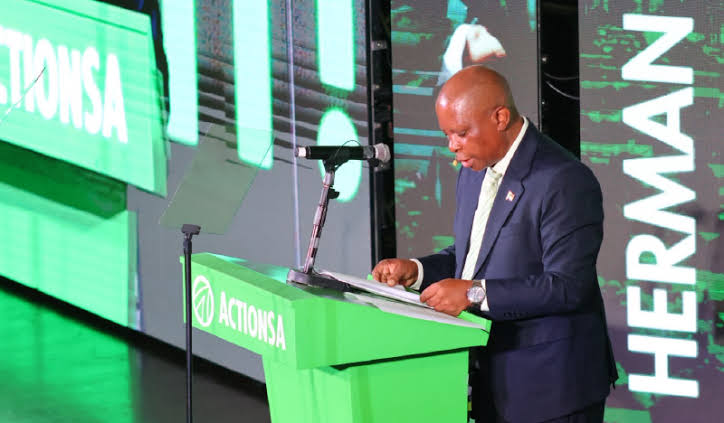
SACP general secretary Solly Mapaila announced the figures at an election briefing on Sunday after the party met Friday’s candidate-submission deadline set by the Electoral Commission of South Africa.
The announcement provides the clearest indication yet that the SACP’s decision to contest independently is not limited to selected symbolic municipalities or wards.
Instead, the party is attempting to establish a national municipal electoral presence.
“The SACP is fielding 4,118 ward candidates across the country,” Mapaila said.
“In the same vein we are contesting proportional councillor seats countrywide.”
The scale matters because the SACP and African National Congress have historically fought elections together through the Tripartite Alliance rather than competing against one another.
The communist party resolved at its 2022 national congress to pursue independent electoral participation and reaffirmed the decision at its Fifth Special National Congress in December 2024.
Its Central Committee formally confirmed in April 2025 that the party would contest the 2026 local government elections across South Africa.
The SACP launched its municipal election manifesto earlier this month under the theme of building “people’s power” around employment, water, land, electricity, roads and public safety.
Sunday’s announcement demonstrates how extensively that decision has now translated into actual candidates.
South Africa has 4,484 municipal wards for the November election.
The SACP’s figure of 4,118 therefore represents candidates in roughly 92% of all wards, although the IEC still has to verify nominations before final candidate lists are confirmed.
The party is additionally submitting proportional-representation lists, meaning its electoral footprint extends beyond those ward contests.
Mapaila said the candidate lists include people who are not SACP members.
He said community development activists, people associated with faith-based organisations and members of traditional communities had been incorporated into the party’s slate.
According to Mapaila, that showed the SACP was attracting support outside its formal membership.
The claim will ultimately be tested by voters in November.
The candidate numbers nevertheless give the SACP considerably greater potential to affect the election than it would have had through a strategy focused on a small number of traditional strongholds.
That is particularly relevant for the ANC.
The two parties have overlapping political constituencies and organisational histories, while many activists have traditionally held membership in both organisations.
Senior government and ANC figures including Higher Education Minister Buti Manamela, Science, Technology and Innovation Minister Blade Nzimande, Deputy Finance Minister David Masondo and Gauteng Cooperative Governance MEC Jacob Mamabolo have held senior positions or membership within the SACP.
The ANC has previously told members with dual membership that they cannot campaign against ANC candidates.
Its National Executive Committee decided earlier this year that members would have to determine whether they intended campaigning for the ANC or SACP during the municipal election.
That question becomes substantially more immediate now that the parties have submitted competing candidate lists across most of the country.
The SACP’s independent campaign has also created divisions within Congress of South African Trade Unions.
COSATU has a standing resolution supporting the ANC but is allowing affiliates to develop their own mandates ahead of the federation’s national congress next month.
NEHAWU has formally endorsed the SACP, while major affiliates including SADTU and POPCRU have indicated they will continue backing the ANC.
The resulting contest is therefore unusual within South African electoral politics.
Organisations that have spent decades mobilising voters together could find themselves campaigning for competing candidates in the same wards.
Mapaila insisted on Sunday that the SACP’s decision should not be interpreted as abandoning the alliance.
“Our electoral contest must be understood correctly: the SACP has not walked away from the alliance but firmly remains part of it while pursuing its reconfiguration,” he said.
He said independent electoral participation reflected the party’s political, ideological and organisational autonomy.
The ANC has taken a different view of the political consequences.
Its relationship with the SACP deteriorated particularly after the formation of the Government of National Unity following the 2024 election.
The SACP opposed the ANC entering a governing arrangement that included the DA and Freedom Front Plus and subsequently intensified preparations to contest the municipal elections independently.
The disagreement was visible during the ANC’s local government manifesto launch in Diepsloot last weekend, where the SACP did not play the traditional role of an alliance partner endorsing the ANC campaign.
The November election will now provide the first national-scale measure of whether the SACP can convert its organisational presence into votes independently of the ANC.
Its impact could be particularly important in municipalities where governing margins are narrow.
Johannesburg, Tshwane and Ekurhuleni are expected to produce closely contested elections, while the ANC also faces significant pressure from the MK Party in KwaZulu-Natal and from opposition parties in several Eastern Cape municipalities.
In those councils, even relatively small percentages of votes won by the SACP could influence whether the ANC can form a government alone, which coalition combinations are viable, or whether additional smaller parties become necessary to establish a majority.
The SACP could also compete directly with the ANC in municipalities and wards where organised labour has traditionally provided a significant component of the governing party’s campaign infrastructure.
The IEC is now checking candidate submissions from political parties against legal requirements.
Chief electoral officer Sy Mamabolo said this weekend that 519 of the country’s more than 700 registered political parties had submitted candidates by Friday’s deadline.
The commission expects to release preliminary figures after completing the initial verification process.
That process will determine whether all 4,118 SACP ward nominations survive scrutiny.
For the SACP, however, the political decision has already crossed an important threshold.
What began as an internal alliance debate over whether the communist party should contest elections independently has now produced thousands of candidates who will appear alongside — and frequently against — ANC candidates across South Africa.
The next measure of the strategy will come on 4 November, when voters determine whether the SACP’s organisational reach translates into an independent electoral constituency.