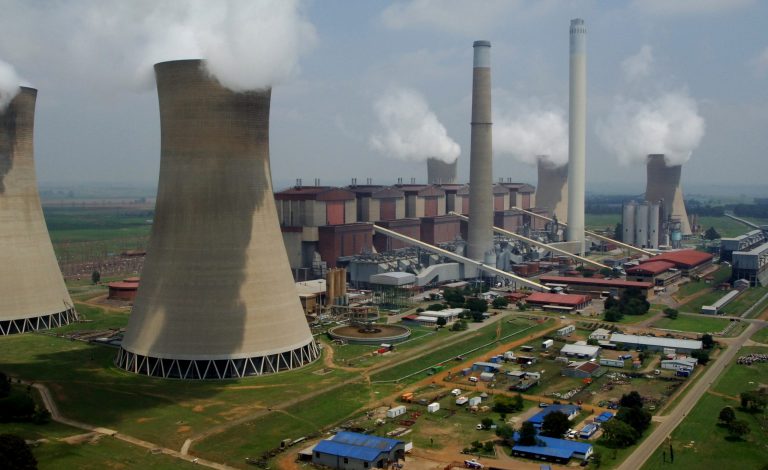
JOHANNESBURG, Monday 31 August 2026 — Eskom has reported a R30.3 billion profit after tax for the year ended March 2026, more than double its restated R14 billion profit a year earlier, but warned that escalating municipal arrears remain its biggest financial threat ahead of South Africa’s November local government elections.
The state-owned power utility said on Monday that it had recorded a second consecutive profitable year after almost a decade of losses.
Revenue increased by 4.1%, supported by a 12.74% average tariff increase, although electricity sales volumes fell by 6.2% to 178 TWh.
Eskom said the decline reflected weaker industrial demand, increased self-generation and energy-efficiency measures.
Industrial electricity demand alone fell by 22.5% year on year, according to the utility.
The financial improvement was also supported by better generating performance and reduced reliance on emergency diesel-fired power generation.
South Africa experienced only four days of load shedding during the financial year, compared with 329 days in 2024.
Eskom chairperson Mteto Nyati said stronger operational performance had allowed the utility to reduce the cost of electricity production and rebuild its capacity to invest.
“This is the second consecutive year that Eskom has delivered a profit,” Nyati said in the utility’s results statement.
He said the improvement would allow Eskom to reinvest in generation reliability, distribution and grid expansion.
The utility plans to increase annual capital expenditure from around R45 billion in the 2026 financial year to more than R70 billion annually from 2029.
Eskom said total planned capital investment across the group would reach R343 billion over the next five years.
Despite the stronger headline figures, unpaid municipal electricity accounts remain a significant risk.
Municipal arrears increased by 17.9% to R111.6 billion by the end of March and had risen to approximately R119 billion by June 2026, according to Eskom.
The utility has warned that municipal debt could reach as much as R358 billion by 2031 if no effective intervention is implemented.
Municipalities and metros account for more than 40% of Eskom’s electricity sales, making their ability to collect revenue and pay the utility important to its longer-term financial stability.
Eskom chief financial officer Calib Cassim said resolving municipal arrears was necessary if the utility was to maintain its recovery without continued reliance on government assistance.
The debt problem has become increasingly politically significant ahead of the 4 November local government elections.
Municipal finances, electricity provision and basic service delivery are expected to be central issues in many of the country’s most competitive councils.
The ANC used its local government election manifesto launch earlier this month to commit itself to reducing municipal debt owed to Eskom and water boards by at least 30% by 2031.
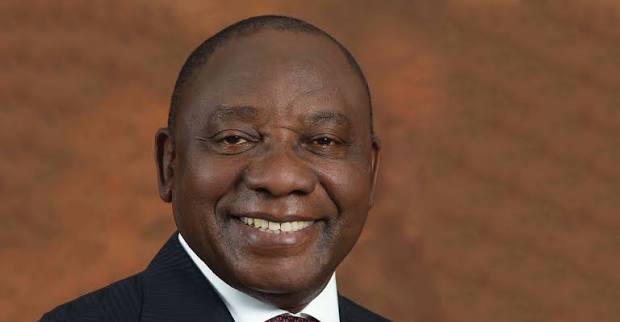
President Cyril Ramaphosa also pledged stronger municipal revenue collection and financial management.
Those commitments will now be measured against municipal arrears that continue to rise despite Eskom’s broader financial recovery.
The problem extends across both metropolitan and smaller municipalities, although some large cities have recently taken steps to resolve long-running disputes.
Johannesburg paid Eskom approximately R5.25 billion earlier in August following a government-mediated settlement between the utility, the City and City Power.
The settlement resolved disputed historical accounts and included a commitment by Johannesburg to keep future electricity payments current.
Many municipalities remain in substantially weaker financial positions.
Eskom has been pursuing distribution agency agreements under which it can assist municipalities with functions including electricity distribution, revenue collection and billing.
Electricity and Energy Minister Kgosientsho Ramokgopa has previously told Parliament that the arrangements are intended to strengthen municipal revenue recovery while improving electricity services.
Municipal debt could become increasingly important after November if a larger number of councils emerge without outright political majorities.
Coalition instability has complicated long-term financial planning and administrative decision-making in several major metros during the current municipal term.
Johannesburg, Tshwane and Ekurhuleni have all experienced changes in political leadership since the 2021 elections.
At the same time, residents have faced substantial increases in electricity costs.
Eskom’s results show that its 12.74% tariff increase contributed to higher revenue during a year in which total electricity consumption declined.
The utility acknowledged that tariff increases alone could not provide a sustainable basis for future revenue growth.
Improved generating availability has instead created an estimated 2 GW to 3 GW of surplus production capacity, giving Eskom an incentive to retain existing customers and attract additional electricity demand.
The annual results therefore show a substantially stronger Eskom than during the peak of South Africa’s electricity crisis, but also expose the extent to which the utility’s next financial challenge has shifted toward municipalities.
With municipal arrears already approaching R120 billion and voters due to elect new councils on 4 November, the ability of municipalities to collect revenue and maintain electricity payments is likely to remain closely linked to both Eskom’s recovery and the local government election campaign.