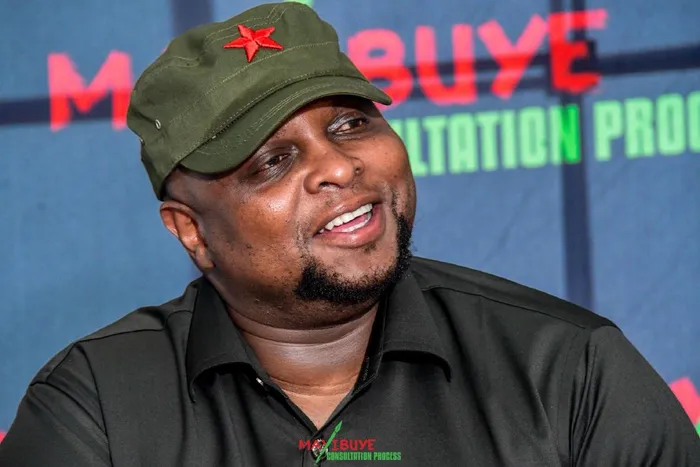
CAPE TOWN, Monday 31 August 2026 — The ANC has removed South African Communist Party Western Cape provincial secretary Benson Ngqentsu from the provincial legislature after he chose to campaign for the SACP in the November local government elections, turning tensions between the alliance partners into a direct change in elected representation.
Ngqentsu had represented the ANC in the Western Cape Provincial Legislature since the 2024 elections and served as the party’s spokesperson on police oversight and community safety.
He is simultaneously the provincial secretary of the South African Communist Party, which is contesting the 4 November municipal elections independently of the ANC.
The African National Congress had previously told members affiliated to both organisations that they would have to decide which party they intended to campaign for once the SACP confirmed that it would field its own candidates.
Ngqentsu chose the SACP.
He said he was informed of his removal from the legislature by telephone rather than through written correspondence and described the decision as a “badge of honour”.
Ngqentsu said his removal resulted from his decision to campaign for the SACP and his political convictions rather than allegations of wrongdoing.
The ANC has said the measures against members campaigning for rival electoral lists do not constitute a purge of communists.
ANC spokesperson Mahlengi Bhengu said earlier this year that members were instead required to decide whether they were campaigning for the ANC or the SACP once the two organisations became electoral competitors.
The distinction has become increasingly important as the municipal election approaches.
The SACP remains part of the longstanding Tripartite Alliance with the ANC and COSATU but has decided to contest the 2026 local elections under its own name.
Its independent campaign creates an unusual situation in which organisations that continue to describe themselves as alliance partners are competing directly for the same voters, activists and, in some cases, political representatives.
The SACP’s Western Cape organisation had already warned in March that its decision to contest independently was “irreversible” and said threats against communists serving in government would not cause the party to reverse course.
Ngqentsu was one of the officials identified with that position.
The provincial SACP has said it intends contesting wards across the Western Cape, including in Cape Town.
Ngqentsu said earlier this month that the party’s candidates would be drawn from its own membership as well as trade unions and civil society organisations, and that ANC members would not automatically be excluded from standing under the SACP banner.
That position creates the possibility of further movement between the alliance partners as candidate lists are finalised.
The dispute is already extending into municipal councils.
ANC Western Cape spokesperson Sifiso Mtsweni said the party had notified municipalities in Cape Town, Mossel Bay, George and Knysna of councillor expulsions involving representatives who had moved to rival election lists.
Those councillors are expected to contest for the DA, Patriotic Alliance or SACP.
In Knysna, the ANC confirmed that one of its councillors had moved to the SACP.
The development differs from the previously reported departures of Cape Town ANC councillors Thembinkosi Mjuza and Lindile Sonyoka because it involves the ANC’s alliance relationship with the SACP rather than movement solely between traditional electoral rivals.
It also reaches beyond municipal representation.
Removing Ngqentsu from the provincial legislature means the dispute over the SACP’s electoral independence has now directly affected an ANC seat in a provincial legislature held since the 2024 election.
The SACP’s decision could have wider electoral consequences if it attracts a meaningful share of voters who would previously have supported the ANC.
That question is particularly relevant in municipalities where relatively small changes in support can affect proportional-representation seats or determine which coalition combinations are possible after the election.
The Western Cape ANC is already fighting to rebuild its municipal position while facing competition from the DA, Patriotic Alliance and smaller parties.
The SACP will now compete for part of the same constituency traditionally associated with the broader ANC-led alliance.
Nationally, the consequences of the split remain less clear.
ANC secretary-general Fikile Mbalula has rejected suggestions that the disagreement over the municipal elections necessarily marks the end of the alliance, while the SACP has maintained that independent electoral participation does not require it to abandon the alliance itself.
The practical distinction is becoming harder to maintain at candidate level.
ANC members who appear on SACP lists or campaign against official ANC candidates risk losing their ANC positions, while SACP leaders such as Ngqentsu have indicated that they will not abandon the communist party’s campaign to retain ANC-deployed offices.
The Electoral Commission of South Africa is now verifying candidate submissions following the 28 August nomination deadline.
Publication of the final candidate lists on 16 September should reveal the extent to which ANC-linked councillors and activists are standing for the SACP and whether Ngqentsu’s removal is an isolated provincial-level confrontation or the beginning of a broader reshuffling of the alliance’s political personnel before 4 November.