JOHANNESBURG, Friday 4 September 2026 — The ANC and DA are running closely in several of South Africa’s most competitive metropolitan municipalities while the MK Party holds a commanding lead in eThekwini, according to a new Ipsos poll released two months before the 4 November local government elections.
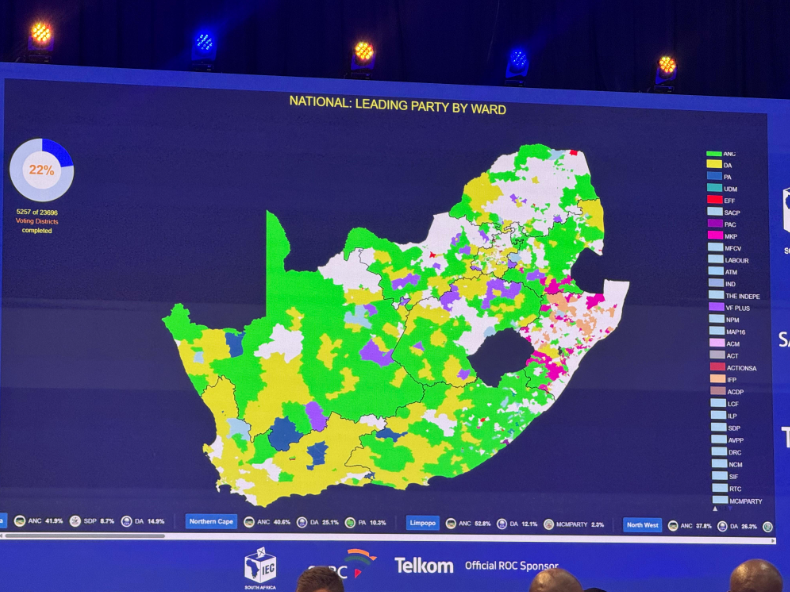
The latest Ipsos Pulse of the People survey puts national voting intention among respondents planning to vote at ANC 31%, DA 25%, MK Party 14%, EFF 11%, ActionSA 6%, IFP 3% and Patriotic Alliance 2%, Daily Maverick reported.
The survey is particularly significant at metropolitan level, where fragmented councils and coalition governments are likely to determine control of several of the country’s largest cities.
In Johannesburg, the poll places the ANC on 31% and the DA on 27%, a four-point gap that leaves neither party close to an outright majority.
ActionSA, the EFF, MK Party and other contestants could consequently play an important role in the composition of the next Johannesburg council and any coalition formed after the election.
The picture is different in Tshwane, where Ipsos places the DA on 31% compared with 22% for the ANC.
The capital has changed governing coalitions during the current municipal term and remains one of the DA’s principal targets as former mayor Cilliers Brink seeks to return to office.
Ipsos also found the ANC and DA closely matched in Ekurhuleni, Nelson Mandela Bay and Buffalo City, according to Daily Maverick.
The most striking metropolitan result comes from KwaZulu-Natal.
In eThekwini, 55% of respondents who indicated an intention to vote said they would support the MK Party, putting former president Jacob Zuma’s party substantially ahead of its rivals in the provincial economic centre.
That result, if reflected at the ballot box, would materially alter the coalition calculations in a municipality where the ANC has historically dominated but lost its outright majority in 2021.
The survey reinforces MK’s concentration of support in KwaZulu-Natal rather than suggesting similar dominance nationally.
Ipsos director of public affairs Mari Harris said the party was performing strongly in KwaZulu-Natal but did not show the same strength elsewhere, while ActionSA’s support was more prominent in Gauteng and the Patriotic Alliance remained a factor in the Western Cape.
The provincial findings also show the ANC retaining substantial support in Limpopo and the Eastern Cape, while the DA remains dominant in the Western Cape.
Ipsos reported ANC support at 58% in Limpopo and 56% in the Eastern Cape.
The survey was conducted through face-to-face, in-home interviews with about 3,500 respondents.
Ipsos cautioned that while the overall registered-voter sample has a maximum margin of error of about ±1.77 percentage points at the 95% confidence level, margins increase substantially when the sample is divided into individual provinces and metropolitan municipalities. Some metro-level results should therefore be regarded as indicative rather than precise forecasts.
The poll should also not be read as an election result projection.
Turnout remains one of the largest uncertainties in municipal elections, and Harris said differences in the willingness of party supporters to vote could materially change the final outcome.
The Electoral Commission said this week that Johannesburg will have the country’s most crowded metropolitan proportional-representation ballot, with 80 parties, followed by Tshwane with 72, eThekwini with 70 and Ekurhuleni with 69.
The number of contestants increases the possibility of further council fragmentation even where one or two larger parties dominate support.
For the ANC and DA, the Ipsos numbers point to a competitive final two months in Johannesburg, Ekurhuleni, Nelson Mandela Bay and Buffalo City.
For MK, they provide the clearest indication yet from a major national polling organisation that eThekwini could become the party’s most important municipal prize on 4 November.