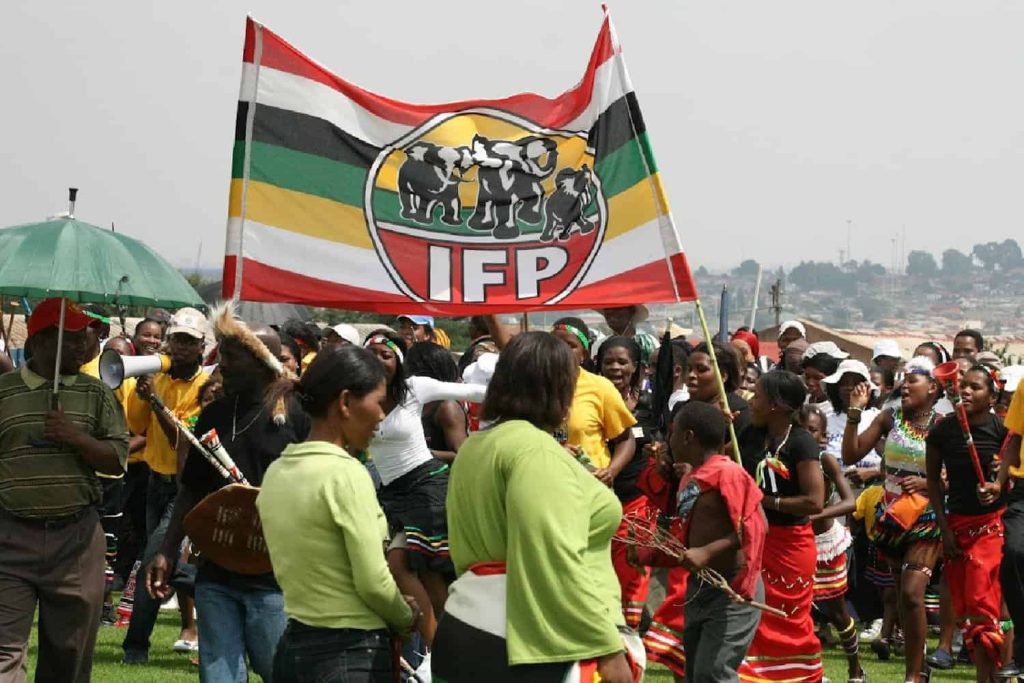
PIETERMARITZBURG, Friday 4 September 2026 — Two Inkatha Freedom Party councillor candidates have been killed in separate shootings in KwaZulu-Natal within seven days, prompting the party to call for the province’s Political Killings Task Team to investigate whether either attack was politically motivated ahead of the 4 November local government elections.
The IFP confirmed on Thursday that Lucky Sokhela, its Ward 8 candidate in uMshwathi Local Municipality, was shot dead after arriving at his home on Tuesday, 1 September.
The party alleges that Sokhela had been followed by people travelling in a Volkswagen Polo before the shooting. That account forms part of the circumstances the IFP wants police to investigate and has not yet been established by a court.
Sokhela’s death followed the killing of Khethelo Mdluli, a serving IFP proportional-representation councillor in uMlalazi Local Municipality who had been selected to contest Ward 17 in November.
Mdluli, 40, was shot at his home in oPhindweni, Gingindlovu, on Thursday, 27 August. The IFP said he later died at Ngwelezane Hospital.
The party’s national spokesperson, Mkhuleko Hlengwa, said the two killings required an urgent response from law-enforcement authorities and called for the KwaZulu-Natal Political Killings Task Team to investigate both cases.
The IFP has specifically asked investigators to establish the motive for each shooting, including whether political considerations played any role.
There is currently no publicly established evidence that either killing was politically motivated, and the two incidents have not been shown to be connected.
That distinction is important in KwaZulu-Natal, where politically motivated killings have a long history but murders involving politicians can also arise from criminal, personal, business or other disputes.
The deaths nevertheless carry immediate electoral significance because both victims were candidates in November’s municipal elections.
Sokhela was standing in uMshwathi, while Mdluli was seeking election in uMlalazi, municipalities where the IFP and ANC have been significant competitors and where KwaZulu-Natal’s changing party landscape has intensified the contest for council control.
The IFP regained control of uMlalazi from the ANC after the 2021 municipal elections.
Mdluli had served as a PR councillor since that election and had now been selected to contest a ward directly.
The killings come amid wider concern about political violence during the campaign.
KwaZulu-Natal Premier Thami Ntuli recently said at least 18 councillors had been assassinated in the province since the 2021 local government elections, according to reporting by The Citizen.
Other incidents have also raised concerns about whether parties can campaign freely in politically contested areas.
IFP president Velenkosini Hlabisa said this week that party volunteers had been assaulted while putting up election posters in KwaNyuswa, while EFF leader Julius Malema has publicly warned against attempts to create political “no-go areas” in the province.
Those are separate incidents and there is no evidence linking them to the murders of Sokhela or Mdluli.
Election security has already formed part of preparations for the November poll, particularly in KwaZulu-Natal, where law-enforcement agencies and the Electoral Commission must manage both ordinary election-related security risks and the province’s history of political killings.
The deaths also create practical consequences for the IFP’s candidate slate.
Electoral processes will determine whether and how the party may replace the two candidates, depending on their nomination status and the applicable provisions of the municipal election timetable.
Candidate verification is currently under way, with the IEC scheduled to publish final candidate lists on 16 September.
The immediate focus, however, remains on the criminal investigations.
The IFP has asked SAPS to mobilise the necessary resources to identify those responsible and for prosecutors and other law-enforcement agencies to treat the cases as priorities.
Whether investigators establish a political motive will determine whether the deaths become part of KwaZulu-Natal’s broader pattern of political killings or remain separate criminal cases involving political candidates.
Either way, the loss of two candidates within a week adds a new election-security concern as campaigning intensifies ahead of 4 November.