JOHANNESBURG, Monday 7 September 2026 — The MK Party has opened a substantial polling lead in eThekwini while the DA is below the outright-majority threshold in Cape Town, according to new Ipsos research that points to sharply different electoral contests across South Africa’s largest municipalities two months before the 4 November local government elections.
Ipsos places MK at 55% among registered voters expressing a party preference in eThekwini, making it the only party in the survey with majority-level support in any of the metros highlighted by the research.
The finding, if broadly reflected at the ballot box, would represent a major change in eThekwini’s political balance.
The municipality is currently governed through a multiparty arrangement led by ANC Mayor Cyril Xaba, after no party secured an outright majority in the 2021 municipal elections.
MK did not exist at the time of that election.
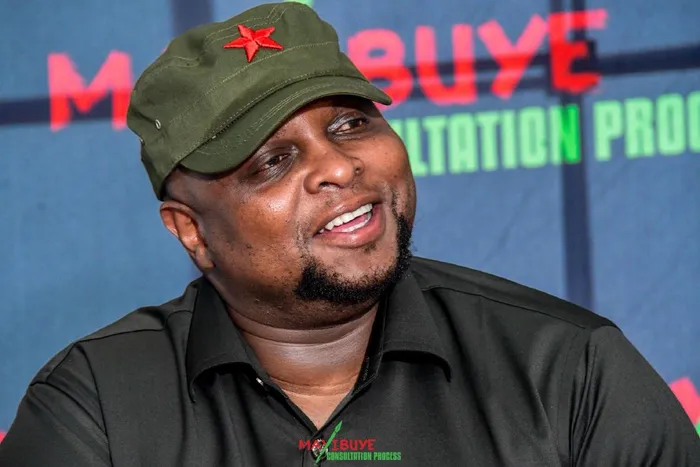
Its emergence following the 2024 national and provincial elections fundamentally altered KwaZulu-Natal’s party landscape, and the Ipsos figures suggest former president Jacob Zuma’s party could translate its provincial strength into substantial municipal representation.
Ipsos cautioned, however, that its findings are not a forecast of the final election result.
The survey was conducted between June and July 2026 through face-to-face interviews with 3,600 randomly selected South Africans. Results were weighted to represent the adult population, with the electoral analysis filtered to registered voters.
Party-support percentages were then recalculated among registered respondents who expressed a voting preference.
About 81.8% of registered voters in the sample selected a political party, while others either declined to choose or indicated that they did not intend voting.
The metro results therefore describe current preferences among respondents who selected a party rather than a turnout model for 4 November.
That distinction is important in several closely contested councils.
Ipsos found that roughly one-fifth to one-quarter of registered respondents in Ekurhuleni, eThekwini, Tshwane and Buffalo City currently indicated they did not intend to vote.
The research company said mobilising even part of that group could materially change the results.
DA below 50% in Cape Town
In Cape Town, Ipsos recorded the DA at 46%, its strongest performance in any metro covered by the study but below the level required to guarantee outright control of the council.
Reporting based on the survey places the ANC on 26%, the EFF on 11% and the Patriotic Alliance on 8% in the city.
The DA currently governs Cape Town with a majority and has done so continuously since 2006.
Losing that majority would not necessarily remove the party from government.
If it remained comfortably the largest party but finished below 50%, it could seek support from one or more smaller parties to elect a mayor and approve budgets.
The Patriotic Alliance’s showing is particularly relevant to that calculation because the party has been campaigning for growth in communities on the Cape Flats where it and the DA compete for overlapping groups of voters.
The DA has disputed the way the Ipsos findings are being interpreted.
Party spokesperson Matthew Sims told IOL that the survey does not incorporate the DA’s preferred turnout modelling and argued that this makes comparisons with likely election-day outcomes unreliable.
Ipsos itself explicitly says the survey should not be read as an election prediction.
Its stated purpose is to measure current voting intentions, with two months of campaigning remaining.
Johannesburg and Ekurhuleni remain competitive
The research identifies Johannesburg, Ekurhuleni, Nelson Mandela Bay and Buffalo City as metros where the ANC and DA are particularly competitive.
That finding reinforces the likelihood that coalition negotiations could again determine governments in several major cities.
Johannesburg has moved through a succession of governing arrangements since the ANC first lost its outright majority in 2016.
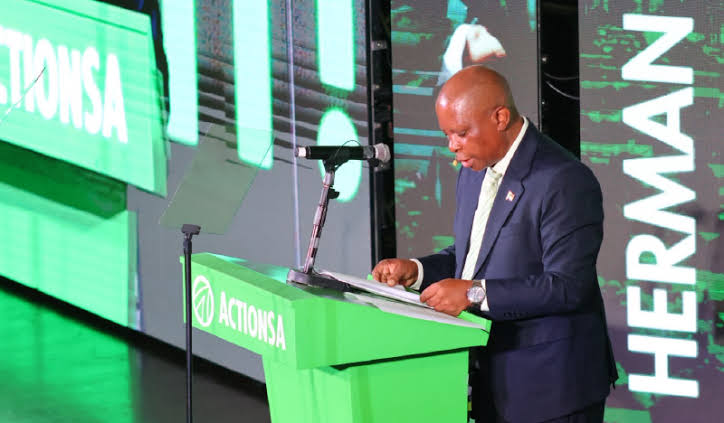
The November election features high-profile mayoral candidates including the DA’s Helen Zille, ActionSA leader Herman Mashaba, the MK Party’s Bongani Baloyi and the EFF’s Tlaleng Mofokeng.
ActionSA also remains a significant Gauteng factor.
Ipsos says the party records double-digit support in Johannesburg, Tshwane and Ekurhuleni, with its strongest electoral footprint still concentrated in the province.
That matters because relatively modest shifts between the larger parties and ActionSA could affect whether any workable post-election majority can be assembled.
In Tshwane, ActionSA currently holds the mayoralty through Nasiphi Moya, while the DA is trying to return former mayor Cilliers Brink to office.
The ANC, EFF, Freedom Front Plus and other parties are also mounting campaigns in a council where coalition breakdowns have repeatedly changed the governing balance.
EFF records unusually strong Buffalo City support
Ipsos also identifies Buffalo City as an outlier for the EFF.
The party reaches 27% in the Eastern Cape metro in the survey, substantially stronger than its support in the other major municipalities measured.
The finding should be treated cautiously.
Ipsos specifically warns that the sample sizes for Buffalo City, Nelson Mandela Bay and Mangaung are comparatively small.
The maximum margin of error listed for Buffalo City and Mangaung is approximately ±15.46 percentage points, while Nelson Mandela Bay’s is approximately ±12.12 points.
Metro-level margins are narrower elsewhere but remain substantially larger than the survey-wide margin.
Ipsos gives maximum margins of approximately ±5.57 points for Johannesburg, ±7.94 for Tshwane, ±6.86 for Ekurhuleni and eThekwini, and ±6.12 for Cape Town.
The figures should consequently be read as indicators of the political landscape rather than precise projections of council-seat totals.
Coalition arithmetic remains central
Despite those limitations, the survey points towards a common feature across most metros: no dominant party is clearly positioned for outright government.
“What stands out is that there is no single metropolitan story unfolding across South Africa,” Ipsos political analyst Mari Harris said.
Ipsos said MK’s position in eThekwini was the clearest exception, while many other metros appeared headed towards another period of coalition government.
That would make the relative strength of smaller and medium-sized parties important well beyond their individual vote shares.
Council governments are elected by councillors rather than directly by voters, meaning a party does not need to win 50% itself if it can assemble a majority with coalition partners or through other voting arrangements.
The political parties are already positioning themselves for that possibility.
Some have begun setting out coalition preferences or exclusions, although those positions could be tested after election results reveal the actual council arithmetic.
The Ipsos findings also come before the IEC publishes the final certified candidate lists on 16 September, and before the most intensive period of the municipal campaign.
Campaign events, candidate disputes, service-delivery developments and turnout mobilisation could all still shift voting intentions.
That leaves two particularly significant propositions from the latest poll to be tested on 4 November: whether MK can convert its KwaZulu-Natal strength into control of eThekwini, and whether the DA can recover enough support to retain an outright majority in Cape Town.