DURBAN, Friday 11 September 2026 — The ANC has disclosed additional problems with its municipal election candidate lists in eThekwini and Ray Nkonyeni, including ward candidates recorded against incorrect wards, duplications and candidates apparently swapped between wards, extending the party’s nomination difficulties beyond the six municipalities already at the centre of its Electoral Court battle with the Electoral Commission.
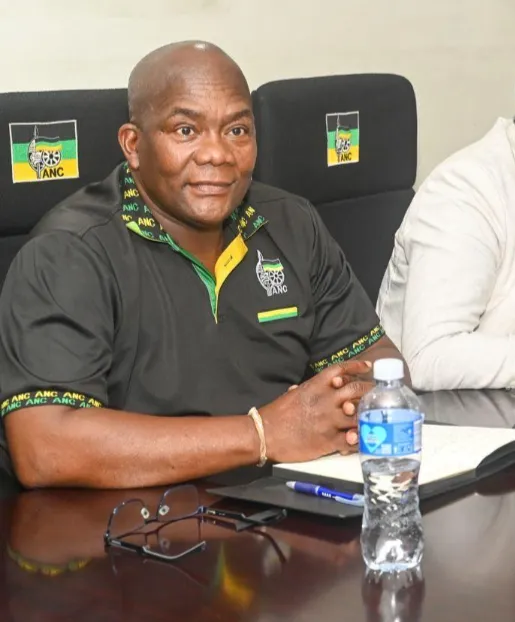
ANC KwaZulu-Natal provincial task team coordinator James Nxumalo confirmed the additional errors during a briefing in Durban on Thursday, according to News24 reporting. The party described the affected number of candidates as limited and said it was trying to correct the capturing problems.
The disclosure is significant because eThekwini is South Africa’s third-largest metropolitan municipality and one of the most consequential contests of the 4 November local government elections, while Ray Nkonyeni is an important municipality on KwaZulu-Natal’s South Coast.
It also establishes that the ANC is dealing with two different types of candidate-list problem: nominations it says were captured but not finally submitted in six councils, and nominations that were submitted but appear to contain incorrect ward allocations in additional KwaZulu-Natal municipalities.
eThekwini and Ray Nkonyeni problems are separate from court case
The ANC’s current Electoral Court application concerns 181 candidates in six municipalities whose information was captured on the IEC’s online nomination system but was not recorded as finally submitted before the 17:00 deadline on 28 August.
Those six councils are Mangaung, uMshwathi, Ngquza Hill, Port St Johns, Walter Sisulu and Sundays River Valley.
The newly disclosed eThekwini and Ray Nkonyeni problems are different.
According to reporting on Nxumalo’s briefing, the affected candidates were captured, but some were linked to incorrect wards, duplicated or exchanged between ward positions.
The ANC has not publicly identified all the affected candidates or wards.
No evidence currently suggests that the mistakes were deliberate.
Errors emerge in crucial eThekwini contest
Even a small number of incorrect ward nominations attracts greater significance in eThekwini because the metro is expected to produce one of the closest and most politically consequential contests of November’s election.
The ANC lost its outright majority in eThekwini in 2021 and has since governed through coalition and cooperation arrangements.
Its position weakened further in KwaZulu-Natal during the 2024 national and provincial elections, when the MK Party emerged as the province’s largest political force.
The November election will test whether that provincial shift can be reproduced at municipal level.
The MK Party has itself experienced candidate-list turmoil in eThekwini this week, with president Jacob Zuma replacing mayoral candidate Zandile Hlophe-Mkhwanazi, removing party representatives from the National Party Liaison Committee and ordering an investigation into allegations that nominated candidates had been removed from lists submitted to the IEC.
The two controversies are unrelated, but together underline the extent to which candidate administration has become part of the political contest in the metro.
IEC verification process is nearing completion
The Electoral Commission received a record 142,072 candidate nominations for the 2026 local government elections.
Of those, 40,241 were political-party candidates for proportional-representation seats and 100,856 were party candidates contesting wards, with another 975 independent ward candidates nominated.
The commission is currently checking those nominations for compliance and duplication before compiling its final candidate lists.
The IEC has said the final lists are due to be made available on 16 September.
That leaves parties with little room to resolve errors that can still lawfully be corrected under the election timetable.
The IEC had explicitly warned parties before nominations closed that the timetable was fixed and that no new submissions would be permitted after 17:00 on 28 August.
Whether the eThekwini and Ray Nkonyeni errors qualify as correctable defects within the post-nomination verification process will depend on the nature of each individual error and the relevant provisions of the Municipal Electoral Act and election timetable.
IEC disputes ANC’s broader system-glitch claim
The wider controversy has already produced sharply conflicting accounts between the ANC and IEC.
The ANC says technical problems affected the final confirmation of some nominations that were already stored on the commission’s system.
The IEC rejects the suggestion that its platform failed.
In papers opposing the ANC’s Electoral Court application, the commission says its records show party officials continued using the nomination system up to the deadline and maintains that candidates who were captured but not finally submitted cannot retrospectively be accepted.
The Electoral Court will decide that dispute.
The newly disclosed eThekwini and Ray Nkonyeni errors do not appear, on currently available information, to form part of the ANC’s existing 181-candidate court application.
uMshwathi faces separate PR-list risk
KwaZulu-Natal already contains one of the six municipalities directly affected by the Electoral Court case.
In uMshwathi, the ANC successfully registered its ward candidates but failed to complete submission of its proportional-representation list before the deadline.
The party says it remains confident it can retain the municipality, but failure in court would mean it could compete for ward seats while being unable to obtain the PR seats normally used to make council representation proportional to the vote.
That could materially alter the composition of the next council even if the ANC retains significant electoral support.
The eThekwini and Ray Nkonyeni problems therefore add a new layer to an already complicated KwaZulu-Natal candidate picture.
Internal nomination process also under scrutiny
The problems are not confined to the IEC interface.
ANC secretary-general Fikile Mbalula has acknowledged that some information originating from party branches included inaccurate or unverified identity numbers, prompting an internal review of aspects of the nomination process.
Former deputy president Kgalema Motlanthe’s ANC Electoral Committee had reportedly recommended that the party begin its candidate-selection process substantially earlier, warning that leaving selections close to the statutory deadline created avoidable risks.
The ANC leadership chose a shorter timetable, partly because of concerns that announcing candidates too early could prolong internal conflicts.
That decision is now facing renewed scrutiny as several different list problems emerge.
Correcting eThekwini slate becomes immediate priority
The immediate question is whether all the incorrectly captured eThekwini and Ray Nkonyeni nominations can be corrected before the IEC compiles final lists on 16 September.
If they are administrative defects capable of correction within the existing timetable, the political impact may ultimately be limited.
If any error results in a candidate being legally unable to contest the ward for which the ANC intended to nominate them, the consequences could be much more significant.
That is particularly true in eThekwini, where individual ward outcomes could influence whether any party approaches a majority and which coalition combinations are available after the election.
The ANC must therefore resolve two candidate-list fronts simultaneously: defend its 181 disputed nominations in the Electoral Court and ensure that candidates it did successfully submit are recorded against the correct wards.
With the final candidate lists only days away, the distinction between an internal capturing mistake and an uncorrectable electoral error is becoming increasingly consequential.