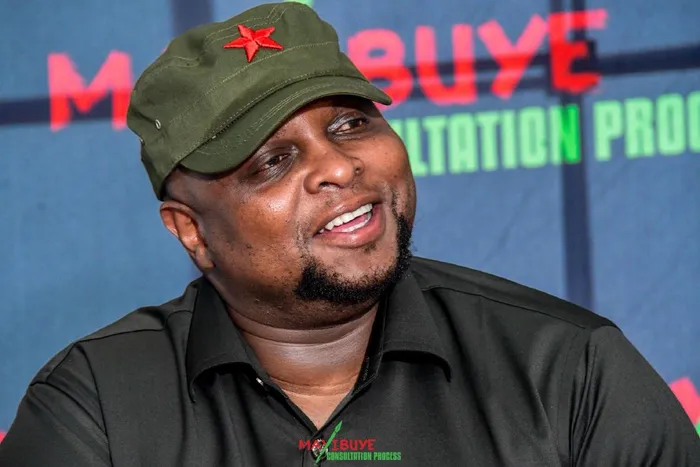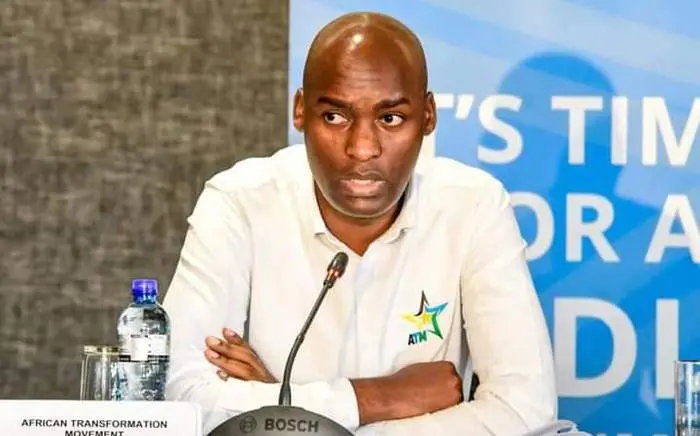
SOWETO, Monday 14 September 2026 — The African Transformation Movement has named its parliamentary leader and founding president Vuyolwethu Zungula as its candidate for mayor of Johannesburg, putting one of the party’s most prominent national figures into an increasingly crowded contest for control of South Africa’s largest city ahead of the 4 November local government elections.
The ATM confirmed Zungula’s candidacy while unveiling its Gauteng mayoral slate at an event in Soweto on Monday. The party also named candidates for Tshwane, Ekurhuleni, Emfuleni, Midvaal, Lesedi and the Sedibeng and West Rand district municipalities.
Zungula has served in the National Assembly since 2019 and remains the ATM’s parliamentary leader after handing the party presidency to Caesar Nongqunga in 2025. The ATM’s own leadership records identify him as its founding president and current parliamentary leader.
His move into the Johannesburg race is significant because it gives the smaller party a nationally recognised candidate in a metro where fragmentation could leave minor parties holding consequential council seats after November.
Zungula joins crowded Johannesburg field
Zungula will enter a mayoral contest that already includes several senior national or metropolitan political figures.
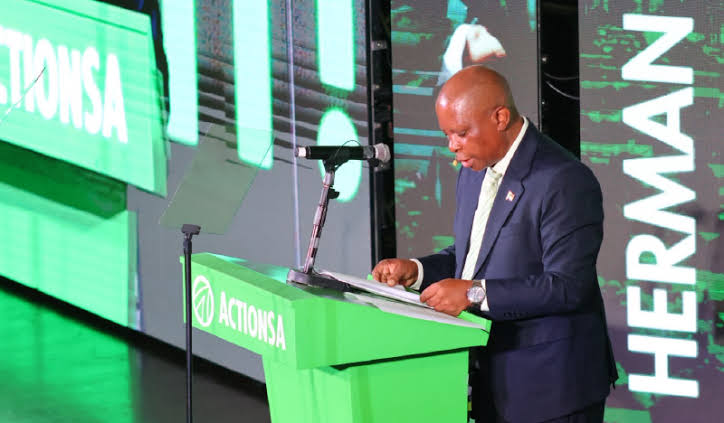
The DA is campaigning behind Helen Zille, ActionSA behind Herman Mashaba, and the EFF has selected former MP and medical doctor Tlaleng Mofokeng.
The ANC has shortlisted incumbent mayor Dada Morero, deputy mayor Loyiso Masuku and veteran Frank Chikane, although Chikane’s omission from the party’s submitted council candidate lists has complicated his potential route to the mayoralty.
The MK Party is campaigning behind Bongani Baloyi.
No mayor is elected directly by Johannesburg voters. Residents elect ward and proportional-representation councillors, and the new council then elects the executive mayor.
The importance of each party’s mayoral candidate therefore depends ultimately on its representation in the 270-seat council and the coalition arrangements that follow.
ATM also unveils Tshwane and Ekurhuleni candidates
The ATM’s Gauteng announcement extended beyond Johannesburg.
The party named Mncedi Ndzwanana for Tshwane and Velaphi Ernest Ndaba for Ekurhuleni.
It also selected Siyanda Afrika for Emfuleni, Dimakatso Pinkie Masopha for Midvaal, Pulane Mokhanedi for Lesedi, Khayalethu Goodman Nkenkwezi for Sedibeng District Municipality and Danny Molefi Thupane for the West Rand District Municipality.
The breadth of the slate signals that the ATM intends to use the Gauteng election not only to pursue representation in Johannesburg but to build a wider municipal footprint in the country’s most populous province.
Party makes service delivery central to campaign
ATM spokesperson Zama Ntshona said the party’s candidates had been deployed to provide accountable municipal leadership rather than simply secure political office.
The party identified water, sanitation, electricity reliability, deteriorating infrastructure, unemployment, crime and local economic development as priorities for its Gauteng campaign.
It also promised stronger protection of municipal finances and said local procurement should, within existing law, create more opportunities for township enterprises, small businesses, manufacturers, artisans and farmers.
Those pledges broadly correspond with the ATM’s published national platform, which emphasises anti-corruption measures, housing, reliable basic services and economic transformation.
The claims are election commitments and will ultimately depend on the powers, finances and council support available to any ATM-led administration.
Zungula’s parliamentary future becomes a question
Zungula’s candidacy also raises a question about his national parliamentary role.
The Citizen reported that the ATM had not immediately explained what would happen to his National Assembly position if he became a Johannesburg councillor.
He does not need to surrender his parliamentary seat merely to campaign as a mayoral candidate.
However, becoming Johannesburg mayor would first require him to serve as a municipal councillor, meaning he could not simultaneously remain a member of the National Assembly once he formally assumed incompatible municipal office.
The issue would become relevant only after the election and depending on the ATM’s result and any coalition negotiations.
ATM remains a small party but could matter in hung council
The ATM enters Johannesburg as a substantially smaller organisation than the ANC, DA, EFF, ActionSA or MK Party.
That makes an outright ATM administration unlikely on present evidence.
But the political significance of Zungula’s candidacy cannot be assessed solely by whether he becomes mayor.
Johannesburg has repeatedly demonstrated that relatively small parties can exercise significant leverage where larger parties lack a council majority.
A handful of seats can influence the election of the mayor and speaker, budget votes and motions of no confidence.
That creates an incentive for smaller parties to field recognisable candidates and establish their preferred governance programmes before coalition talks begin.
Existing ATM-MK relationship could become relevant
The ATM has also previously announced a political cooperation arrangement with the MK Party, including cooperation on political and parliamentary activities and support in certain electoral contests. The ATM’s own website records that agreement as having been concluded in 2025.
That relationship could become relevant after the Johannesburg election if no bloc secures a majority.
It should not, however, be treated as proof that the two parties will automatically form a municipal coalition.
Johannesburg coalition agreements would still depend on the actual seat distribution, negotiations between parties and the positions adopted after the vote.
Johannesburg coalition field increasingly defined before election
Parties are increasingly setting out both preferred candidates and coalition boundaries well before 4 November.
Zille has ruled out DA coalitions with the EFF and MK Party, while the MK Party’s Johannesburg candidate has separately ruled out cooperation with the DA.
The Freedom Front Plus has also excluded coalitions with the EFF, MK Party and PAC.
Those declarations mean smaller parties that have retained negotiating flexibility could become increasingly important if the city produces another hung council.
The ATM’s election performance will determine whether it enters that group with enough seats to exert meaningful leverage.
For now, Monday’s announcement ensures that the Johannesburg campaign has gained another nationally recognisable contender.
Zungula is moving from being primarily the ATM’s parliamentary face to the front of its campaign for South Africa’s largest municipality — a contest in which even parties far from an outright majority may help determine who ultimately occupies the mayor’s office.