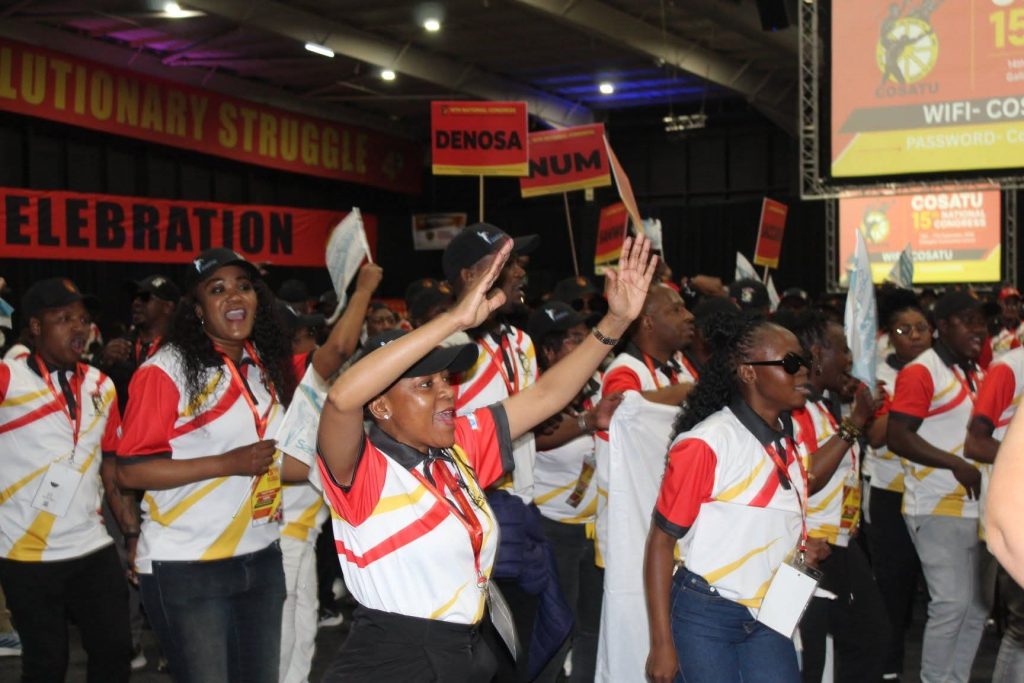
MIDRAND, Tuesday 15 September 2026 — Cosatu has directly blamed the ANC for worsening decay and corruption in many municipalities it governs, delivering one of the labour federation’s sharpest assessments of its alliance partner as delegates prepare to decide where Cosatu will place its support in the 4 November local government elections.
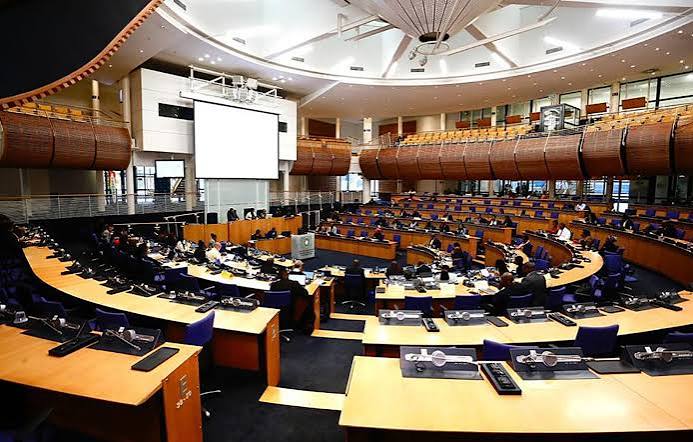
In its political report to Cosatu’s 15th national congress in Midrand, the federation said many ANC-led municipalities were either collapsing or approaching collapse, with failing water, electricity and road infrastructure and growing numbers unable to pay their employees.
The report is politically significant because Cosatu has traditionally deployed its organisers and approximately 1.5 million members behind ANC election campaigns.
This year, however, the federation enters an election in which another member of the Tripartite Alliance, the South African Communist Party, is contesting independently.
Cosatu has not yet made its final decision on which party it will support on 4 November.
Cosatu says ANC approach produced ‘more decay and corruption’
The federation compared the current state of municipalities with commitments made by the ANC before the 2021 local government elections.
It said the ANC’s 2021 manifesto contained proposals that could have improved failing municipalities but argued that approaches adopted after the election instead produced further weaknesses.
Cosatu’s assessment attributes substantial responsibility to the ANC for conditions in municipalities it governs.
That is the federation’s political assessment rather than an independent finding that every struggling municipality is failing because of ANC decisions.
Municipal performance varies substantially across the country and is also influenced by local revenue bases, infrastructure backlogs, administrative capacity, provincial and national government decisions and historical inequalities.
Only 39 municipalities achieved clean audits
The federation’s criticism comes against deteriorating municipal audit outcomes.
Only 39 of South Africa’s 257 municipalities received clean audits for 2024/25, down from 41 in the previous financial year.
Cosatu said governance failures were increasingly affecting workers directly, including municipalities struggling to meet salary obligations.
The federation also criticised what it described as politically protected tender networks that deliberately damage public infrastructure to generate opportunities for contractors.
That allegation is presented in Cosatu’s political report and should not be interpreted as a finding against any particular contractor, municipal official or ANC representative.
Federation also targets municipal funding model
Cosatu did not attribute the local-government crisis exclusively to corruption or political management.
Its report argues that South Africa’s municipal funding system entrenches inequality between wealthier metropolitan areas and poorer townships and rural municipalities.
The federation said historically disadvantaged municipalities frequently have smaller revenue bases while carrying substantial infrastructure and service-delivery responsibilities.
It also accused provincial and national government departments of worsening municipal financial problems by failing to pay amounts owed to councils.
Cosatu said billions of rand in outstanding government accounts weaken municipal revenue collection and make it more difficult for councils to enforce payment by businesses and residents.
Cosatu opposes Treasury withholding funds from failing councils
The federation also challenged National Treasury’s response to financially distressed municipalities.
Treasury temporarily withheld equitable-share payments from 69 municipalities across all nine provinces in July as part of efforts to enforce financial discipline.
The affected municipalities faced problems including unpaid bulk suppliers, unauthorised or wasteful expenditure, unpaid pension and tax deductions and unfunded budgets.
Cosatu backed the position of its municipal affiliate, the South African Municipal Workers’ Union, that withholding money amounted to collective punishment.
The federation acknowledged that municipal maladministration and failures of consequence management were genuine problems but argued that withholding funds ultimately harms municipal employees and residents already experiencing poor services.
Report creates difficult election choice for Cosatu
The criticism arrives at a particularly sensitive moment in relations between the ANC and organised labour.
Cosatu has historically been one of the ANC’s most important election campaign organisations.
Its affiliates provide organisers, volunteers and workplace networks capable of mobilising voters nationally.
But the SACP’s decision to contest the 2026 municipal elections independently has created an unprecedented choice for the federation.
Both the ANC and SACP are longstanding Cosatu alliance partners.
The congress is expected to determine whether the federation continues campaigning for the ANC, backs the SACP, allows individual affiliates greater freedom or adopts another arrangement.
Mantashe urges federation to resolve differences
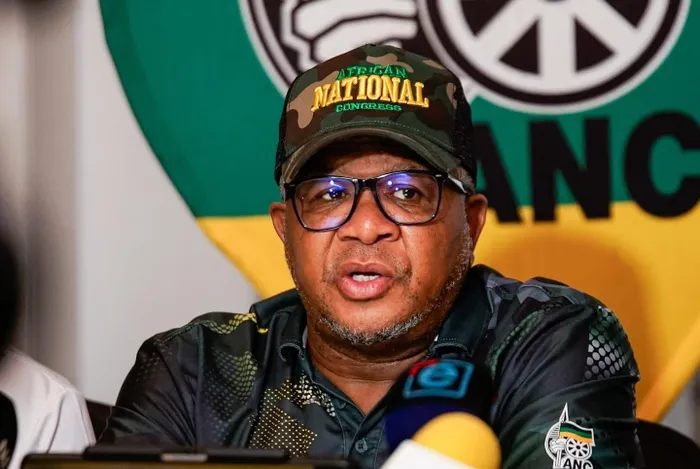
ANC national chairperson Gwede Mantashe addressed the congress amid those tensions.
He urged Cosatu leaders to manage internal disagreements and preserve organisational unity while the federation deals with its leadership contest and political differences.
The congress has already been disrupted by a dispute involving first deputy president Mike Shingange, whose reported suspension by Nehawu triggered a credentials impasse on Monday.
That leadership dispute is separate from the political report.
However, the two issues overlap politically because competing Cosatu factions differ over the federation’s relationship with the ANC and SACP.
Local government becomes test of alliance relationship
The timing of Cosatu’s criticism gives the report significance beyond an ordinary policy document.
The federation is delivering its assessment approximately seven weeks before voters elect new councils.
The ANC is defending municipal governments across the country while attempting to recover ground lost during the 2024 national election and subsequent local contests.
Several major metros — including Johannesburg, Tshwane, Ekurhuleni, eThekwini, Nelson Mandela Bay and Mangaung — could again produce councils without outright majorities.
Cosatu’s organisers could consequently be valuable to parties competing in closely fought wards.
Congress still has to decide who receives Cosatu support
The report does not itself constitute a decision to abandon the ANC.
Cosatu remains formally allied with the ANC and SACP, and the congress must still adopt resolutions governing its electoral strategy.
But its assessment establishes the political environment in which delegates will make that decision.
Rather than defending the ANC’s municipal record while debating whether to support another alliance partner, Cosatu’s own political report now explicitly identifies ANC governance as part of the local-government problem.
The next major development will be the congress resolution on the 4 November local government elections.
That decision will show whether Cosatu’s criticism remains an internal warning to its alliance partner or translates into a fundamental change in where South Africa’s largest labour federation directs its election machinery.