JOHANNESBURG, Tuesday 15 September 2026 — The Electoral Commission has told the Electoral Court that the ANC had formally submitted candidate lists for only 18 of South Africa’s 257 municipalities two days before the nomination deadline, new detail that strengthens the commission’s argument that the party’s disputed omissions resulted from its own late submission process rather than a failure of the IEC’s electronic system.
The figures are contained in the IEC’s answering papers opposing the ANC’s attempt to have candidates accepted in six municipalities after the 17:00 deadline on 28 August, according to fresh reporting on the court record.
The disclosure materially advances the candidate-list dispute because it provides a national picture of how much of the ANC’s submission process remained outstanding shortly before the deadline, rather than dealing only with the six municipalities now before the court.
The ANC maintains that the disputed candidates had been captured on the IEC system before the deadline and argues that this should constitute valid submission. The commission says capturing information and formally submitting a nomination are separate steps.
IEC says most ANC submissions came in final two days
According to the IEC’s court papers, the ANC had formally submitted lists for just 18 municipalities by 26 August, leaving submissions covering the overwhelming majority of municipalities in which it intended to contest to be completed during the final two days.
The commission is relying on that timeline to counter the ANC’s contention that problems with the Online Candidate Nomination System caused the disputed nominations to be excluded.
The IEC describes the ANC’s legal case as unsustainable and says the party is attempting to attribute its own administrative failures to the commission.
That is the IEC’s position before the Electoral Court and has not yet been accepted as a judicial finding.
ANC says candidates were already captured
The ANC’s case turns on a narrower legal question.
It argues that the names, information and supporting documentation for its disputed candidates were already recorded on the IEC platform before the deadline and that they should therefore be regarded as having been submitted in accordance with the Municipal Electoral Act.
The IEC says that interpretation would erase the distinction between saving or capturing a prospective candidate and completing the formal submission required by the election timetable.
The dispute affects ANC nominations in Sundays River Valley, Walter Sisulu, Ingquza Hill, Port St Johns, uMshwathi and Mangaung.
The consequences differ between municipalities because some disputed submissions involve proportional-representation lists, some ward candidates and others both.
181 ANC candidates directly affected
The ANC has said 181 of its candidates are affected by the six-municipality dispute, comprising 130 proportional-representation candidates and 51 ward candidates.
The party has asked the Electoral Court to declare that the nominations were timeously and lawfully submitted.
Its secretary-general, Fikile Mbalula, has said the ANC is not asking for an extension of the deadline or permission to nominate new people after it closed.
Instead, the party wants the court to recognise candidates whose information was already contained in the IEC’s system.
That distinction will be central to whether the court regards the case as an interpretation of what constitutes electronic submission or an attempt to circumvent a statutory election deadline.
Dispute potentially affects thousands beyond ANC
The legal implications extend beyond the governing party.
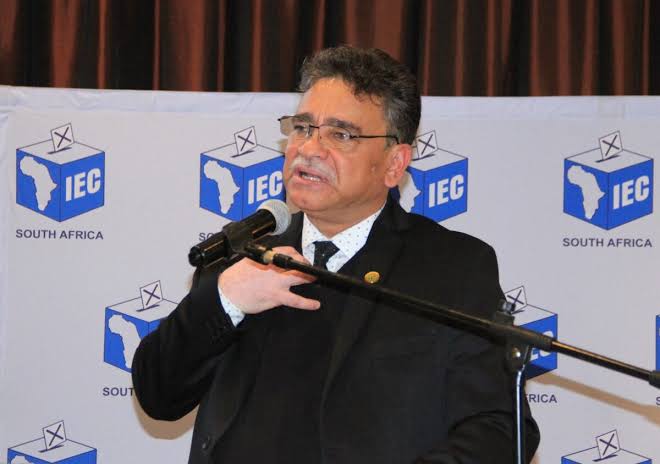
IEC chairperson Mosotho Moepya previously disclosed that 2,274 prospective candidates belonging to 45 parties had been captured on the electronic system but were not formally submitted by the deadline.
Of those, 480 were proportional-representation candidates and 1,794 were ward candidates.
The ANC has consequently argued that any favourable ruling on the legal meaning of submission should apply consistently to other parties whose candidates were in equivalent circumstances.
The commission’s concern is that accepting the ANC’s interpretation could therefore affect considerably more nominations than those identified in the party’s application.
ATM and DA oppose ANC challenge
The dispute has also expanded beyond the ANC and IEC.
The DA has filed papers seeking to intervene against the ANC application, while the African Transformation Movement formally applied on Monday to participate in support of the commission’s position.
The ATM argues that political parties were required to complete the formal submission step and that accepting candidates merely because information had been captured would undermine consistent application of the election timetable.
The DA similarly argues that parties which complied with the deadline should not be disadvantaged by post-deadline relief for competitors.
Neither intervention determines the outcome. The Electoral Court must decide both the procedural applications and the merits of the ANC’s case.
New timeline echoes ANC’s own internal problems
The IEC’s national submission timeline is also relevant because it broadly aligns with evidence that the ANC was still finalising and altering candidate lists immediately before the deadline.
An internal report by Mbalula, reported on Monday, acknowledged late submissions, last-minute amendments and administrative failures within the party’s own candidate process.
The report said the Eastern Cape’s final list reached the ANC’s national election operation at 16:31 on 28 August — 29 minutes before the IEC deadline.
It also raised concerns about changes made to some provincial lists.
Those are separate internal ANC issues and do not by themselves decide whether the IEC system operated correctly.
They do, however, provide context for the commission’s assertion that the party left a substantial portion of its national submission process until the closing stages.
Eastern Cape carries largest political risk
Four of the six municipalities directly involved in the court case are in the Eastern Cape: Sundays River Valley, Walter Sisulu, Ingquza Hill and Port St Johns.
The province has historically been one of the ANC’s strongest electoral territories, but opposition and smaller parties are campaigning aggressively ahead of 4 November.
The UDM, EFF, MK Party and SACP are among parties seeking to benefit from declining ANC support and internal divisions in the province.
Exclusion from proportional-representation contests would be particularly damaging because PR seats compensate parties according to their overall municipal support.
A party could therefore win substantial votes but receive fewer council seats than its electoral support would ordinarily justify if it has no valid PR list.
Mangaung dispute has metro-level consequences
The dispute also reaches Mangaung, one of South Africa’s eight metropolitan municipalities.
The ANC won a narrow outright majority there in 2021 but current polling suggests the November election could produce a hung council.
Recent Ipsos polling placed the DA on 36% and ANC on 32%, although polling is not a prediction of the final result and remains highly sensitive to turnout.
That makes the validity of the ANC’s Mangaung proportional-representation list potentially consequential to the eventual council arithmetic.
If the ANC’s disputed list remains excluded, the effect would not simply be an internal candidate problem; it could influence the distribution of council seats and therefore coalition possibilities.
Certified candidate lists are next major milestone
The court fight is taking place immediately before the IEC’s next important electoral milestone.
Certified candidate lists are due to be published on Wednesday 16 September, providing voters and parties with the formal record of candidates accepted for the election.
Any subsequent Electoral Court order could require adjustments if the ANC succeeds.
The new evidence does not resolve the legal question before the court.
But it significantly strengthens the factual context surrounding it: two days before nominations closed, according to the commission’s own electronic records, South Africa’s largest political party had completed formal candidate submissions for only a small fraction of the country’s municipalities.
The Electoral Court must now determine whether the candidates caught in the final rush were nevertheless legally submitted before the deadline — or whether being captured in the system without the final submission step left them outside the 4 November ballot.