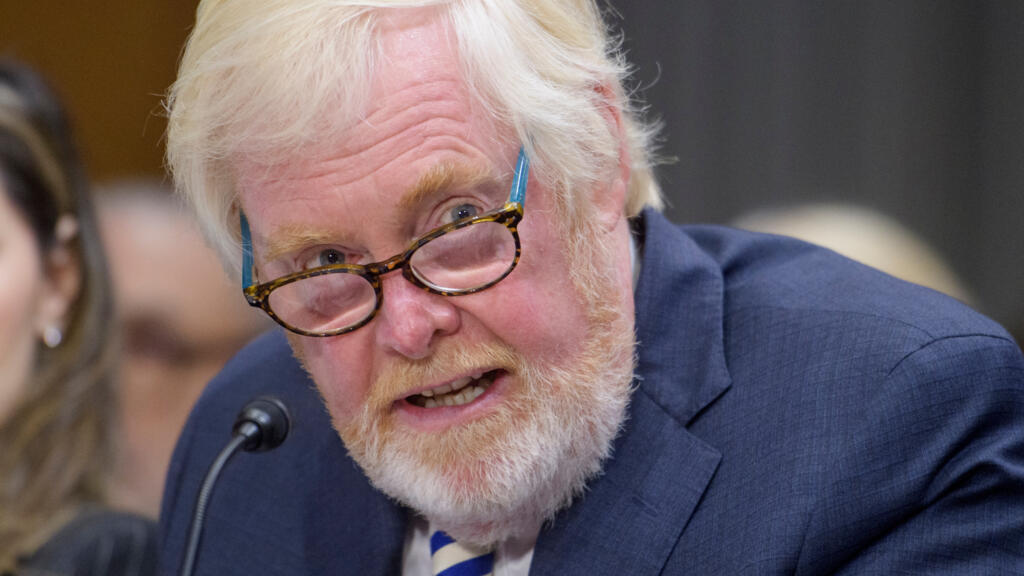
PRETORIA, Monday 21 September 2026 — United States ambassador Leo Brent Bozell III has suggested former president Thabo Mbeki could help break the diplomatic impasse between Pretoria and Washington, as both governments publicly acknowledged the extent of strains in their relationship on Monday.
Bozell told Business Day that Mbeki’s experience in international diplomacy and negotiations made him well placed to engage Washington at a senior level.
His remarks came on the same day International Relations Minister Ronald Lamola described South Africa-US relations as being at a “critically low point”.
No formal mediation role for Mbeki has been announced by either government, and there is no indication that the former president has agreed to undertake one.
Bozell identifies Mbeki as potential interlocutor
Bozell made the comments during an interview at the US embassy in Pretoria.
He described Mbeki as an experienced international statesman capable of navigating negotiations with Washington.
The ambassador’s comments represent a public suggestion rather than an official diplomatic appointment.
Mbeki served as South Africa’s president from 1999 until 2008 and has remained involved in mediation and diplomatic initiatives through the Thabo Mbeki Foundation and African Union processes.
Any role in the current South Africa-US dispute would require engagement with the sitting South African government.
Comments come hours after Lamola warning
Earlier on Monday, Lamola said South Africa should prepare for a worst-case scenario in its relationship with Washington.
He argued that Pretoria should not surrender sovereignty over Black Economic Empowerment, land reform, the Expropriation Act or South Africa’s independent foreign policy in response to US pressure.
Lamola said relations had reached a “critically low point” but maintained that South Africa remained open to diplomatic engagement.
His comments were made in the United States ahead of the United Nations General Assembly high-level week.
The Bozell interview therefore provides a US diplomatic response on the same day that Pretoria publicly adopted a more cautious assessment of the bilateral relationship.
Dispute covers domestic and foreign policy
Relations have deteriorated across several policy areas.
The US administration has criticised South Africa’s race-based economic policies and land-reform framework and has introduced visa restrictions targeting foreign officials associated with policies Washington considers racially discriminatory.
Pretoria disputes the US characterisation.
The South African government says its transformation and land-reform policies are constitutional measures aimed at addressing the continuing effects of apartheid-era racial exclusion.
Foreign policy has created additional disagreements.
South Africa has maintained its case against Israel before the International Court of Justice, continued engagement with Russia and China through BRICS and defended what it describes as a non-aligned foreign policy.
Washington has criticised aspects of those relationships and positions.
Mbeki remains outside current executive
Although Bozell identified Mbeki as a possible interlocutor, the former president does not hold office in President Cyril Ramaphosa’s administration.
South Africa’s foreign relations are constitutionally conducted by the sitting national executive.
Any involvement by Mbeki would therefore most likely require coordination with Ramaphosa’s government if it were to form part of an official diplomatic process.
No such arrangement had been announced by Monday evening.
Mbeki has also not publicly responded to Bozell’s suggestion in the sources reviewed.
Ambassador has had complicated relationship with ANC
Bozell’s tenure in Pretoria has itself reflected the strains between the two countries.
Earlier this year, the ANC declined meetings with him before Ramaphosa formally accepted his diplomatic credentials.
ANC deputy secretary-general Nomvula Mokonyane said at the time that the party would not recognise him as ambassador until the formal credentials process had been completed.
That issue was subsequently resolved through the normal diplomatic process.
The broader political disagreements between Washington and Pretoria have nevertheless continued.
Economic relationship remains substantial
Despite the diplomatic tensions, the United States remains an important trade and investment partner for South Africa.
That economic relationship has increased the significance of efforts by both governments to manage their political disagreements.
South African officials have repeatedly sought to separate disputes over individual policies from the broader commercial and diplomatic relationship.
The US administration has, however, increasingly linked trade, immigration and diplomatic measures to concerns about South African domestic and foreign policy.
No mediation process announced
Bozell’s comments therefore should not yet be interpreted as the beginning of formal mediation.
There has been no announcement from the Presidency, DIRCO, Mbeki or Washington establishing such a process.
His intervention instead identifies one possible channel through which the diplomatic relationship could be addressed.
Whether Pretoria accepts that approach remains to be seen.
For now, the public positions on Monday illustrate the distance between the two governments: Lamola has warned South Africa to prepare for further deterioration while refusing concessions on matters Pretoria considers sovereign, while the US ambassador has publicly suggested that a former South African president could help reopen higher-level negotiations.
The next diplomatic test comes during UN General Assembly high-level week in New York, where South African officials are expected to hold bilateral meetings alongside the multilateral programme.