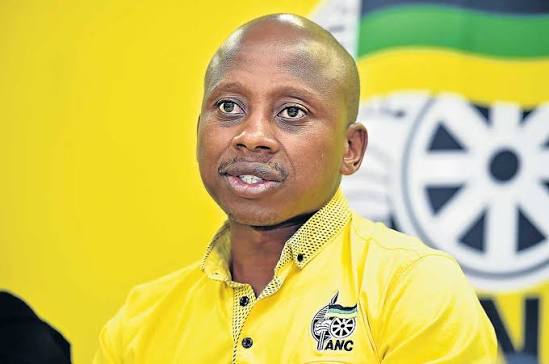
GQEBERHA, Friday 25 September 2026 — ANC National Executive Committee member Andile Lungisa says the party has resolved an internal dispute over his removal from its Nelson Mandela Bay proportional-representation candidate list, potentially ending a court battle that exposed divisions in the party’s candidate-selection process in one of South Africa’s most competitive metros.
Lungisa said the ANC’s National Working Committee had decided that his position would be restored and that national chairperson Gwede Mantashe had backed recognition of the choices made by the party’s Nelson Mandela Bay structures.
His comments follow an urgent High Court application in which he accused ANC secretary-general Fikile Mbalula of personally ordering his removal from a list previously approved through the party’s candidate-selection structures.
The apparent settlement is politically significant because Lungisa was the highest-ranked candidate emerging from the ANC’s Nelson Mandela Bay nomination process and had been publicly shortlisted for the mayoralty.
It does not, however, mean his name has now been inserted into the Electoral Commission’s certified candidate list for the 4 November election.
Lungisa says NWC has resolved dispute
Speaking in Gqeberha, Lungisa said the NWC had intervened and that his name would ultimately return to the party’s PR list.
“The national chair spoke on that — the will of the people, or structures of Nelson Mandela — my name will be brought back,” Lungisa said.
He indicated that the mechanism would involve opportunities available to political parties to supplement proportional-representation lists after election results have been declared and before councillors take office.
That distinction is important.
The IEC has already certified the candidates who will contest the election, and Lungisa’s comments do not establish that the Commission has reopened the ANC’s pre-election candidate submission.
Rather, the ANC appears to have resolved how Lungisa will be treated internally if a post-election vacancy or statutory supplementation mechanism permits his inclusion.
Court case targeted Mbalula’s alleged intervention
Lungisa approached the Gauteng High Court in Johannesburg earlier this month after discovering that his name was absent from the ANC’s submitted Nelson Mandela Bay list.
His founding papers alleged that his candidacy had passed through the party’s branch nominations, provincial list conference and national structures before his name was removed.
Lungisa alleged that Mbalula personally instructed officials compiling the submission to remove him.
According to Lungisa’s affidavit, Mbalula believed his candidacy would cause unspecified “problems” for the secretary-general.
Those assertions are allegations made by Lungisa in court papers and have not been established by a court.
Mbalula previously said he would deal with the dispute through the legal process.
Lungisa argued ANC rules were breached
At the centre of Lungisa’s case was the ANC’s own candidate-selection procedure.
He argued that changes to an approved list could only be made on serious grounds and with the level of support prescribed by the party’s rules.
According to his court papers, his name remained on the candidate list when the ANC NEC considered and approved candidates in late August.
He therefore sought a declaration that his removal was unlawful.
Importantly, Lungisa subsequently clarified that the relief he sought did not necessarily require the IEC to alter the already-certified ballot list.
The declaration would instead preserve his ranking for the ANC’s later supplementary-list process.
That helps explain how an internal political settlement remains possible despite the election timetable having moved beyond the ordinary nomination stage.
Lungisa topped local nomination process
Lungisa’s exclusion attracted particular attention because he had emerged strongly from the ANC’s internal Nelson Mandela Bay process.
His court papers say he was nominated by branches, ranked first during the provincial list process and subsequently shortlisted as one of the ANC’s possible mayoral candidates for the metro.
ANC president Cyril Ramaphosa had publicly identified him among the shortlisted mayoral contenders.
The party had not yet completed its final mayoral selection when the candidate-list dispute emerged.
South African voters do not directly elect executive mayors.
Residents elect ward and PR councillors, and the newly constituted municipal council then elects a mayor from among its members.
That means a politician ultimately seeking the mayoralty must first be able to enter the council.
Settlement could avert damaging ANC court fight
If the internal agreement is implemented and Lungisa withdraws or settles his application, the ANC could avoid a High Court hearing over allegations concerning its own secretary-general.
The matter had been set down for 26 September.
A contested hearing could have required the party to respond directly to Lungisa’s allegation that Mbalula overrode a candidate list approved by ANC structures.
The apparent NWC intervention instead provides a route to resolving the dispute politically.
Whether the pending court proceedings are formally withdrawn or settled will still need to be confirmed.
Separate from ANC’s 181-candidate IEC dispute
Lungisa’s case should not be confused with the ANC’s larger dispute with the Electoral Commission of South Africa over 181 excluded candidates.
The Electoral Court dismissed the ANC’s challenge over those candidates on 15 September.
That dispute concerns the party’s contention that information entered onto the IEC’s electronic nomination platform before the deadline should be regarded as submitted even though the final submission process had not been completed.
The IEC rejected the ANC’s argument that a system problem prevented completion.
The ANC subsequently announced that it would pursue further legal remedies.
Lungisa’s case is different because he alleges that his name was deliberately removed during the ANC’s internal process rather than lost through the disputed IEC submission process.
Nelson Mandela Bay remains a key metro contest
The resolution matters beyond the ANC’s internal politics because Nelson Mandela Bay is one of the municipalities where relatively small shifts in support could determine who governs after 4 November.
The metro has experienced repeated coalition changes since the ANC lost its outright majority in 2016.
The ANC regained control through coalition arrangements during the current term but enters the election facing competition from the DA, EFF, MK Party and other organisations.
The SACP is also contesting independently, with former Nelson Mandela Bay mayor Zanoxolo Wayile among its prominent candidates.
A dispute involving one of the ANC’s most senior and locally recognised figures therefore carried direct implications for the party’s organisation and campaign.
Post-election mechanism now becomes crucial
Lungisa’s announcement resolves one question but creates another.
The ANC appears to have agreed internally that his position should be recognised.
The remaining issue is how and when that decision can legally translate into council membership.
Parties cannot simply alter certified candidate lists at will after the nomination deadline.
The Municipal Structures Act does, however, provide mechanisms for parties to supplement PR lists in specified circumstances after an election.
Lungisa himself has pointed to those processes as the route through which his position can be restored.
The next material developments will therefore be whether his High Court application is formally withdrawn or settled, whether the ANC confirms the NWC decision publicly and, after 4 November, whether Lungisa is lawfully added through the applicable supplementary-list procedure.
Until then, the precise position is narrower than saying he has been reinstated as an IEC-certified candidate.
The ANC has, according to Lungisa, resolved its internal dispute in his favour.
Whether that ultimately puts him back into Nelson Mandela Bay council — and potentially into contention for the mayoralty — will depend on the post-election process.