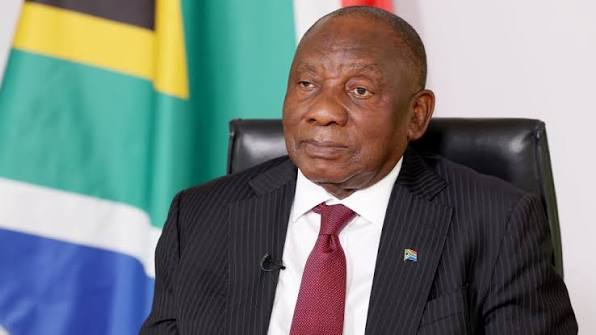
PRETORIA, Tuesday 29 September 2026 — President Cyril Ramaphosa has ordered a national recovery operation for unresolved serious crimes against women and children, women’s safety audits in every municipality and the development of new measures targeting alcohol-related violence, setting 60- and 90-day deadlines as part of an intensified government response to gender-based violence and femicide.
Addressing the nation from the Union Buildings on Tuesday evening, Ramaphosa announced a four-part intervention covering stalled criminal cases, forensic backlogs, unsafe public spaces and alcohol-related violence.
The measures follow renewed concern over the killings of women in and around Ekurhuleni, where police have increased their presence and established a multidisciplinary investigation into the deaths.
Ramaphosa said arrests had been made and additional persons of interest identified, but cautioned that there was no indication at this stage that one person was responsible for the killings.
The President acknowledged that government’s existing response to violence against women had not been sufficient.
“What we have done is not enough. We need to do much more,” Ramaphosa said, according to contemporaneous reporting of the address.
His new directives introduce specific responsibilities and deadlines, alongside a requirement for government to report publicly on implementation.
GBVF classified as national disaster last year
Ramaphosa said gender-based violence and femicide was classified as a national disaster in November 2025, after which government prioritised resources and strengthened coordination across the state.
The Presidency has previously confirmed that the national-disaster classification was followed by Cabinet approval of an action plan and commitments to strengthen policing, prosecutions, courts and survivor support.
Ramaphosa said the National Council on Gender-Based Violence and Femicide was now operational.
The statutory council’s members took office from 1 August 2026 and it is mandated to provide strategic leadership and coordinate the country’s multi-sectoral response to GBVF at national, provincial, local and community level.
Government is also expanding sexual offences courts, strengthening the processing of DNA and other forensic evidence and continuing specialised GBV-related training for police officers.
Police stations have GBV desks, Ramaphosa said, and these interventions will be strengthened.
But the President acknowledged that the existence of institutions and programmes meant little if they failed women when they needed them.
Women should not be turned away from police stations when attempting to report crimes, he said, while those seeking protection orders should not be sent from office to office.
Protection orders could not be allowed to become merely pieces of paper, while criminal cases should not collapse because dockets had been lost.
1. National recovery operation for stalled cases
The first major intervention is a national case-recovery operation targeting serious unresolved cases involving women and children.
The operation will bring together the relevant criminal justice institutions, including the police, justice authorities and National Prosecuting Authority, to identify cases that have stalled and establish what is required to move them forward.
Within 60 days, an audit must identify unresolved cases and establish the extent and age of the backlog.
Within 90 days, individual recovery plans must be in place for priority cases and cases that have stalled.
IOL’s contemporaneous reporting of the address confirms that the operation will focus on unresolved serious offences including murders, attempted murders and rape cases involving women and children.
The directive is intended to move beyond simply determining how many cases are outstanding by requiring authorities to develop individual plans for priority matters that are not progressing.
It comes amid continuing scrutiny of how cases involving violence against women move through the criminal justice system and whether delays in investigations, forensic processing and prosecution contribute to cases collapsing or remaining unresolved.
2. Funded forensic backlog plan due within 60 days
Ramaphosa’s second directive targets forensic delays.
The President directed the Minister of Police, National Commissioner of Police and relevant forensic authorities to present a funded plan within 60 days to reduce forensic backlogs and establish clear turnaround standards for priority GBVF cases.
EWN independently confirmed the directive following the address.
DNA and other forensic evidence can be critical to identifying suspects, linking crimes and enabling prosecutors to proceed with cases.
The requirement for a funded plan means authorities must go beyond identifying existing problems and set out the resources and operational measures required to address them.
The forensic intervention will also operate alongside the national case-recovery process, as delayed forensic evidence can contribute to investigations and prosecutions stalling.
3. Every municipality ordered to conduct women’s safety audit
The third intervention extends government’s response directly into local government.
Every municipality in South Africa must begin a women’s safety audit to identify high-risk areas and environmental conditions that could make public spaces unsafe.
Within 60 days, the audits must identify hazards including broken streetlights, overgrown public spaces, abandoned or unsafe buildings, unsafe transport routes, poorly secured parks and cemeteries and other conditions that expose women to risk.
IOL independently confirmed the municipal requirement and the categories of hazards that municipalities have been instructed to identify.
Municipalities will then face a further deadline.
Within 90 days of the audit, the most urgent hazards must either have been addressed or incorporated into funded plans containing clear completion dates.
Progress will be published so communities can see what has been identified and what authorities have subsequently repaired or addressed.
The requirement introduces a measurable local-government component to the national GBVF response.
Municipalities do not control the South African Police Service, criminal prosecutions or courts, but are responsible for significant parts of the public environment, including street lighting, municipal parks and public spaces, aspects of transport infrastructure, problem properties and municipal law enforcement.
The audits therefore place direct responsibility on councils to identify environmental conditions that contribute to unsafe public spaces and demonstrate what they are doing to address them.
4. Cabinet to receive alcohol-related violence proposals within 60 days
Ramaphosa’s fourth directive focuses on alcohol-related violence.
Provincial and municipal structures have been instructed to intensify enforcement of existing liquor laws and by-laws, particularly against unlicensed outlets and establishments trading outside their permitted hours.
Government will simultaneously examine possible legislative interventions.
The Minister of Trade, Industry and Competition, working with the ministers responsible for Health, Social Development, Police and Cooperative Governance, must submit a coordinated legislative package to Cabinet within 60 days aimed at reducing alcohol-related violence.
The directive goes beyond enforcement of existing liquor laws by requiring several Cabinet portfolios to jointly develop possible legislative measures.
The details of those proposals have not yet been announced.
Any legislation ultimately approved by Cabinet would still have to follow the applicable constitutional and parliamentary processes before becoming law.
Additional resources to be allocated through medium-term budget
The programme is also expected to receive additional government funding.
Ramaphosa said Finance Minister Enoch Godongwana would allocate further resources when he presents the Medium Term Budget Policy Statement.
The precise amount and distribution of that funding have not yet been announced.
The medium-term budget will therefore provide an early indication of the resources government intends committing to implementation.
Ramaphosa said resources had already been prioritised across government since GBVF was classified as a national disaster.
Government’s response includes the National Council on Gender-Based Violence and Femicide, specialised sexual offences courts, GBV desks at police stations, forensic services and continuing specialised training for police officers.
Tuesday’s directives add measurable deadlines to that institutional framework.
Visible policing increased in Ekurhuleni
The national intervention follows a series of killings of women in and around Ekurhuleni that have prompted an intensified police response.
Ramaphosa said visible policing had already been increased in the metro.
A multidisciplinary specialised investigation is examining the deaths, while police are looking for possible connections between individual cases.
Authorities have cautioned against assuming that the killings are the work of a single perpetrator.
Current police reporting similarly says investigators have not established that the deaths are linked.
Ramaphosa nevertheless stressed that policing alone could not resolve South Africa’s wider crisis of violence against women.
“We cannot police our way out of gender-based violence alone,” he said.
The President also appealed to members of the public to immediately report people who go missing.
There is no requirement to wait 24 hours before reporting a missing person to police, he said, stressing that the first hours after a disappearance can be important to an investigation.
First implementation report due within 90 days
The measures announced on Tuesday will be subject to ongoing monitoring rather than ending with the initial deadlines.
Ramaphosa said the Inter-Ministerial Committee on Gender-Based Violence and Femicide and the National Council on Gender-Based Violence and Femicide would monitor implementation.
They will issue reports every quarter, with the first report due within 90 days.
That creates a formal point at which government will have to account for progress on the directives.
By the time the first report is produced, the initial 60-day deadlines should already have passed.
The report should therefore provide an early indication of whether departments, prosecutors, police, forensic authorities and municipalities have carried out the responsibilities assigned to them.
Ramaphosa characterised the measures as obligations accompanied by deadlines and reporting requirements rather than general expressions of intent.
The quarterly reporting mechanism means implementation can continue to be measured after the initial 90-day period.
Next 90 days will test implementation
The first significant implementation deadline arrives in 60 days.
By then, government expects an audit of unresolved serious cases involving women and children to have established the extent and age of the backlog.
Police and forensic authorities must have produced a funded plan for reducing forensic backlogs and established clear turnaround standards.
Municipalities must have identified high-risk public spaces through their women’s safety audits.
The ministers responsible for Trade, Industry and Competition, Health, Social Development, Police and Cooperative Governance must also have produced their coordinated legislative package addressing alcohol-related violence for consideration by Cabinet.
The following 30 days bring further requirements.
Individual recovery plans must be in place for priority stalled cases, while the Inter-Ministerial Committee and National Council must produce their first quarterly implementation report.
Municipalities face a separate 90-day period following their audits in which their most urgent identified hazards must either be addressed or incorporated into funded plans with clear completion dates.
Those deadlines create identifiable benchmarks against which Parliament, civil society, communities and the public will be able to assess government’s implementation.
The next test will therefore be whether the institutions assigned responsibility under Tuesday’s directives meet those deadlines — and whether the quarterly reports show measurable progress in cases, forensic processing and the safety of public spaces.