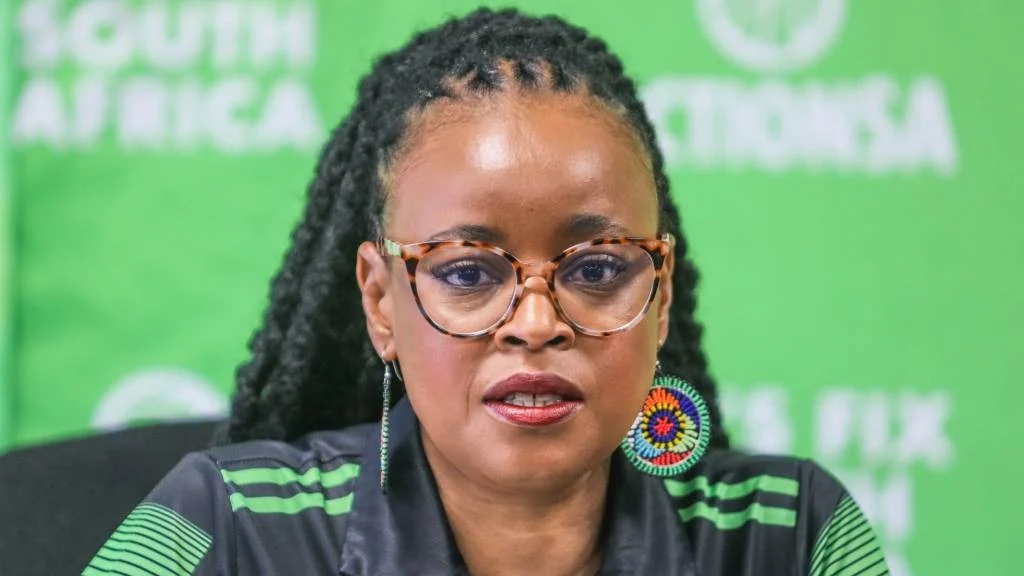
JOHANNESBURG, Thursday 22 October 2026 — ActionSA will contest 78 municipalities in South Africa’s 4 November local government elections, according to a correction issued by party national spokesperson and Member of Parliament Lerato Ngobeni on Saturday, 24 October.
The corrected figure replaces an earlier report that ActionSA would contest 42 municipalities, which had suggested the party was narrowing its electoral ambitions from the almost 60 municipalities it previously indicated it would target.
Ngobeni provided the clarification in a response on X to Mzansi Political Safari, accompanied by a provincial breakdown listing 78 municipalities across all nine provinces.
The correction means the party’s stated municipal footprint exceeds its earlier target, although ActionSA continues to emphasise the importance of established political structures and effective resource allocation.
Party clarifies electoral footprint
In August, ActionSA announced plans to contest just under 60 municipalities and more than 2,000 wards.
An interview with Ngobeni published by Polity on Thursday, 22 October, had indicated that the party would contest 42 municipalities.
Ngobeni subsequently corrected the figure to 78 municipalities nationally.
The revised total represents a substantially broader municipal footprint than in the 2021 local government elections, when ActionSA contested six municipalities.
The party’s participation now extends across all nine provinces, including metropolitan municipalities and smaller local councils.
According to the list provided by Ngobeni, ActionSA will contest 18 municipalities in North West, 13 in Mpumalanga, 12 in KwaZulu-Natal, 11 in Limpopo and nine in Gauteng.
The party also lists six municipalities in the Free State, four each in the Eastern Cape and Western Cape, and one in the Northern Cape.
The provincial figures total 78 municipalities.
Campaign strategy shaped by previous elections
Ngobeni said ActionSA’s electoral planning had been influenced by lessons from the 2024 national and provincial elections.
She acknowledged that the party had previously spread its resources too widely and needed to focus on areas where it could sustain effective campaigning.
The party’s preparations included strategic engagement with provincial chairpersons.
According to Ngobeni, the party considered the strength of local structures, campaign capacity and its ability to deploy party agents during voting and counting.
The corrected municipal total does not change the party’s stated emphasis on organisational capacity, although it substantially changes the reported scale of its participation.
Gauteng remains central to campaign
ActionSA will contest all three Gauteng metropolitan municipalities: Johannesburg, Tshwane and Ekurhuleni.
Its Gauteng list also includes Mogale City, Emfuleni, Merafong City, Rand West City, Lesedi and Midvaal.
Outside Gauteng, the party’s corrected list includes municipalities in North West, Limpopo, KwaZulu-Natal, Mpumalanga and the remaining provinces.
Among the metropolitan municipalities identified are eThekwini, Nelson Mandela Bay, Buffalo City and Cape Town.
Ngobeni previously identified Limpopo as an area where ActionSA believes its support has grown.
The party’s provincial leadership had motivated for participation in specific municipalities based on assessments of local support and organisational capacity.
ActionSA’s reported participation in 78 municipalities remains more geographically selective than that of parties contesting every municipality.
The Democratic Alliance and Economic Freedom Fighters are contesting all 257 municipalities, according to the Electoral Commission’s certified candidate information.
Coalition conditions outlined
Ngobeni also provided details about ActionSA’s approach to coalition negotiations after the elections.
She identified three central requirements for prospective coalition partners.
These concern equitable service delivery, action against corruption and the enforcement of immigration laws.
The party says municipal services must be provided to residents regardless of their political affiliations.
It also wants coalition partners to support stronger accountability measures for public officials implicated in corruption or misconduct.
Ngobeni said ActionSA would require partners to support lawful measures addressing undocumented immigration.
The party has not announced final coalition agreements for the councils that will be constituted after the elections.
Party backs professional municipal appointments
ActionSA also intends to prioritise professional qualifications and performance when selecting municipal officials.
Ngobeni said the party’s candidate-selection approach allows it to recruit suitably qualified individuals who are not necessarily members of ActionSA.
She cited the appointments of the late David Tembe as Johannesburg’s public safety MMC and Nasiphi Moya, who subsequently became Tshwane’s executive mayor, as examples of the party’s approach.
ActionSA wants municipal officeholders and officials to be subject to measurable performance agreements.
Ngobeni said officials who fail to meet agreed targets should face appropriate accountability processes.
Tshwane water crisis raises accountability questions
The spokesperson also addressed the contaminated-water crisis affecting Bronkhorstspruit and surrounding communities in Tshwane.
She confirmed that the mayor’s office had instituted an internal investigation into failures involving the procurement of chlorine for the Bronkhorstspruit Water Treatment Works.
The municipality previously acknowledged that the treatment plant had supplied water without chlorination between 24 September and 14 October.
The incident has been linked to hundreds of reported gastrointestinal illnesses.
Tshwane Mayor Nasiphi Moya has accepted responsibility for the municipality’s failures and indicated that action against responsible officials is being pursued.
The internal investigation had not produced a publicly confirmed final disciplinary finding at the time of the original report.
Attention turns to post-election councils
ActionSA’s corrected participation figure of 78 municipalities places its 2026 electoral campaign on a substantially broader footing than previously reported.
The party’s results will determine whether its expanded electoral footprint compared with 2021 translates into increased council representation.
Its coalition requirements could also influence negotiations in municipalities where no party secures an outright majority.
The composition of the new councils after 4 November will determine ActionSA’s opportunities to participate in municipal governments and implement its stated priorities.
Correction — 24 October 2026: An earlier version of this article reported that ActionSA would contest 42 municipalities in the 2026 local government elections, based on an interview published on 22 October. ActionSA national spokesperson Lerato Ngobeni subsequently clarified that the correct figure is 78 municipalities nationally and supplied a provincial breakdown. The headline, introduction, electoral-footprint details and conclusion have been updated accordingly.