CAPE TOWN, Thursday 22 October 2026 — The People’s Movement for Change (PMC), led by former ANC Western Cape leader Marius Fransman, has announced that it will contest 32 municipalities and seven district municipalities in the 4 November local government elections.
Fransman confirmed the party’s electoral plans during its manifesto launch in Cape Town on Thursday.
The party is positioning itself as a potential coalition partner and hopes to become the third-largest political party in the City of Cape Town.
PMC outlines municipal election footprint
Fransman said the PMC would contest elections across 32 municipalities and seven district municipalities.
The announcement establishes the scale of the party’s intended participation in the municipal elections.
The PMC is seeking to build support among working-class and lower-income communities, particularly in the Western Cape.
The party has also indicated that it wants to represent middle-income households facing increasing financial pressure.
Its electoral performance will determine whether it secures sufficient council representation to influence municipal governance.
Party targets coalition role
Fransman said the PMC was preparing for an election in which coalition governments could become increasingly common.
The party intends to assess potential coalition partners according to their willingness to support policies benefiting poorer and middle-income residents.
Fransman argued that coalition agreements should be based on shared governance priorities rather than simply distributing political positions.
The PMC has not announced a formal coalition agreement with another party.
Any negotiations would depend on the election results and the composition of the incoming municipal councils.
Cape Town mayoral candidate remains vacant
The PMC will contest the Cape Town elections without a named mayoral candidate following the withdrawal of Deon “DJ Ready D” Daniels.
Daniels withdrew from the mayoral race and resigned from the party in September, citing professional commitments involving international clients.
His withdrawal was previously reported by Mzansi Political Safari.
The PMC has not announced a replacement mayoral candidate.
However, the absence of a named mayoral candidate does not prevent the party from contesting municipal council seats.
Under South Africa’s local government system, executive mayors are elected by councillors rather than directly by voters.
Party identifies economic priorities
During Thursday’s launch, Fransman identified alternative energy, fishing and financial services among the sectors the PMC wants to develop in the Western Cape.
The party argues that economic development should be linked to employment creation and improvements in living conditions.
Its broader political programme emphasises community participation and support for economically marginalised residents.
Fransman has previously advocated greater public investment in infrastructure and municipal services.
The practical implementation of those proposals would depend on the responsibilities, finances and powers of any municipality in which the party participates in government.
Coalition arithmetic could determine influence
Cape Town is currently governed by the Democratic Alliance (DA), which is seeking another term in office.
The PMC will compete against established parties and several newer political formations seeking representation in the metropolitan council.
Fransman’s ambition to become the city’s third-largest party remains an electoral objective rather than an established projection.
Even without winning the municipality outright, smaller parties could influence the selection of political office-bearers if the election produces a council without an outright majority.
The PMC’s immediate challenge will be converting its announced electoral footprint into council seats.
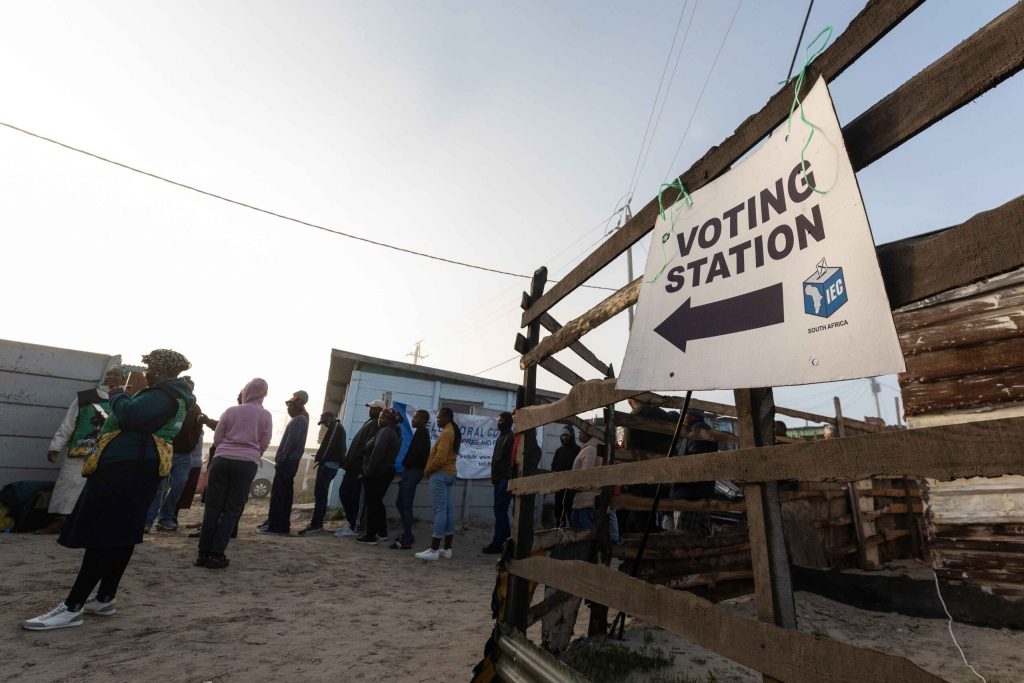
The extent of its influence will become clearer after the IEC declares the results of the 4 November elections.