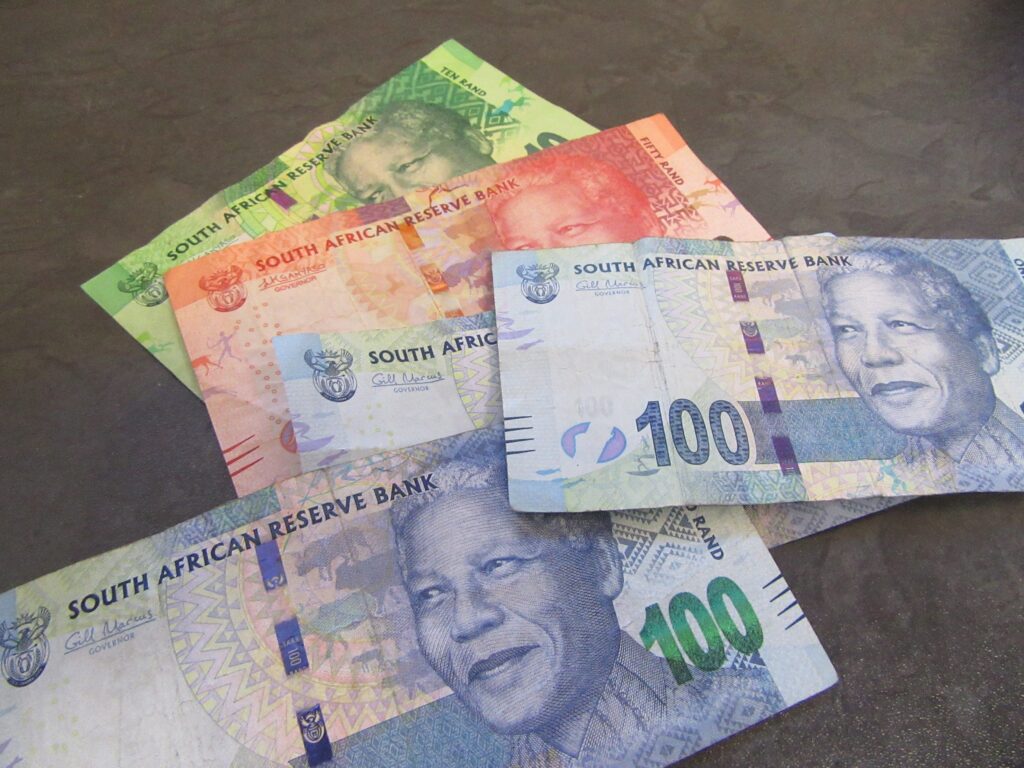
JOHANNESBURG, Friday 20 November 2026 — The South African rand touched a one-year low in early trading on Friday as uncertainty over coalition negotiations following the local government elections added to pressure from a stronger US dollar and concerns about domestic inflation.
The currency traded at approximately R17.56 to the dollar at 07:40 South African time, according to Reuters, after ending Thursday at its weakest closing level in more than a year.
Business Day reported that the rand weakened by 1.06% on Thursday to close around R17.45 against the dollar, its weakest closing level since November 2025.
The latest decline comes as the African National Congress (ANC), ActionSA, Economic Freedom Fighters (EFF) and uMkhonto weSizwe (MK) Party negotiate possible governing arrangements in Johannesburg, Tshwane and Ekurhuleni.
The proposed coalition arrangements could exclude the Democratic Alliance (DA) from governing all three Gauteng metropolitan municipalities despite the party receiving the largest share of votes in each.
Investors are monitoring whether the negotiations could have broader consequences for political stability, particularly the relationship between the ANC and DA in the national Government of National Unity (GNU).
The Bureau for Economic Research warned in its weekly review that excluding the DA from local government could heighten tensions within the national coalition and affect investor confidence.
However, the currency’s weakness cannot be attributed solely to domestic political developments.
The US dollar has strengthened significantly in recent weeks, approaching a 19-month high as international investors respond to global economic uncertainty and expectations about American interest rates.
Domestic monetary policy has also contributed to market caution.
On Thursday, the South African Reserve Bank kept its benchmark policy rate unchanged at 7.25%, following a closely divided Monetary Policy Committee decision.
Four committee members supported keeping rates unchanged, while three favoured a 25-basis-point increase.
The split highlighted continuing concerns about inflation, which reached 5.2% in October, above the Reserve Bank’s 3% target.
Reserve Bank Governor Lesetja Kganyago indicated that monetary policy remained sufficiently restrictive for the time being, while leaving open the possibility of further action should inflation risks increase.
The weakening rand could add to imported inflation pressures if the depreciation persists, particularly through goods and commodities priced in foreign currencies.
The political uncertainty follows the 4 November municipal elections, which left several major metropolitan councils without outright governing majorities.
In Johannesburg, the DA received approximately 35% of the vote, followed by the ANC with 20% and ActionSA with 16%.
ActionSA leader Herman Mashaba has emerged as a potential mayoral candidate under the proposed coalition framework, while the parties continue negotiating the distribution of executive and oversight positions.
No final governing agreement has been confirmed.
The currency’s direction will continue to depend on both international market conditions and domestic developments, including the outcome of municipal coalition negotiations and expectations about future interest-rate decisions.