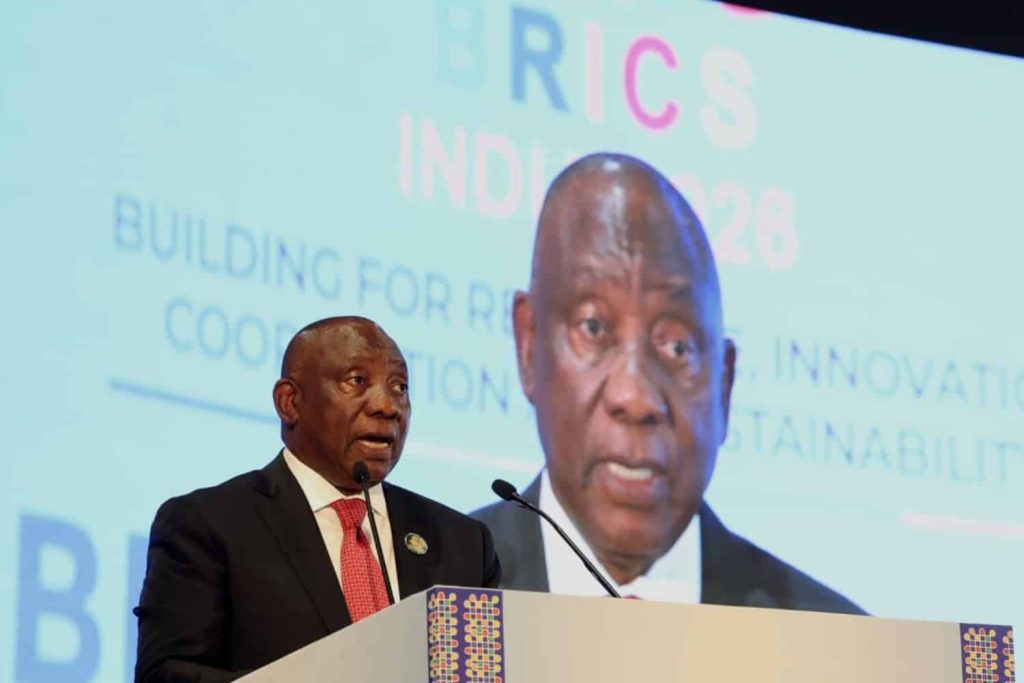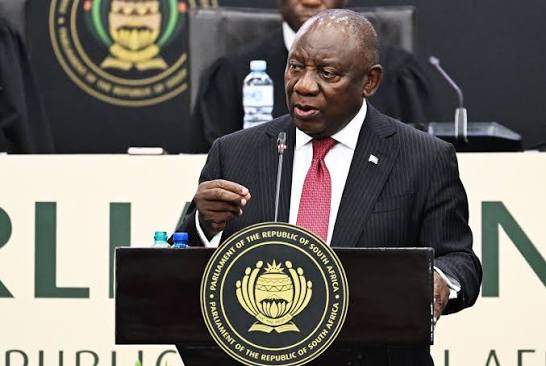
CAPE TOWN, Tuesday 25 August 2026 — President Cyril Ramaphosa has told Parliament that the Southern African Development Community will support Madagascar’s return to constitutional and democratic government but will not determine how the country’s political transition should unfold.
Answering questions in the National Assembly on Tuesday, Ramaphosa said responsibility for rebuilding Madagascar’s democratic order ultimately rests with the Malagasy people.
The comments come as South Africa holds the rotating chairship of SADC and follows a military takeover in Madagascar in October 2025 led by Colonel Michael Randrianirina.
Ramaphosa said SADC’s role was to encourage peace, reconciliation and a political process in which the country’s citizens can express their views through transparent and democratic mechanisms.
He said the regional organisation did not intend to interfere in Madagascar’s internal political process.
The Presidency had identified Madagascar as one of the foreign-policy issues Ramaphosa would address during Tuesday’s parliamentary question session, including South Africa’s contribution to efforts to restore constitutional and democratic order.
SADC has been formally engaged with the political crisis for several months.
At an extraordinary summit in June, regional leaders agreed that SADC would remain involved in efforts to support Madagascar’s transition and endorsed an inclusive, nationally led political process.
That summit also called for the release of political prisoners, an end to arbitrary arrests and measures allowing political exiles to return.
SADC said those steps were necessary to create conditions for credible national dialogue and reconciliation.
Ramaphosa told Parliament that the regional bloc’s objective remained a peaceful and democratic outcome rather than imposing a political settlement from outside Madagascar.
His position reflects the distinction SADC has sought to maintain between regional pressure for constitutional governance and direct intervention in the domestic political choices of member states.
Madagascar’s Constitutional Court had earlier ruled that a vacancy existed in the presidency following the departure of the former president, a development that formed part of SADC’s assessment of the country’s political situation.
The regional response will be closely watched because SADC has faced recurring questions over how consistently it responds to unconstitutional transfers of power and political instability among its member states.
South Africa assumed the SADC chairship following the organisation’s 46th Ordinary Summit in Durban earlier this month.
Further developments will depend on Madagascar’s internal political process and whether SADC’s engagement results in a timetable or agreed framework for restoring elected civilian government.