DURBAN, Friday 28 August 2026 — The MK Party has expelled MPs Pumlani Kubukeli and Khanyisile Litchfield-Tshabalala with immediate effect and asked Parliament to begin removing them from the National Assembly, extending a series of senior leadership changes as the party prepares for its first local government election.
The party announced the expulsions on Thursday, saying the two had engaged in conduct that it considered detrimental to its reputation, integrity and interests and had undermined organisational unity and discipline.
It did not publicly specify the individual acts that resulted in their removal.
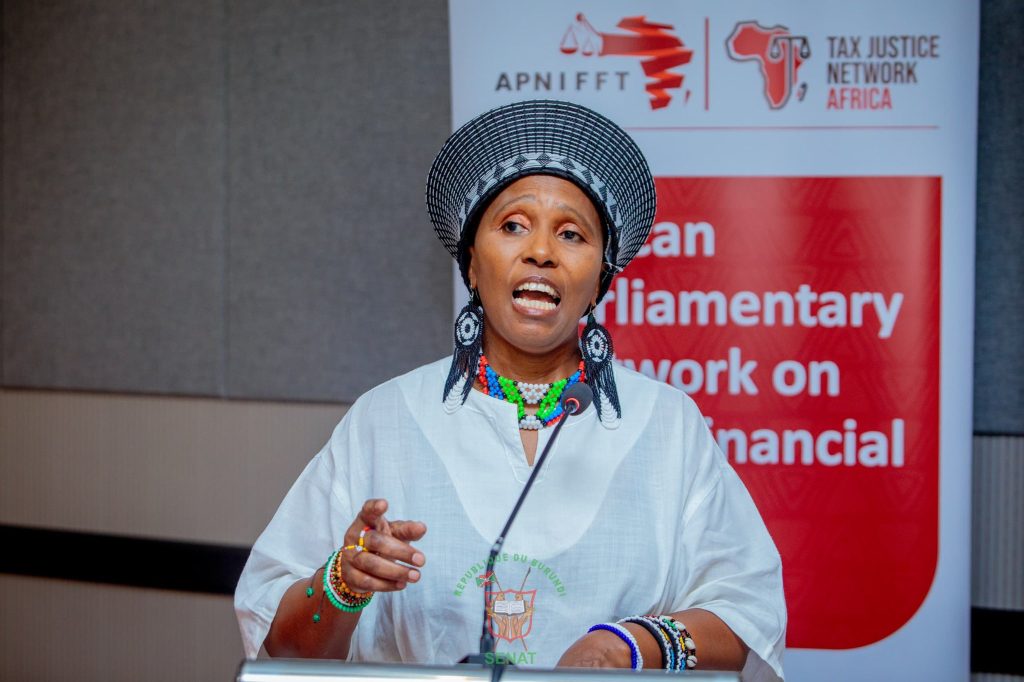
Litchfield-Tshabalala has disputed the basis of the decision.
She told SABC News that she had not been informed of the reasons for her expulsion and could not identify conduct on her part that would have damaged the party.
She said the circumstances surrounding the decision would ultimately become clearer.
The expulsions were authorised under Section 7(2)(h) of the MK Party’s constitution, which the party says gives its president executive authority to establish, restructure and remove organisational structures or deployees.
Jacob Zuma is president of the party.
MK secretary-general Sibonelo Nomvalo has written to National Assembly Speaker Thoko Didiza to formally notify her that the pair’s party memberships have been terminated and to initiate the process for their removal from Parliament.
The decision is politically significant because Kubukeli and Litchfield-Tshabalala were not peripheral members of the organisation.
News24 reported that both had recently been appointed to a 20-member strategic presidential team established by Zuma in July, with Kubukeli serving as its convenor.
The structure replaced an earlier presidential task team and was intended to occupy an influential position in the party’s national organisation.
Their removal therefore represents another rapid reversal in MK’s senior leadership structure.
Litchfield-Tshabalala is a former ANC and EFF MP who later joined MK.
She previously attracted national attention while in the EFF for her role in the party’s campaign demanding that Zuma repay public money spent on upgrades to his Nkandla residence.
Kubukeli, a military veteran, entered the National Assembly as an MK MP in December 2025 and subsequently rose into the party’s senior organisational structures.
The expulsions follow several other changes in MK’s leadership during the current election year.
Former judge John Hlophe was removed as first deputy president earlier this month, although he remains the party’s parliamentary leader.
Former police minister Nathi Nhleko was removed as national chairperson and replaced by Mxolisi Phakathi.
Zuma’s son Duduzane Zuma was appointed first deputy president, while former ANC national executive committee member Tony Yengeni became second deputy president.
The changes followed earlier removals involving other prominent MK figures.
Former spokesperson Nhlamulo Ndhlela and Zuma’s daughter Duduzile Zuma-Sambudla were expelled from the party and subsequently approached the Gauteng High Court to challenge their expulsions.
They have argued that they were denied procedural fairness.
Those proceedings remain separate from the latest expulsions.
Former EFF deputy president Floyd Shivambu has also passed through several positions in MK since joining the organisation in 2024.
He was removed as secretary-general in 2025 and later ceased to be an MK member.
Former Johannesburg council speaker Colleen Makhubele was removed as the party’s parliamentary chief whip before resigning from Parliament earlier this year.
MK rejects interpretations that the repeated changes demonstrate organisational instability.
Nomvalo defended the party’s disciplinary approach during Friday’s announcement of its metropolitan mayoral candidates, saying there had been a period of internal turmoil involving people who were attempting to undermine the organisation.
He said members responsible for misconduct had to face consequences.
The comments provide additional context to Thursday’s expulsions but do not establish precisely what conduct MK attributes to Kubukeli or Litchfield-Tshabalala.
The party has not publicly released disciplinary findings setting out the allegations against either former member.
The leadership changes carry additional significance because MK is preparing for its first municipal election after emerging as the third-largest national party in the 2024 general election.
It was particularly successful in KwaZulu-Natal, where it became the largest party in the provincial legislature.
The party is now seeking to convert that national and provincial support into representation in municipal councils on 4 November.
On Friday, MK announced mayoral candidates for six of South Africa’s eight metropolitan municipalities.
Former Midvaal mayor Bongani Baloyi will lead its Johannesburg campaign, MP Thulani Shongwe will contest Ekurhuleni and Zandile Hlophe-Mkhwanazi has been selected for eThekwini.
Mapaseka Mothibi will contest Mangaung, Mzwandile Vaaibom Buffalo City and Mvuleni Mapu Nelson Mandela Bay.
Candidates for Tshwane and Cape Town remain outstanding.
The leadership upheaval and mayoral announcements are therefore unfolding simultaneously as MK shifts from building a relatively new national organisation towards managing candidates and campaigns across all 257 municipalities.
Political parties faced a hard deadline of 17:00 on Friday to submit their candidates for the November elections to the Electoral Commission of South Africa.
The commission has said ordinary changes to submissions will not be permitted after the deadline.
That makes organisational stability increasingly important because parties now have limited scope to alter their election slates while campaigning intensifies.
The latest expulsions also have consequences for Parliament of South Africa.
MK has formally asked Didiza to process the departure of Kubukeli and Litchfield-Tshabalala from the National Assembly following termination of their party memberships.
Their parliamentary seats can ultimately be filled from the party’s applicable candidate lists once the required parliamentary and electoral procedures have been completed.
The immediate question is whether either former member will challenge the expulsions.
Litchfield-Tshabalala’s public rejection of MK’s explanation raises the possibility of a dispute similar to the litigation already brought by previously expelled members, although she had not announced court proceedings in the latest verified reporting.
For MK, the broader test will be whether the repeated restructuring of its national leadership affects its ability to build stable municipal organisations while simultaneously contesting its first nationwide local government campaign.
With candidate nominations now closed, the party’s focus shifts from assembling lists and leadership teams towards convincing voters that an organisation that achieved a major national breakthrough in 2024 can translate that support into municipal government in November.