BLOEMFONTEIN, Sunday 30 August 2026 — ANC members protested over disputed ward-candidate selections during the party’s Free State manifesto launch in Mangaung on Sunday, prompting first deputy secretary-general Nomvula Mokonyane to tell dissatisfied members that the candidate lists for the 4 November local government elections had been concluded.
The demonstration is politically significant because it brings the ANC’s internal candidate-selection disputes into public view in Mangaung, one of South Africa’s eight metropolitan municipalities, after the party submitted its candidates to the Electoral Commission.
Protesters at the Grassland Community Hall held placards accusing the party of factionalism and objecting to the selection of candidates in certain wards, according to SABC News.
Specific disputed wards and the names of the candidates affected were not identified in the report.
Mokonyane acknowledged that the final selections would not satisfy every member but said organisational discipline was required now that the process had concluded.
She said the ANC would communicate with the protesting members rather than exclude them from the event.
“I am happy with the protests. That’s the beauty of the ANC. We didn’t chase them away, we called them forward. Communication will happen,” Mokonyane said.
The intervention follows a difficult final week of candidate selection for the African National Congress nationally.
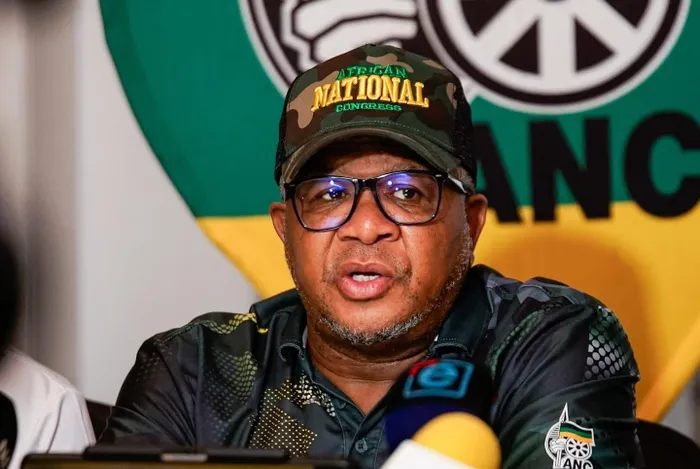
ANC secretary-general Fikile Mbalula confirmed that the party met Friday’s 17:00 IEC deadline and submitted candidates for all 257 municipalities, despite internal disagreements over the composition of some lists and threats of legal action in the Eastern Cape.
The Mangaung dispute is separate from the Eastern Cape litigation threats but reflects a broader electoral risk for the ANC: whether members whose preferred candidates were excluded will actively campaign for those ultimately selected.
Candidate tensions in Mangaung predate Sunday’s demonstration.
Local ANC branches had raised concerns during the selection process over alleged candidate imposition and factional influence, with some members warning in July that unresolved disputes could affect the party’s electoral support. Those earlier allegations were contested internal-party claims rather than established findings.
The timing is important because candidate nominations have now closed.
Political parties had until Friday, 28 August to submit ward and proportional-representation candidates to the Electoral Commission of South Africa.
The ANC therefore cannot simply restart local selection processes where branches remain dissatisfied without running into the election timetable and the rules governing candidate substitutions.
Mangaung has particular significance for the ANC.
The party has historically dominated the Free State capital but has faced years of political instability and serious governance problems in the metro.
Mangaung was placed under national intervention in 2022 after the provincial intervention under section 139 of the Constitution failed to stabilise the municipality.
The metro has since faced continuing concerns over finances, infrastructure and service delivery.
Those governance problems make the November election more consequential than the ANC’s historical strength in the Free State might suggest.
Internal divisions could also provide opportunities for opposition parties and independent candidates.
Independent candidates are already campaigning in Mangaung on dissatisfaction with established political parties and municipal performance.
Independent candidate Themba Zweni told SABC News this weekend that voters should prioritise community representation rather than party affiliation.
The EFF and other opposition parties are also campaigning for increased representation in the metro.
For the ANC, Sunday’s demonstration creates a different challenge.
The party must now persuade dissatisfied members to campaign for candidates they opposed during the internal process while simultaneously asking Mangaung voters to renew its mandate to govern the municipality.
Mokonyane indicated that discussions with aggrieved members would continue but gave no indication that the finalised lists would be reconsidered.
The IEC’s verification process will provide the next formal milestone.
Once the commission publishes the verified candidate lists, the identities of the ANC candidates in disputed Mangaung wards will be publicly confirmed and the scale of any continuing branch resistance should become clearer.
With just over two months remaining before voting day, the electoral significance of Sunday’s protests will depend less on the demonstration itself than on whether the disagreements are resolved — or translate into campaigning against official ANC candidates, abstention by local activists or support for rival candidates.