CAPE TOWN, Tuesday 1 September 2026 — The African National Congress has called for an independent forensic investigation into the police Crime Intelligence Secret Service Account, arguing that secrecy surrounding the fund has prevented adequate scrutiny of allegations of misuse uncovered during Parliament’s inquiry into criminal infiltration and political interference in the justice system.
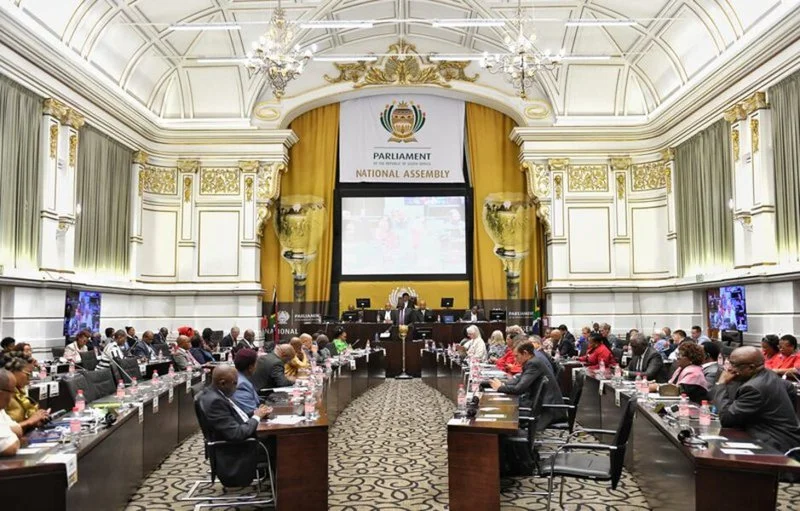
The proposal was made on Tuesday as Parliament of South Africa‘s Ad Hoc Committee investigating allegations originally raised by KwaZulu-Natal police commissioner Lieutenant-General Nhlanhla Mkhwanazi continued deliberations on its fourth draft report.
No political party represented in the committee objected to the proposal during the meeting, SABC News reported.
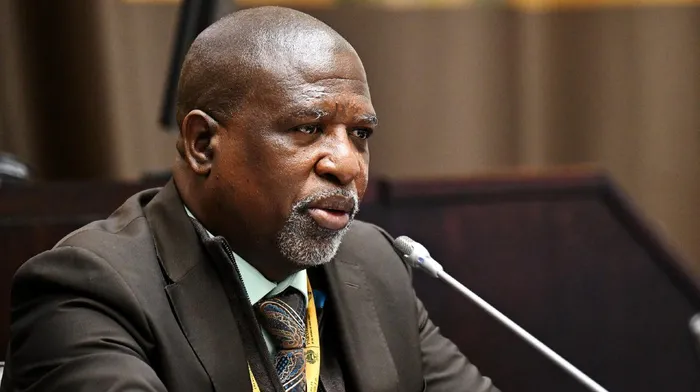
ANC MP Khusela Diko said the classified nature of the account made it difficult for the committee to reach definitive conclusions about allegations concerning its use.
“The key point that we were raising was that the fact that the fund or the account is not open to scrutiny, outside of the legislation that governs classification of the fund, makes it difficult to come to any conclusions,” Diko said.
The ANC consequently proposed an independent forensic investigation, a review of accountability mechanisms governing the fund and possible legislative amendments intended to strengthen oversight.
The Secret Service Account finances covert Crime Intelligence operations and is subject to restrictions intended to protect sensitive policing activities.
Those protections have become a significant issue in both Parliament’s investigation and the separate Madlanga Commission because witnesses have raised allegations concerning the handling and oversight of secret-service funds.
The allegations have not all been established as fact, and Parliament’s committee has repeatedly acknowledged that it is an oversight body rather than a criminal court.
Its members agreed during earlier deliberations that the final report may make findings concerning governance and institutional failures but cannot determine whether individuals are criminally guilty.
The distinction has become central to negotiations over the committee’s final report.
The fourth draft runs to almost 800 pages and draws on months of evidence concerning allegations of criminal infiltration, corruption and political interference in the criminal justice system.
Committee chairperson Soviet Lekganyane has said MPs must remain within their constitutional mandate while still making clear findings where evidence demonstrates institutional or governance failures.
The Democratic Alliance has separately cautioned that the committee should not make adverse findings based on hearsay, conjecture or evidence that has not been adequately tested.
Other parties have agreed that the committee cannot make findings of criminal guilt but have argued that this does not prevent Parliament from assessing evidence and recommending investigations or other interventions.
The committee previously supported an ANC proposal that conduct could be referred for further investigation where MPs believe prima facie evidence justifies doing so.
Tuesday’s Secret Service Account proposal is potentially significant because it would move scrutiny of the fund beyond the parliamentary committee’s own evidentiary limitations.
An independent forensic investigation could potentially examine financial records and transactions that MPs have been unable to assess fully because of classification restrictions, subject to the legal framework governing intelligence information.
No such investigation has yet been commissioned.
The proposal remains part of the committee’s deliberations and will only acquire formal parliamentary force if incorporated into its final recommendations and subsequently adopted through the appropriate parliamentary process.
The Secret Service Account has also featured in evidence before the Madlanga Commission.
The commission is investigating allegations of criminality, political interference and corruption in the criminal justice system following Mkhwanazi’s public allegations in July 2025.
The two investigations are institutionally separate.
Parliament’s committee has specifically agreed that its final report should be based on evidence gathered through its own proceedings rather than evidence subsequently presented to the Madlanga Commission.
That makes the proposed forensic investigation particularly consequential.
Rather than relying on findings from the commission, Parliament could recommend a separate mechanism specifically designed to examine the financial administration and accountability of Crime Intelligence’s secret funding.
The committee is working against a tight deadline.
National Assembly Speaker Thoko Didiza has extended its lifespan to 11 September, after MPs required additional time to resolve disagreements and complete the final report.
Its recommendations could eventually include institutional reforms, referrals for further investigation and legislative changes arising from the evidence it received.
Whether an independent forensic investigation into the Secret Service Account forms part of those final recommendations will become clearer as MPs complete the fourth draft.
If adopted, the proposal would place the financial governance of one of the most secretive components of the South African Police Service under a new level of scrutiny following more than a year of allegations about corruption and political interference within the criminal justice system.