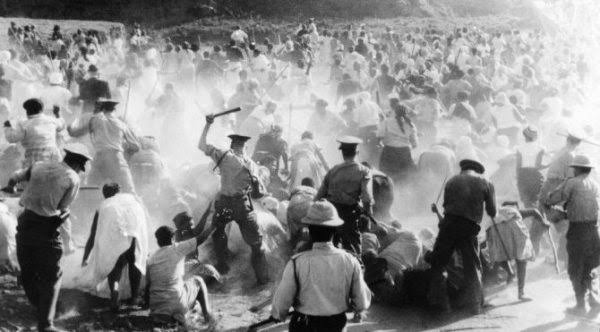
SHARPEVILLE, Thursday 3 September 2026 — Survivors of the 1960 Sharpeville massacre and relatives of people killed have launched legal action against the South African government, seeking reparations and a constitutional challenge to an apartheid-era law that blocked civil and criminal claims arising from the killings.
The proposed class action was filed in the Gauteng High Court on Wednesday and publicly launched in Sharpeville on Thursday by three lead claimants representing surviving victims and dependants of people killed during the massacre.
South African organisation Lawyers for Human Rights is leading the case, with UK-based human rights law firm Leigh Day acting as a consultant to the legal team.
The claim targets the Indemnity Act 61 of 1961, legislation enacted by the apartheid government after the massacre that prevented specified state officials and others from facing civil or criminal proceedings for conduct covered by the law.
The legislation remains on South Africa’s statute book.
The applicants argue that the Act is incompatible with the constitutional right of access to courts and should be struck down.
They further argue that the law effectively prevented victims and their families from pursuing damages for more than six decades and that prescription should therefore be calculated from the point at which the legislation is declared invalid, should their constitutional challenge succeed.
The litigation has been brought by Abram Mofokeng, who survived being shot during the massacre, and Paulina Mathinye and Ishmael Poho, whose fathers were killed.
They seek to represent two broader groups: people who survived being shot at Sharpeville and surviving dependants of those who were killed.
More than 70 survivors and relatives have expressed support for or an interest in participating in the litigation, according to the lawyers.
The class action has not yet been certified by the court, meaning the litigation remains at an initial stage.
Associated Press also reported on Thursday that the applicants are seeking compensation alongside the challenge to the indemnity legislation.
On 21 March 1960, apartheid police opened fire on protesters gathered in Sharpeville against the pass-law system.
The official historical death toll has generally been recorded as 69, while the legal team says subsequent research using police records indicates at least 91 people may have been killed and 238 wounded.
That higher figure forms part of the claimant lawyers’ account and differs from the traditional official tally.
The massacre became one of the defining events of the anti-apartheid struggle and is commemorated annually on 21 March, now Human Rights Day in South Africa.
The latest case also returns attention to unresolved questions surrounding reparations for victims of apartheid-era abuses.
The Truth and Reconciliation Commission recommended individual and broader community reparations after completing its work, but the Sharpeville applicants argue that measures subsequently implemented by the democratic government were inadequate.
The Department of Justice currently continues to administer a final once-off R30,000 individual reparation payment for qualifying TRC-identified victims or their rightful next of kin.
The department renewed its appeal for outstanding beneficiaries to come forward in 2026.
The Sharpeville applicants are seeking substantially broader relief than those existing TRC payments.
Lawyers for Human Rights said the claimants want engagement with government over reparations informed by the TRC’s recommendations while preserving their ability to pursue relief through the courts.
The case also comes amid renewed scrutiny of South Africa’s handling of unresolved apartheid-era crimes.
The Khampepe Commission is separately investigating allegations that investigations and prosecutions arising from Truth and Reconciliation Commission cases were improperly interfered with or obstructed.
That inquiry and the Sharpeville litigation are separate processes, but both concern the democratic state’s response to unresolved apartheid-era crimes and victims’ demands for accountability.
Bloomberg reported that the High Court application seeks orders requiring President Cyril Ramaphosa and the justice and police ministers to take steps relating to the repeal of the Indemnity Act.
The Presidency told Bloomberg it had not yet been aware of the application when approached, while government respondents had not publicly filed their answers to the case.
No court has yet ruled that the legislation is unconstitutional or that the state is liable to compensate the applicants.
The next stage will be determined by the government’s response and the Gauteng High Court’s consideration of whether the proposed class action may proceed.
If the applicants ultimately succeed in removing the Indemnity Act as a legal barrier, the ruling could extend beyond the three lead plaintiffs by creating a route for other surviving victims and dependants to pursue claims arising from the Sharpeville massacre.