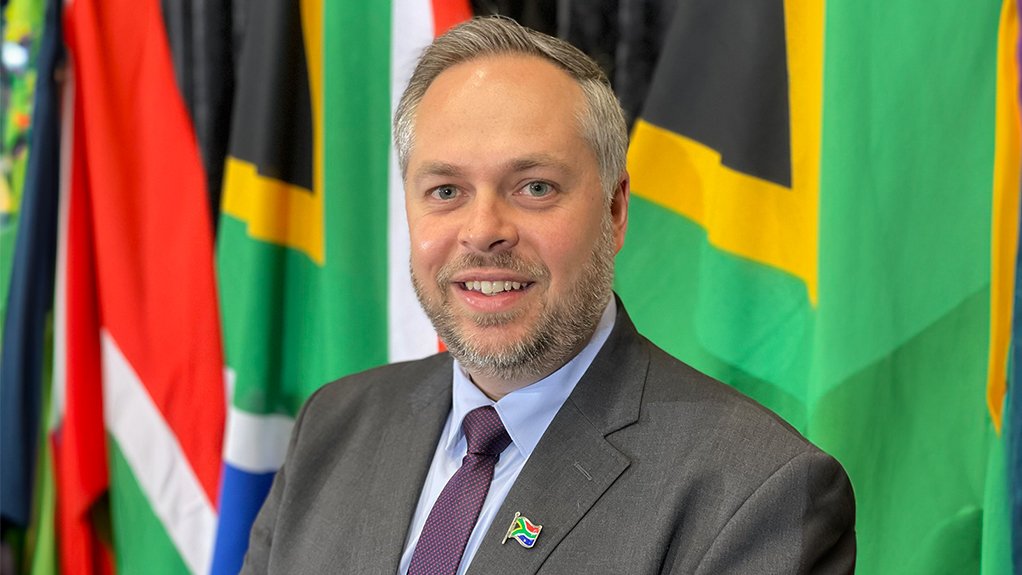
DURBAN, Monday 7 September 2026 — eThekwini Mayor Cyril Xaba says the long-delayed GO!Durban integrated public transport network will begin carrying passengers on its first corridor in December, after the municipality reached agreement with taxi and bus operators on issues that had blocked implementation for years.
The first operational service will run on the C3 corridor between Bridge City and Pinetown, turning infrastructure built over more than a decade into a functioning passenger service for the first time.
The announcement is politically significant because approximately R9.7 billion has already been invested in GO!Durban, making it one of eThekwini’s largest and longest-running infrastructure programmes as the city heads into the 4 November local government elections.
The municipality’s council approved revised GO!Durban business and operational plans on 1 September, clearing the way for Sunday’s implementation announcement. An official eThekwini media advisory confirmed that the briefing was intended to set out the roadmap and milestones required for services to begin.
Xaba said the city, provincial government, national Department of Transport and public transport industry had reached agreement on previously contested issues including fleet ownership, operating contracts, compensation for affected operators, employment and opportunities in the transport value chain.
“This paves the way for the service to go live in December this year,” Xaba said.
Under the agreement, eThekwini will procure 22 buses for the main C3 service.
Public transport operators will acquire feeder vehicles through Vehicle Operating Companies, or VOCs, which will become the structures through which affected taxi and bus operators participate in the system.
The municipality intends entering into an initial three-year stop-gap operating contract, followed by a negotiated 12-year agreement with the operator structures.
Xaba said contracts are expected to be signed during Transport Month in October, after which the city will conduct approximately two months of testing and commissioning before passengers are carried in December.
The employment arrangements are also intended to protect workers affected by the transition from existing transport operations.
Xaba said 75% of employees used in the new system would be drawn from workers displaced by GO!Durban, while compensation for affected operators would take account of business value, current profits and the remaining period on existing operating licences.
Representatives of both the taxi and bus industries participated in Sunday’s announcement.
Bus industry representative Vickesh Maharaj welcomed the planned rollout but said further work remained necessary on the transfer of contracting rights and the wider integration of operators.
The December target represents the latest in a series of promised launch dates for a project whose first services were originally expected years earlier.
GO!Durban was conceived as eThekwini’s integrated rapid public transport network, with construction on the C3 corridor beginning more than a decade ago.
The route had previously been scheduled to become operational around 2017 or 2018 and was subsequently targeted for another launch in 2024.
Disputes with transport operators, community disruptions, financing questions and changes to the programme’s design repeatedly delayed implementation.
Those delays have attracted scrutiny from councillors, Parliament and the Auditor-General.
During an earlier audit period, the Auditor-General found that substantial standing costs were being incurred on infrastructure that could not yet be used.
The Auditor-General also noted that buses had been modified and branded but remained idle because of unresolved disputes over fleet ownership.
Opposition parties in eThekwini have consequently made GO!Durban a recurring municipal governance issue.
DA councillors have questioned the scale of expenditure and consultancy costs associated with the project, while ActionSA has also criticised the delays.
Those criticisms are political positions advanced by opposition parties and do not themselves establish that the expenditure was unlawful.
Xaba acknowledged the delays on Sunday but argued that the investment had produced infrastructure, systems and economic-development benefits that could now be converted into an operating service.
“The priority now is to translate the investment already made into a functioning public transport service, beginning with the C3 corridor,” he said.
The municipality says the R9.7 billion cumulative expenditure has funded stations, depots, transport infrastructure, technology systems and professional services.
It also repeated figures showing thousands of work opportunities and substantial procurement involving small businesses, although some of those cumulative job-creation figures have previously appeared in earlier government reporting and should not be treated as jobs created during the current phase alone.
The next stage will extend beyond the C3 route.
The remaining Phase One services — including the C1, C2 and C9 corridors and an Inner-City Distribution Service — are scheduled to begin rolling out from the first quarter of 2027.
eThekwini also intends integrating existing subsidised bus services into the GO!Durban network between December 2026 and March 2027.
The timing gives the announcement additional electoral relevance.
eThekwini is one of South Africa’s most competitive metros after the ANC lost its outright majority in 2021.
The city is currently led by Xaba under a multiparty governing arrangement, while the MK Party, DA, IFP, EFF, ActionSA and other parties are campaigning to increase their representation on 4 November 2026.
GO!Durban therefore sits directly within the wider election debate over whether the current administration can convert long-running capital expenditure into visible improvements in municipal services.
The December launch would take place after the election.
Voters will consequently go to the polls before being able to assess the passenger service in normal operation.
The more immediate tests will be whether the municipality establishes the required Vehicle Operating Companies, signs the operating contracts in October and successfully completes testing on schedule.
After years of postponed start dates, those milestones will determine whether December becomes the point at which GO!Durban finally moves from a largely infrastructure-based programme to an operational public transport network.