PIETERMARITZBURG, Tuesday 8 September 2026 — KwaZulu-Natal’s Department of Public Works and Infrastructure has received the first clean audit in its history, giving the provincial coalition government a measurable governance improvement as parties prepare to contest the 4 November local government elections.
The department confirmed the result in an official statement dated 7 September, while SABC News reported the achievement on Tuesday morning.
A clean audit means the Auditor-General issued an unqualified opinion on the department’s financial statements without material findings on compliance or reported performance.
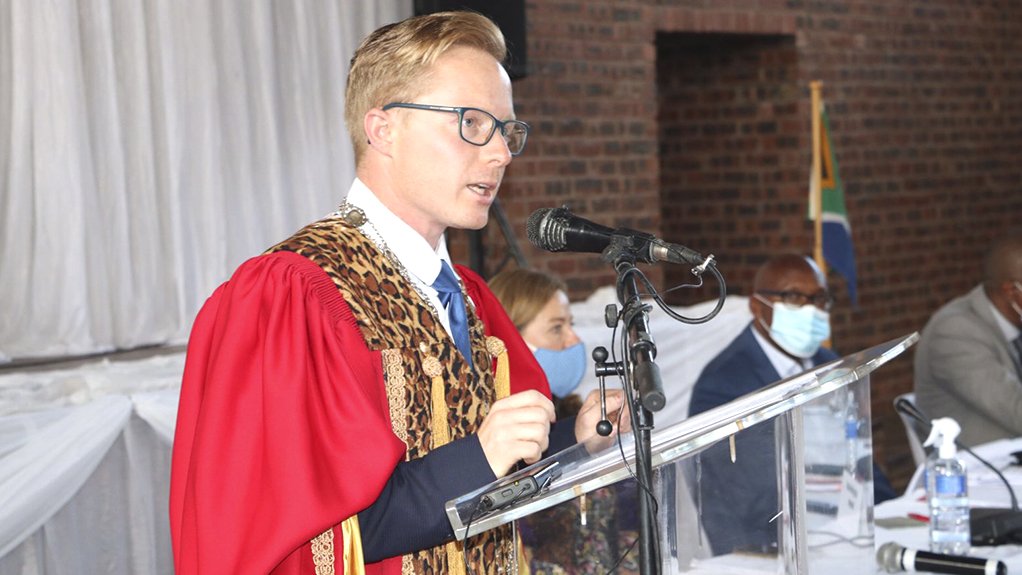
Public Works and Infrastructure MEC Martin Meyer has attributed the improvement to tighter financial controls, accountability measures and reforms implemented within the department.
Department spokesperson Steve Bhengu said the result was intended to position Public Works as a more credible partner for private investors, developers and financial institutions involved in provincial infrastructure projects.
The department described the outcome as the first clean audit since its establishment.
That makes it politically relevant in KwaZulu-Natal, where public-sector governance has become part of a wider contest over the performance of the coalition administration led by IFP Premier Thamsanqa Ntuli.
Meyer represents the DA, which entered the provincial government after the 2024 national and provincial elections alongside the IFP, ANC and NFP.
The parties cooperate at provincial level while competing against one another in the November municipal elections.
Result comes against weak national audit picture
The clean audit stands out against the broader performance of national and provincial government institutions.
Auditor-General Tsakani Maluleke reported in March that only 151 of 417 national and provincial auditees achieved clean audits for the 2024/25 financial year.
Maluleke said government had made only limited overall progress in addressing weaknesses in institutional capability, governance and accountability.
KwaZulu-Natal has also faced substantial governance and financial-management challenges across its municipalities.
At local-government level, only four of the province’s 54 municipalities achieved clean audits in the Auditor-General’s most recent consolidated report, although the province succeeded in eliminating disclaimed audit opinions.
Municipal and provincial audit results are governed by different statutes and should not be directly equated.
They nevertheless provide voters with independently assessed indicators of whether public institutions are maintaining reliable financial records, complying with legislation and implementing effective controls.
Public Works controls large infrastructure portfolio
KwaZulu-Natal Public Works is responsible for substantial elements of the provincial government’s property and infrastructure programme.
Its responsibilities include construction and maintenance projects for departments such as health and education and management of provincial government properties.
That makes procurement controls particularly significant.
Public works departments nationally have historically been vulnerable to irregular procurement, abandoned projects, contractor failures and cost escalation because of the volume and complexity of infrastructure expenditure they oversee.
Meyer has increasingly focused the department’s public messaging on contractor performance and accountability.
In January, he warned departmental officials and contractors that failed projects would carry consequences, while the department has subsequently terminated at least one contractor over poor project performance and intervened at construction sites affected by alleged extortion.
Those interventions are government claims about its management approach rather than proof that all infrastructure problems have been resolved.
A clean audit also does not establish that every project is delivered efficiently or that every service-delivery challenge has been addressed.
It relates specifically to the Auditor-General’s assessment of financial statements, compliance and performance reporting for the audited period.
Election significance for coalition parties
The timing gives the result an electoral dimension.
The DA is attempting to expand its municipal support in KwaZulu-Natal while simultaneously defending its participation in an IFP-led provincial coalition that also includes its national GNU partner, the ANC.
The MK Party enters the election as a major force in the province and is seeking control of several municipalities, including eThekwini.
Against that backdrop, parties governing at provincial level will increasingly point to administrative outcomes as evidence of whether coalition government has improved institutional performance.
Opposition parties, in turn, are likely to focus on areas where provincial and municipal service delivery continues to fall short.
The Auditor-General’s finding gives Meyer and the provincial administration an independently audited result they can cite.
Its longer-term significance will depend on whether the department sustains the clean audit and whether improved financial governance translates into faster and more reliable infrastructure delivery.