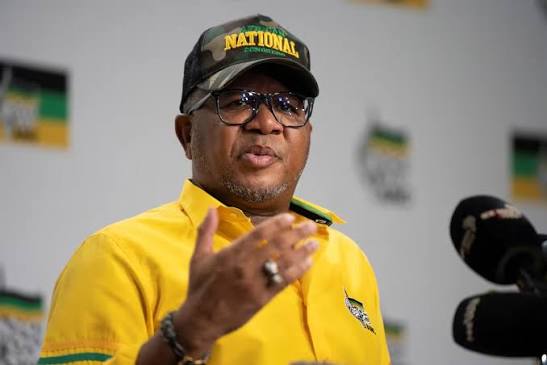
JOHANNESBURG, Tuesday 15 September 2026 — ANC secretary-general Fikile Mbalula and former Cabinet minister Nkosazana Dlamini-Zuma faced off in the Johannesburg High Court on Tuesday over her allegation that Mbalula distributed money to delegates to influence the outcome of the ANC’s 2022 national elective conference.
Mbalula brought an urgent defamation application seeking a retraction and apology from Dlamini-Zuma and an order holding her liable for damages. He denies distributing money to secure his election as secretary-general or to assist Cyril Ramaphosa in winning a second term as ANC president.
Dlamini-Zuma is opposing the application and continues to stand by the substance of her allegation. Her court papers include an affidavit from a former ANC conference delegate who claims he witnessed and benefited from money being distributed by Mbalula.
The High Court confrontation is politically significant because it moves a dispute between two of the ANC’s most senior figures into open judicial proceedings seven weeks before the 4 November local government elections, while also putting allegations about the role of money in ANC leadership contests before a court.
The allegations against Mbalula have not been established as fact, and the court had not delivered a judgment by the close of this scan.
Mbalula says there is no evidence he bought votes
Advocate Smanga Sethene, appearing for Mbalula, argued that Dlamini-Zuma had produced no concrete evidence proving that the secretary-general personally distributed money to delegates to secure votes.
SABC News reported that Sethene challenged the evidentiary basis for Dlamini-Zuma’s allegations and maintained that they were defamatory.
Mbalula has consistently denied the claim.
In his court papers, he said Dlamini-Zuma could provide no evidence supporting what he described as false allegations intended to damage his public standing.
Mbalula was elected ANC secretary-general at the party’s 55th National Conference at Nasrec in December 2022.
Ramaphosa was re-elected president at the same conference.
Mbalula has argued that the leadership election was conducted by secret ballot under the supervision of the ANC’s Electoral Committee and that no party structure challenged the declared result at the time.
Dlamini-Zuma produces affidavit from former delegate
Dlamini-Zuma’s opposition to the application includes evidence that had not been part of her original podcast allegation.
Business Day reported that she attached an affidavit from Mandla Themba Sibiya, who says he attended the 2022 conference as an ANC delegate from the Mzala Nxumalo Region.
Sibiya alleges in the affidavit that he was present when Mbalula distributed money to delegates and that he personally benefited from the distribution.
That claim remains an allegation contained in court papers and has not been tested through cross-examination or accepted as fact by the High Court.
Dlamini-Zuma argues that Sibiya’s account demonstrates the existence of a genuine factual dispute that cannot simply be resolved on Mbalula’s denial.
Dlamini-Zuma says other witnesses are afraid
Dlamini-Zuma has further claimed that other ANC members witnessed what she alleges occurred during the conference but are reluctant to come forward.
She said in her affidavit that some potential witnesses feared for their safety while others had been advised by their families not to become involved.
No independent evidence establishing threats against those unnamed potential witnesses was presented in the reporting reviewed for this article.
The allegation should therefore not be treated as a finding that witnesses have actually been threatened.
Dlamini-Zuma nevertheless argues that her dispute with Mbalula concerns what happened at Nasrec rather than a disagreement over political opinion.
Allegation originated in podcast interview
The dispute stems from comments Dlamini-Zuma made during an August interview on the African Renaissance Podcast hosted by former EFF MP Mbuyiseni Ndlozi.
She alleged that Mbalula distributed money to delegates at a clinic during the ANC conference as part of efforts to influence the leadership election.
Mbalula subsequently demanded that she withdraw the allegation.
When Dlamini-Zuma refused, he approached the High Court.
The former minister has argued that the broader role of money in ANC leadership contests is an internal political problem that the party should confront rather than attempt to resolve through litigation.
Mbalula acknowledges wider problem of money in ANC contests
Mbalula has distinguished the specific allegation against him from the broader question of money influencing ANC politics.
He told EWN last week that he was not denying that substantial funding had become part of internal ANC leadership campaigns.
He warned that without reform, future leadership contests could increasingly favour candidates backed by the largest financial resources.
His position is that acknowledging the wider problem does not amount to accepting Dlamini-Zuma’s allegation that he personally distributed cash to delegates in 2022.
That distinction is central to his defamation case.
Lawyers clash over tone of arguments
Tuesday’s proceedings also became heated during argument.
EWN reported that Dlamini-Zuma’s lawyer, Advocate Muzi Sikhakhane, objected to aspects of Sethene’s submissions and urged Mbalula’s legal team to conduct its arguments respectfully.
Mbalula’s counsel questioned why Dlamini-Zuma waited almost four years after the conference before publicly making the allegation.
Dlamini-Zuma maintains that she was speaking about a broader problem involving the influence of money within the ANC.
The dispute therefore now involves both the factual allegation concerning Mbalula and a wider disagreement over how internal ANC controversies should be handled.
Dlamini-Zuma challenges urgency and court procedure
Dlamini-Zuma is also challenging the procedural basis of Mbalula’s application.
She wants the matter removed from the urgent court roll and argues that former podcast host Ndlozi should have been joined to the proceedings because he is capable of removing or dealing with the published interview.
She argues that the existence of material factual disputes also makes motion proceedings inappropriate for determining whether her allegation is true.
Those procedural arguments could become important even if the court does not immediately determine the truth or falsity of the underlying vote-buying allegation.
Dispute lands during difficult period for ANC
The litigation comes as the ANC prepares for a difficult municipal election.
Mbalula has acknowledged that a poor result on 4 November would reflect negatively on the party’s current leadership.
The ANC lost its national parliamentary majority in 2024 and now faces competitive races across several metropolitan municipalities.
Internal disputes over candidate lists have also intensified in recent weeks, with the ANC separately appearing before the Electoral Court on Tuesday in its challenge to the IEC’s rejection of 181 prospective candidates across six municipalities.
That case is unrelated to the Dlamini-Zuma litigation.
Together, however, the proceedings mean the ANC secretary-general is simultaneously dealing with a major election-law dispute affecting the November ballot and a High Court confrontation with a senior member of his own National Executive Committee.
Court dispute could outlast election campaign
The High Court had not delivered a final ruling by the close of this scan.
Depending on how the court deals with urgency, factual disputes and the relief sought, the case could continue beyond Tuesday’s proceedings.
A finding that the matter requires oral evidence could potentially expose the underlying allegations to testimony and cross-examination.
Conversely, the court could resolve the immediate application without determining whether money was distributed at the 2022 conference.
For the ANC, the significance extends beyond the reputations of two senior members.
Dlamini-Zuma is asking the party to confront the influence of money in its internal elections, while Mbalula argues that an allegation accusing him personally of buying votes cannot be left unanswered.
The High Court will now determine what legal consequences, if any, follow from that political dispute.