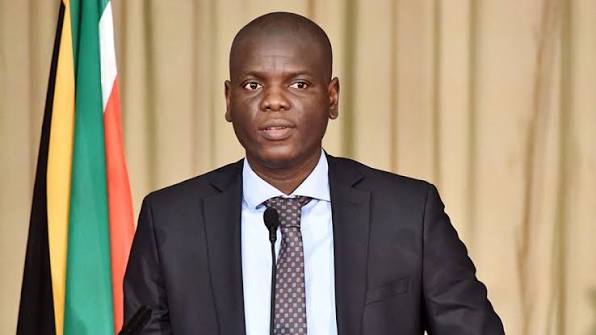
NEW YORK, Monday 21 September 2026 — International Relations and Cooperation Minister Ronald Lamola has warned that relations between South Africa and the United States have reached a “critically low point”, saying Pretoria should prepare for a worst-case scenario rather than concede to pressure over Black Economic Empowerment, land reform and its foreign policy.
Lamola made the assessment while in the United States ahead of the United Nations General Assembly’s high-level week, following a further deterioration in relations over new US visa restrictions targeting foreign officials associated with policies Washington considers racially discriminatory.
The comments mark a sharper assessment from Pretoria of a bilateral relationship that South African officials have previously described as strategically important despite increasingly public disagreements.
Lamola said South Africa remained willing to engage the US government but would not negotiate away policies or constitutional processes that Pretoria regards as matters of domestic sovereignty.
Lamola warns of ‘worst-case scenario’
Speaking to SABC News, Lamola said South Africans needed to prepare for the possibility that relations could deteriorate further.
“I think South Africa has to prepare itself for the worst-case scenario,” he said.
Lamola argued that the US expected South Africa to surrender sovereignty over BEE, land reform, the Expropriation Act and aspects of its foreign policy.
He said those matters should be determined through South Africa’s democratic and constitutional institutions.
The minister’s remarks reflect the South African government’s interpretation of US policy and pressure. They do not constitute an agreed description of Washington’s objectives.
Visa restrictions deepen dispute
The latest deterioration follows an announcement by US Secretary of State Marco Rubio of visa restrictions aimed at foreign nationals Washington says enact or enable policies involving race-based discrimination.
The South African government objected strongly to the measure.
In an official response on 16 September, Lamola’s ministry said the policy relied on what it called a mischaracterisation of South African domestic policies and urged the US to respect South Africa’s democracy and sovereignty.
Pretoria maintains that policies intended to address the consequences of apartheid and racial exclusion are constitutional measures aimed at redress.
The US administration has taken a sharply different position on several of those policies.
Land reform and BEE remain key points of contention
Black Economic Empowerment and land reform have become central fault lines in the relationship.
Lamola specifically referred to the Expropriation Act and the possibility of nil compensation in circumstances allowed by South African law.
South Africa has repeatedly rejected claims that the legislation amounts to arbitrary land confiscation.
The government says decisions involving expropriation remain subject to South African law and constitutional safeguards.
Washington has also criticised race-based economic policies and has linked its broader approach towards South Africa to concerns about Afrikaners and other minorities.
Pretoria disputes the characterisation of Afrikaners as facing state-sponsored racial persecution.
Refugee programme remains source of friction
The dispute also extends to the Trump administration’s programme admitting Afrikaners from South Africa to the United States through refugee channels.
Lamola has described the programme as race-based.
South Africa argues that the country’s constitutional democracy provides mechanisms through which minority communities can challenge government policies and protect their rights.
US officials have defended their approach as a response to concerns about racial discrimination and threats faced by some South Africans.
Those competing narratives have increasingly moved from diplomatic disagreement into concrete US policy measures.
Foreign policy adds another dividing line
Lamola said Washington’s concerns were not limited to domestic South African policy.
Foreign policy has become another major area of disagreement.
South Africa has maintained close engagement with BRICS partners including China and Russia, pursued its genocide case against Israel at the International Court of Justice and repeatedly defended what it describes as an independent, non-aligned foreign policy.
Lamola said South Africa’s foreign policy had a human-rights outlook grounded in the United Nations Charter and should not be dictated by another state.
South Africa’s position does not mean Pretoria and Washington disagree on every international issue, but the number and intensity of disputes have complicated the broader bilateral relationship.
Pretoria still describes US relationship as important
The tougher language represents a notable evolution in the government’s public assessment.
DIRCO has historically emphasised that the United States remains an important strategic and economic partner.
The US is a significant source of investment and an important destination for South African exports.
Earlier government statements have repeatedly stressed the importance of maintaining trade, investment and diplomatic engagement even while the countries disagree on foreign policy and domestic issues.
Lamola has not announced a break in diplomatic engagement.
Instead, his latest comments suggest Pretoria is preparing politically and economically for the possibility that engagement will not prevent further punitive measures.
UN week provides next diplomatic test
The timing is significant because South Africa’s delegation is in New York for the opening of the 81st session of the United Nations General Assembly’s high-level programme.
DIRCO said last month that South Africa’s participation in high-level week would begin on 22 September.
The gathering brings senior South African officials into the same diplomatic arena as the US administration and other major powers.
It also gives Pretoria an opportunity to reinforce its emphasis on multilateralism, sovereignty and reform of international institutions.
The immediate question is whether the two governments use that diplomatic window to contain the dispute or whether Washington proceeds with further measures.
Lamola’s warning indicates that Pretoria is no longer assuming engagement will necessarily prevent escalation.
South Africa, he said, remains open to talks — but not at the cost of surrendering decisions it regards as belonging to South Africans themselves.