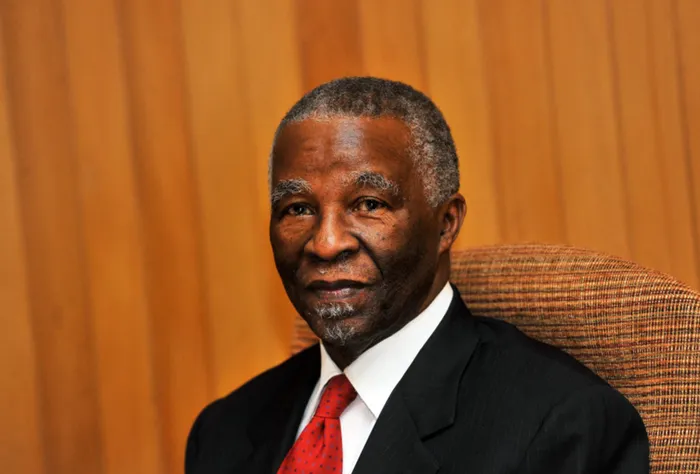
JOHANNESBURG, Tuesday 6 October 2026 — Former presidents Thabo Mbeki and Jacob Zuma are scheduled to testify later this month before the judicial inquiry investigating whether political interference contributed to delays in prosecuting apartheid-era crimes referred by the Truth and Reconciliation Commission.
Mbeki is scheduled to appear before the inquiry on 19 and 20 October, while Zuma is expected to testify on 22 October, according to reports on Tuesday confirming their appearance dates.
The hearings will place two former heads of state before retired Constitutional Court justice Sisi Khampepe after their unsuccessful attempt to have her removed as chairperson of the commission.
Both men have denied allegations that they interfered with the investigation or prosecution of apartheid-era cases.
Inquiry examining stalled apartheid-era prosecutions
The commission is investigating why cases identified by the original Truth and Reconciliation Commission for possible criminal prosecution were not pursued by the authorities.
The inquiry was established amid allegations that political interference may have contributed to delays or decisions not to prosecute people implicated in apartheid-era crimes.
Families and survivors of gross human rights violations have sought answers over why cases involving people who were denied amnesty, or who did not apply for amnesty, remained unresolved decades after the end of apartheid.
Mbeki served as president between 1999 and 2008, while Zuma held the office from 2009 until 2018.
Their evidence is therefore expected to address decisions and events during periods in which responsibility for investigating and prosecuting outstanding TRC matters rested with institutions under administrations they led.
The commission has not found that either former president unlawfully interfered with prosecutions.
Constitutional Court cleared way for hearings
Confirmation of the testimony dates follows a prolonged legal dispute over Khampepe’s position as chairperson.
Mbeki and Zuma had sought her recusal and subsequently challenged her continued participation in the inquiry through the courts.
The Constitutional Court of South Africa dismissed their challenge on 31 August, leaving Khampepe in place and clearing the way for the inquiry to continue.
The former presidents had argued that circumstances surrounding Khampepe’s appointment and previous involvement in related matters created grounds for her to step aside.
Their challenge ultimately failed.
Phosa calls for Mbeki to answer questions
The confirmation of Mbeki’s appearance came as former Mpumalanga premier and ANC treasurer-general Mathews Phosa called for him to be compelled to answer questions about allegations concerning the handling of apartheid-era prosecutions.
Daily Maverick reported on Tuesday that Phosa wanted the inquiry to question Mbeki about alleged agreements or understandings concerning prosecutions arising from the TRC process.
Those allegations remain disputed and have not been established as fact by the commission.
Mbeki will have an opportunity to respond directly when he gives evidence.
Zuma’s testimony three days later is similarly expected to examine events and decisions falling within the period of his presidency.
Commission approaching final stages
The hearings involving Mbeki and Zuma are likely to be among the inquiry’s most consequential as it moves towards completing its work.
The commission is expected to examine whether decisions by political office-bearers or state institutions contributed to failures to investigate and prosecute outstanding cases referred through the TRC process.
The inquiry is scheduled to complete its work and submit its findings to President Cyril Ramaphosa in December.
Mbeki’s evidence is due to begin on 19 October, followed by Zuma on 22 October.
Their testimony will give the commission an opportunity to question the two former presidents directly about allegations that have featured throughout its proceedings.