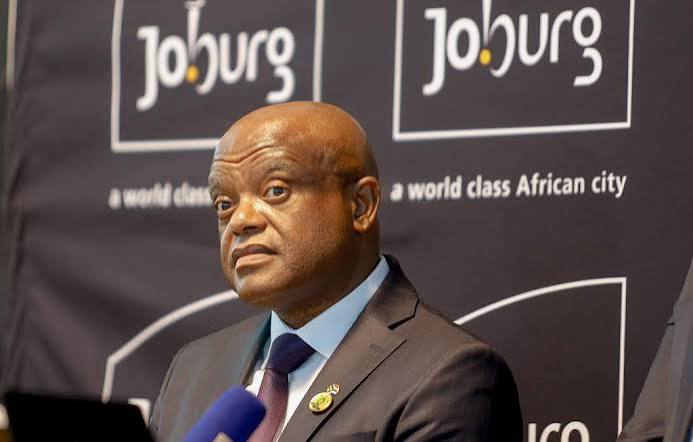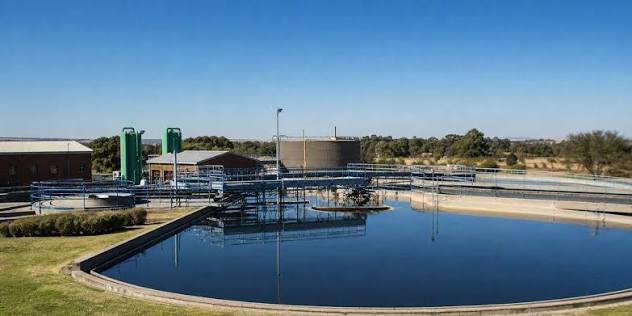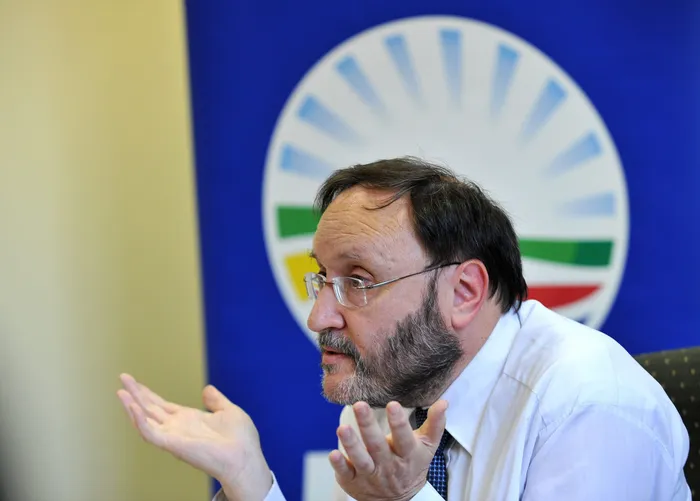
BOKSBURG, Tuesday 27 October 2026 — Gauteng loses approximately 431 billion litres of treated water annually through leaking infrastructure, representing an estimated financial loss of between R7 billion and R14 billion depending on how the water is valued, Deputy Water and Sanitation Minister Jack Bloom said on Tuesday.
Bloom disclosed the figures during a provincial consultation on the government’s revised Strategic Framework for Water and Sanitation Services, as municipalities across Gauteng continue to face water shortages and ageing infrastructure.
Nearly half of treated water generates no revenue
Bloom said approximately 49% of Gauteng’s treated water supply does not generate revenue because of physical leaks, inaccurate billing, illegal connections and other losses.
The figure has increased from 42.5% in the 2023/24 financial year.
Physical leaks alone account for approximately 20% of the province’s treated water supply.
According to Bloom, the volume lost through leaking pipes is roughly equivalent to the total amount of treated water supplied to the Western Cape in a year.
He estimated that the physical losses cost approximately R7 billion annually when calculated using Rand Water’s bulk supply charges.
At higher municipal water tariffs, the estimated value exceeds R14 billion.
The two figures represent different valuations of the same lost water and should not be added together.
Johannesburg and Tshwane among worst affected metros
Bloom provided figures showing substantial differences in water losses across Gauteng municipalities.
Johannesburg records non-revenue water of approximately 49%, including physical losses of 26%.
Tshwane’s non-revenue water stands at about 45%, with physical losses accounting for 34%, while Ekurhuleni records approximately 30% non-revenue water and 22% physical losses.
The situation is more severe in some local municipalities.
Emfuleni loses more than 70% of its treated water through non-revenue categories, while Mogale City’s figure exceeds 60%.
The statistics highlight the scale of infrastructure and revenue-management challenges facing municipalities ahead of the 4 November local government elections.
Government proposes revised water-service framework
The department is consulting stakeholders on an updated national framework intended to replace the strategic approach introduced in 2003.
The proposed framework shifts emphasis from access to basic water infrastructure towards reliable, safe and financially sustainable services.
Measures under consideration include stronger maintenance requirements, digital monitoring systems, smart water meters and improved financial controls.
The draft also proposes greater regulatory oversight and the development of an independent economic regulator for water services.
These measures remain proposals and have not all been adopted as binding requirements.
New targets for infrastructure maintenance
The revised framework proposes reducing national non-revenue water to below 25%.
It also envisages water services authorities renewing at least 10% of their highest-risk ageing infrastructure annually.
Another proposed target would see smart water meters installed in 80% of urban households by 2032.
Bloom said municipalities should ring-fence revenue collected from water services to ensure funds are reinvested in infrastructure and maintenance.
He also encouraged struggling municipalities to seek assistance through the department’s Water Partnerships Office.
Affordability concerns raised
The South African Local Government Association (Salga) has cautioned that proposed changes to water tariffs must take household affordability into account.
Salga sanitation specialist Alana Potter said the pursuit of cost recovery must be balanced against constitutional obligations to provide essential services.
The association has also called for adequate funding of free basic water and sanitation services.
Bloom argued that reducing leaks, improving billing accuracy and addressing illegal connections could help limit pressure on tariffs.
Final framework expected in 2027
The revised strategic framework remains subject to public consultation.
The Department of Water and Sanitation is targeting August 2027 for publication of the final framework.
Its implementation will depend on regulatory decisions, municipal capacity, financing and the ability of water services authorities to improve maintenance.
For Gauteng residents facing interrupted supplies, the immediate question remains whether municipalities can translate national reform proposals into reliable water services.