CAPE TOWN, Wednesday 14 October 2026 — The Democratic Alliance (DA) has launched an online whistleblower portal allowing members of the public to report suspected irregularities in government tenders, as the party seeks to increase pressure on public institutions to blacklist suppliers implicated in wrongdoing.
The initiative, announced on Wednesday, follows parliamentary disclosures that hundreds of suppliers referred for possible restrictions have not been barred from doing business with the state.
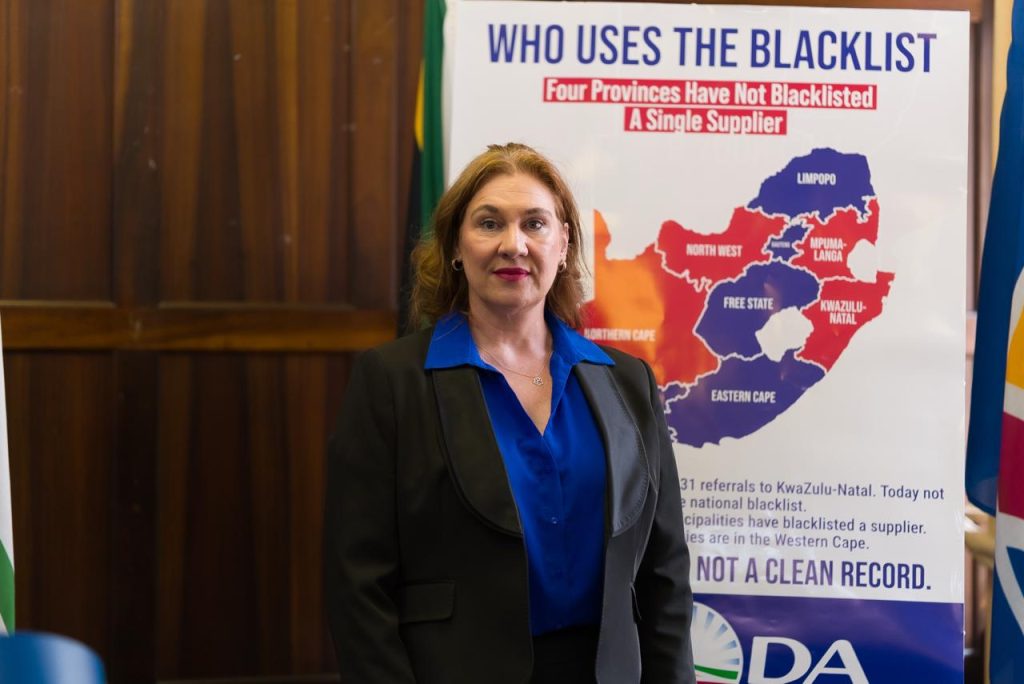
The DA says information submitted through its new Blacklist Project will be used to pursue accountability through Parliament and relevant oversight institutions.
New portal targets questionable government contracts
DA deputy spokesperson on finance Wendy Alexander said the initiative would allow members of the public to submit information concerning government tenders they believe involve corruption, fraud or other irregularities.
According to the party, submissions will not be published.
Instead, the DA intends to assess the information and pursue appropriate accountability measures through parliamentary oversight and institutions including the Special Investigating Unit (SIU) and Auditor-General.
The party said it would also write to accounting officers at institutions implicated in major procurement scandals, seeking explanations for decisions not to restrict suppliers.
The initiative does not give the DA authority to blacklist companies directly.
Such decisions remain subject to the applicable legal procedures and the responsibilities of government institutions.
Hundreds of supplier referrals remain unresolved
The announcement follows concerns raised in Parliament about the limited number of suppliers restricted after being identified through investigations.
On 30 September, Finance Minister Enoch Godongwana told the National Assembly that only 18 of 509 supplier-restriction referrals had resulted in entries on National Treasury’s restricted suppliers database.
The remaining 491 referrals had not resulted in restrictions.
Godongwana explained that National Treasury could not independently restrict suppliers without the necessary processes being initiated by the relevant organs of state.
He said affected institutions were responsible for submitting formal requests and supporting documentation.
The minister also indicated that he would examine what legal options might be available when institutions failed to act.
The figures highlighted concerns about whether findings from investigations were being translated into effective consequences for suppliers.
DA calls for changes to blacklisting procedures
The DA has proposed several reforms to strengthen the system.
These include extending restrictions to individuals responsible for companies implicated in wrongdoing, introducing deadlines for supplier-restriction referrals and publicly identifying government institutions that fail to act.
The party also wants a searchable blacklist linked to the Central Supplier Database.
It has called for measures to ensure that suppliers operating legitimately receive payments on time.
Alexander said the existing system was failing to prevent suppliers implicated in serious procurement concerns from continuing to pursue government contracts.
The DA argues that stronger enforcement is necessary to protect public funds and restore confidence in procurement processes.
Municipal expenditure raises further concerns
The party also highlighted irregular, unauthorised and wasteful expenditure in municipalities.
According to figures cited in its statement, municipal expenditure falling into these categories reached R268 billion during the 2024/25 financial year.
The DA said the number of municipalities making criminal referrals had declined from 37 to 20.
These figures form part of the party’s argument that procurement accountability needs to improve across national, provincial and local government.
However, irregular expenditure does not automatically establish fraud or corruption, and allegations against suppliers must be assessed through the appropriate investigative and legal processes.
Parliamentary scrutiny expected to continue
The DA says it will use parliamentary questions and oversight processes to seek answers from accounting officers responsible for procurement decisions.
Its Blacklist Project is intended to provide an additional channel through which members of the public can bring suspected irregularities to the party’s attention.
The initiative comes three weeks before the 4 November local government elections, when financial management and service delivery will be among the issues facing voters.
Whether the portal results in investigations, formal referrals or additional supplier restrictions will depend on the information received and the actions taken by the relevant authorities.