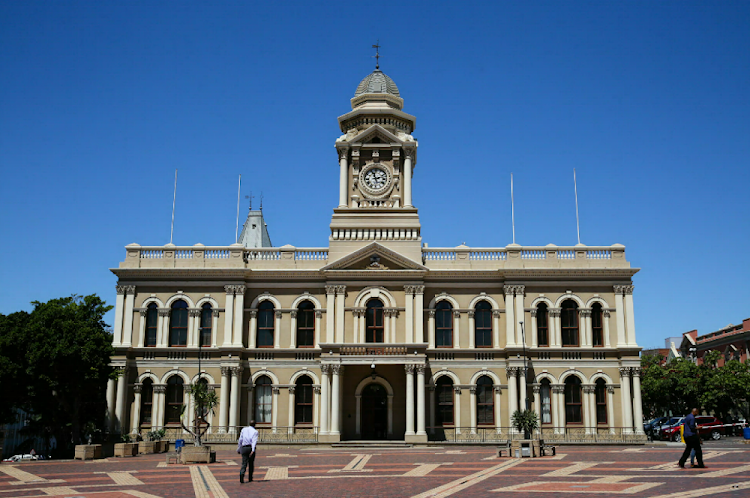
GQEBERHA, Friday 28 August 2026 — Nelson Mandela Bay Municipality has rejected National Treasury’s warning that its proposed R23.08 billion write-off of historic unauthorised, irregular, fruitless and wasteful expenditure is legally defective, opening a major governance dispute less than three months before voters choose a new metropolitan council.
Acting city manager Lonwabo Ngoqo has told Treasury that the municipality stands by its conclusion that expenditure recorded up to 30 June 2021 is no longer legally recoverable because the city failed to identify and pursue potentially liable officials, political office-bearers and service providers within the applicable prescription periods.
The dispute concerns approximately R23.08 billion in unauthorised, irregular, fruitless and wasteful expenditure accumulated between 2009 and 2021.
National Treasury told the metro earlier this month that it could not support a blanket write-off and that each transaction must instead be assessed individually before the council can determine whether money is irrecoverable.
Treasury’s deputy director-general for intergovernmental relations, Ogalaletseng Gaarekwe, also said an affidavit prepared by Ngoqo to support the process was legally defective.
Treasury warned that approving the write-off without complying with Section 32 of the Municipal Finance Management Act could render a council decision unlawful and expose officials and councillors to misconduct proceedings.
Ngoqo has now directly rejected that interpretation.
In his response, which formed part of the agenda for Thursday’s council meeting, he argued that the municipality’s failure to act timeously is itself relevant to whether the claims have prescribed.
“The proposed write-off is not advanced on the simplistic basis that UIFWE is old,” Ngoqo wrote, according to The Herald.
He said the municipality had failed within a reasonable period to identify relevant parties, establish causes of action and pursue recovery, meaning potential claims had subsequently become legally irrecoverable.
The municipality is relying partly on Section 12(3) of the Prescription Act, which deals with when a creditor is considered to have knowledge of a debtor and the facts giving rise to a debt.
Ngoqo argued that requiring the city to reconstruct every historic invoice, payment or purchase order would not revive claims that have already prescribed.
Treasury disputes that approach.
Its position is that Section 32 of the MFMA requires an item-by-item assessment before expenditure can be certified as irrecoverable and written off.
That means the dispute now concerns not simply whether R23 billion should disappear from the municipality’s UIFWE register, but competing interpretations of the legal process a municipality must follow when years of failure to pursue recovery may itself have allowed claims to prescribe.
Ngoqo also rejected Treasury’s instruction that his affidavit be withdrawn.
He acknowledged that some date references or arithmetic examples contained in it could require correction but said those issues did not alter the municipality’s substantive position.
The acting city manager said writing expenditure off would also not necessarily end other accountability processes.
He said criminal and disciplinary consequences could still be pursued where appropriate and that matters could be referred to the SAPS.
However, he acknowledged that some potential civil claims against officials or political office-bearers could themselves have prescribed because of the municipality’s failure to act earlier.
The issue was expected to come before the Nelson Mandela Bay council on Thursday but was deferred for seven days following a heated procedural and political dispute.
That postponement means councillors have not yet taken the final decision to approve the R23.08 billion write-off.
The dispute has already divided the metro’s political parties.
The ANC and EFF supported moving the write-off process through the Municipal Public Accounts Committee earlier this month, while the DA and ACDP opposed the approach and asked the Auditor-General and National Treasury to intervene.
Opposition councillors argued that they had not received the Section 32 reports needed to establish what individual amounts were spent on, who might be liable and whether recovery remained possible.
ACDP councillor Lance Grootboom and DA councillor Gert Engelbrecht subsequently escalated their concerns to national oversight institutions.
Treasury’s intervention supported their argument that an aggregated write-off could not replace transaction-level investigations.
ANC and EFF councillors have defended the committee process while emphasising that MPAC can only make recommendations and that the full council remains responsible for the final decision.
The latest development is particularly significant because the dispute is unfolding in Nelson Mandela Bay, one of the country’s most closely contested metropolitan municipalities.
The DA and ANC each won 48 of the 120 council seats in the 2021 local government elections, leaving smaller parties with decisive influence over the formation of municipal governments.
The metro has subsequently experienced repeated coalition changes and leadership instability.
Mayor Babalwa Lobishe currently leads an ANC-aligned administration, while former mayor Retief Odendaal is leading the DA’s campaign to regain control in the 4 November local government elections.
The R23 billion dispute consequently gives municipal financial governance an unusually prominent place in an election where comparatively small changes in voter support could determine which coalition governs after November.
It also comes immediately after the DA announced a substantial overhaul of its Nelson Mandela Bay candidate slate, replacing 10 of its 23 sitting ward councillors and targeting at least five additional wards.
The municipality itself has the highest accumulated unauthorised, irregular, fruitless and wasteful expenditure of any municipality in South Africa, with the broader balance approaching R30 billion, according to The Herald.
The immediate question is what councillors do when the R23.08 billion proposal returns to council next week.
A decision to proceed despite Treasury’s objections could escalate the dispute into further intervention by national oversight institutions or litigation over whether the municipality has complied with the MFMA.
A decision to abandon or substantially revise the proposal would instead require the metro to determine how thousands of historic expenditure items should be investigated individually despite the passage of time.
Either outcome is likely to make the handling of Nelson Mandela Bay’s finances a central issue in the final two months of campaigning for control of the metro.