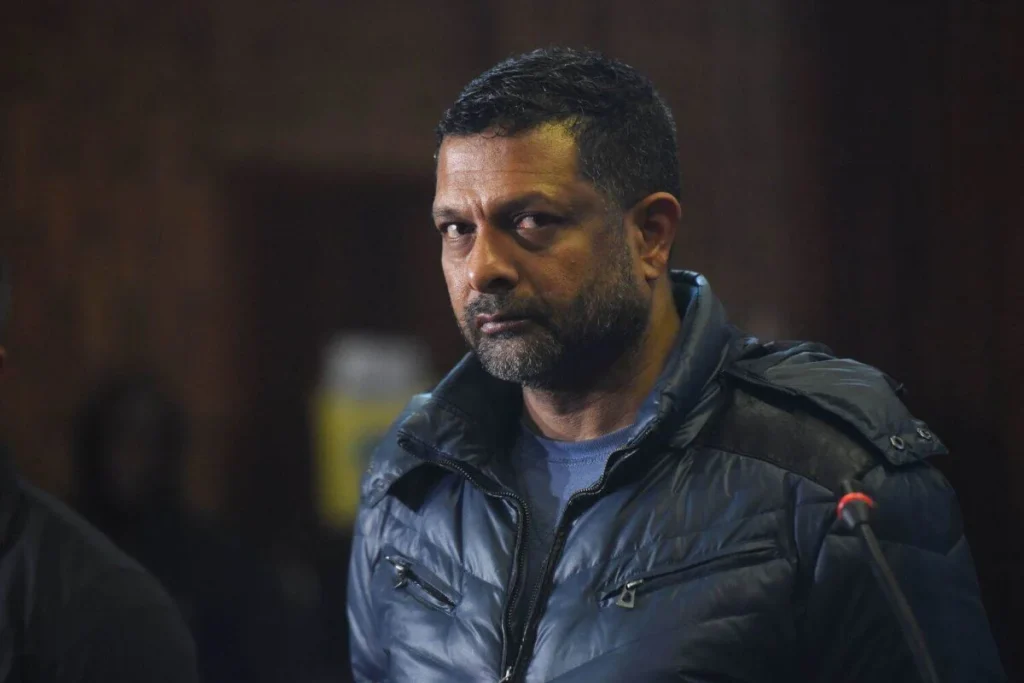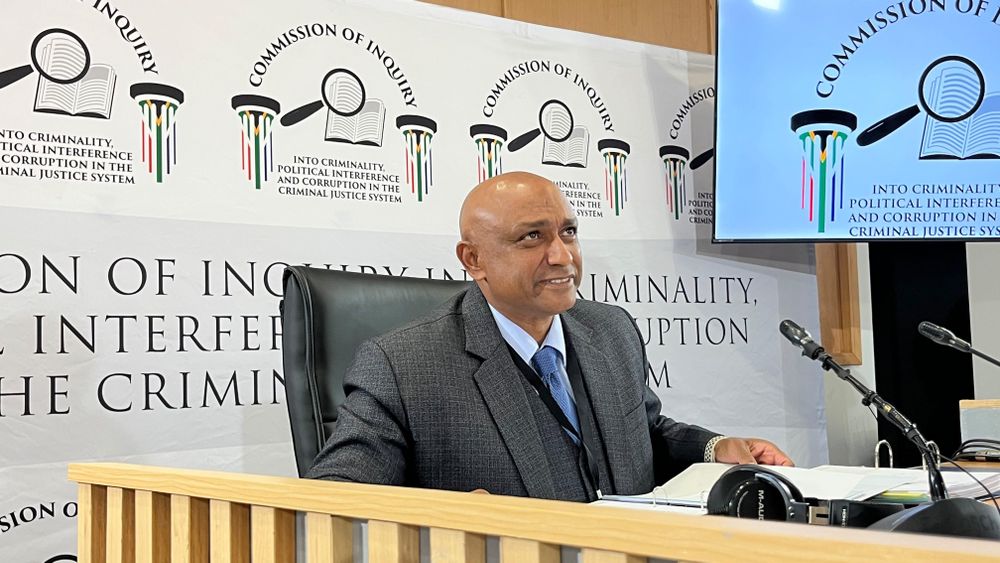
PRETORIA, Sunday 30 August 2026 — KwaZulu-Natal Hawks commander Deenadayalan “Deena” Govender must give key parts of his evidence publicly before the Madlanga Commission on Monday after retired Constitutional Court justice Mbuyiseli Madlanga rejected his request for those portions of his testimony to be heard behind closed doors.
The ruling is significant because Govender’s evidence intersects several allegations at the centre of the commission’s investigation into criminality, political interference and corruption within South Africa’s law-enforcement agencies.
Govender previously alleged before the commission that a person he described as being close to Police Minister Senzo Mchunu pressured him to falsely implicate KwaZulu-Natal police commissioner Nhlanhla Mkhwanazi and former provincial Hawks head Lesetja Senona in alleged extrajudicial killings.
Mchunu has denied the allegation.
The commission’s ruling, issued on Sunday, means Govender is scheduled to return to the public hearing at 09:30 on Monday, 31 August.
Govender had applied during his first appearance on 21 August for portions of his evidence to be heard in camera.
The commission granted condonation for the late filing of his application but refused his request to give evidence relating to specified portions of a Regulation 10(6) notice privately.
The ruling does, however, impose safeguards around sensitive information.
Govender will not be required to identify witnesses involved in an ongoing investigation into the suspected theft of a large cocaine consignment from the Hawks’ Port Shepstone offices.
He will also not be required to disclose specific police strategies, investigative techniques, operational methods or intelligence-gathering methods.
Evidence connected to earlier closed-door testimony by a person identified as Witness P will remain private.
That evidence concerns a counter-intelligence operation involving organised drug gangs in the Durban area and will be heard in camera on Monday or another date determined by the commission.
The distinction means that much of Govender’s evidence can be scrutinised publicly while the commission attempts to protect active investigations, witnesses and policing methods.
Govender heads a KwaZulu-Natal police cash-in-transit task team and has become an important witness in the commission’s investigation into allegations involving law-enforcement officials and organised criminal networks.
Part of the evidence concerns the disappearance of 541 kilograms of cocaine, estimated to have been worth about R200 million, from Hawks offices in Port Shepstone in November 2021.
The drugs had been seized months earlier after authorities intercepted a container at a depot in Isipingo.
A theft and business-burglary case was subsequently opened amid allegations that police officers may have been involved.
The commission is also examining allegations concerning a police operation in which tow-truck operator Bevan Loftus and four other people — Sihle Zondi, Ryan Santos, Chase Fynn and Michigan Hippolyte — were killed at a flat on 1 April 2023.
Evidence presented to the commission has included allegations that businessman Clive Naicker offered money for Loftus to be killed and that Govender’s team was subsequently deployed against him.
Those allegations have not been established as fact.
Govender has denied wrongdoing and has maintained that the operation in which Loftus and the other men were killed was a legitimate police operation.
KwaZulu-Natal Independent Police Investigative Directorate deputy director for investigations Len John previously told the commission that approximately R2 million was deposited into accounts linked to Govender and his wife, who is also a police officer, between August 2022 and December 2023.
Govender has disputed allegations against him.
His own evidence has, in turn, introduced allegations of attempted political interference into the commission’s proceedings.
During his 21 August appearance, Govender played audio recordings that he said supported his allegation that Mavuso Ntandani, whom he described as a political fixer associated with Mchunu, approached him on 13 August.
Govender alleged that he was pressured to become a state witness and falsely implicate Mkhwanazi and Senona in police shootings.
The allegations remain contested and have not been established by the commission.
They are particularly politically sensitive because Mchunu’s conduct and allegations of political interference in policing form part of the broader circumstances that led President Cyril Ramaphosa to establish the Madlanga Commission.
Mkhwanazi’s allegations concerning interference with police investigations triggered a major political and institutional crisis in 2025 and subsequently led to both the commission and parliamentary scrutiny.
The commission has since heard evidence involving senior police officers, politicians, prosecutors, business figures and alleged criminal networks.
Sunday’s ruling is therefore more than a procedural decision about whether a witness appears on camera.
Public testimony from Govender could provide additional information about competing allegations involving police operations, alleged corruption and attempts to influence investigations while allowing the claims to be tested openly before the commission.
Madlanga has nevertheless preserved confidentiality where disclosure could compromise active investigations or expose witnesses.
That balance will shape Monday’s proceedings.
Govender is expected to resume his testimony publicly at 09:30, while the commission will move into a closed session when questioning reaches the protected counter-intelligence evidence.
The credibility of Govender’s allegations — and the competing claims made about his own conduct — will remain matters for the commission to test as witnesses, documents and other evidence are examined.