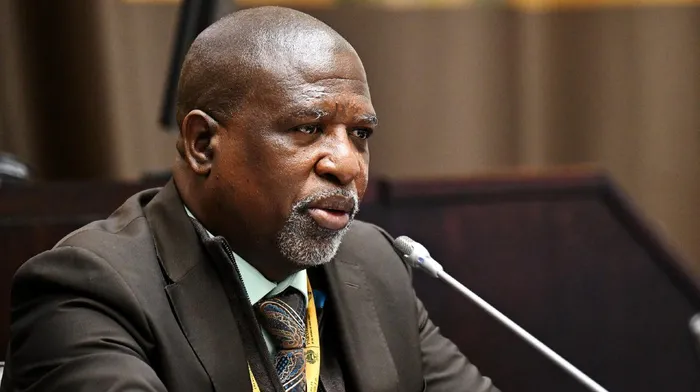
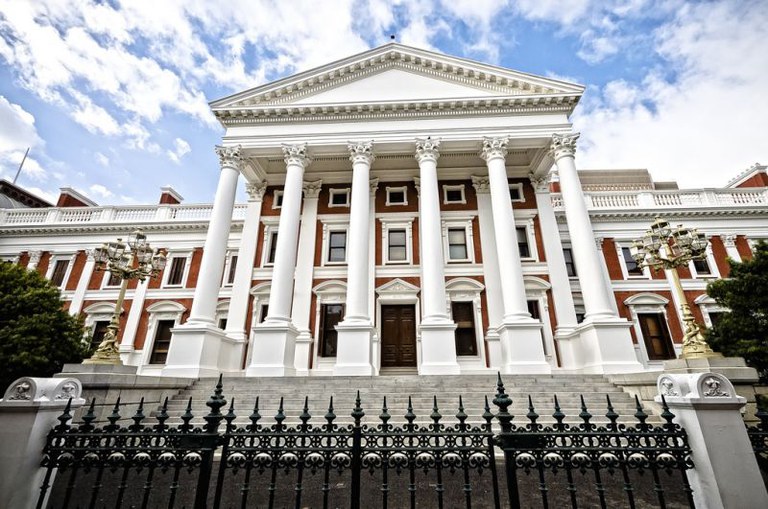
CAPE TOWN, Tuesday 1 September 2026 — Parliament’s legal advisers have found no evidence supporting President Cyril Ramaphosa‘s claim that Advocate Thandazani Madonsela SC could be biased against him, but have advised the Section 89 Impeachment Committee to reconsider Madonsela’s proposed appointment after confirmation that he previously advised the ANC on matters linked to the impeachment process.
The advice, presented to the committee on Tuesday, is a significant new step in Parliament of South Africa‘s continuing inquiry into Ramaphosa’s conduct following the 2020 theft of foreign currency from his Phala Phala farm.
Parliament’s Constitutional and Legal Services Office concluded that the information currently available does not establish an actual conflict of interest involving Madonsela.
Legal adviser Michael Prince also found no objective basis for Ramaphosa’s argument that Madonsela might harbour a grievance against him because the President previously removed him as a presidential appointee to the Judicial Service Commission.
“There appears to be no evidence before the Impeachment Committee that demonstrates any personal animosity between the president and Advocate Madonsela,” Prince told the committee, according to Eyewitness News.
Parliament’s lawyers said the fact that Madonsela ceased serving as a presidential JSC appointee did not by itself establish either an actual conflict or reasonable apprehension of bias.
They also emphasised that an evidence leader does not decide the outcome of a Section 89 inquiry.
The evidence leader assists MPs by identifying, organising and presenting evidence, while the committee itself evaluates that material and makes findings.
The legal advice does not, however, automatically clear the way for Madonsela’s appointment.
Parliament’s lawyers said his subsequently confirmed previous legal work for the African National Congress constituted new information that the committee should formally consider before finalising the appointment.
Madonsela had initially disclosed to the committee that he previously provided advice concerning the impeachment matter to a political “study group” in Parliament.
The ANC later formally disclosed that it was the organisation that had briefed him.
ANC secretary-general Fikile Mbalula informed National Assembly Speaker Thoko Didiza of the previous legal work on 8 August.
The ANC said its communication was not an objection to Madonsela’s appointment and did not question his integrity or independence, but was intended to ensure the information was formally before Parliament.
Didiza referred the matter back to the committee.
Ramaphosa subsequently lodged his own objection.
The President argued that Madonsela did not meet the requirement that the chief evidence leader be free of real or perceived conflicts of interest.
His objection rested on two principal grounds.
First, Ramaphosa said his decision to remove Madonsela as his JSC representative following the 2022 Chief Justice interviews could create a reasonable apprehension that Madonsela harboured a grievance against him.
Second, he argued that Madonsela’s previous legal advice to the ANC could create a conflict because the advice concerned matters related to the same Section 89 process.
Parliament’s lawyers rejected the first argument.
Their position on the second was more qualified.
They found that Madonsela’s previous ANC work did not automatically disqualify him, but advised MPs to reconsider the issue now that the identity of his former client had been formally confirmed.
“The information presently available does not establish an actual conflict of interest,” Prince said.
“Nevertheless, the subsequent disclosure that the advice was rendered to the ANC constitutes new information.”
The committee has consequently been advised that it can either confirm Madonsela as its preferred evidence leader and record why it considers him sufficiently independent, or withdraw its recommendation and reconsider another candidate.
Parliament’s legal advisers said formally applying its mind to the new disclosure would strengthen the procedural fairness and credibility of the impeachment process and reduce the risk of subsequent legal challenges.
The committee originally recommended Madonsela on 5 August after several unsuccessful attempts to agree on an evidence leader.
He received nine votes, while Advocate Kate Hofmeyr SC received seven.
Eleven MPs abstained.
Madonsela was supported by MPs from the EFF, MK Party, ACDP, ATM, Build One South Africa and United Africans Transformation.
Hofmeyr received support from the DA, Freedom Front Plus and ActionSA, while the ANC, Patriotic Alliance and Al Jama-ah abstained.
The dispute comes during an already legally complicated Section 89 process.
The committee is examining whether there are grounds for Ramaphosa’s removal from office following the findings of an independent panel established under Section 89 of the Constitution.
The panel’s report concerns the President’s conduct following the theft of US dollars from his Phala Phala farm in Limpopo in February 2020.
Ramaphosa has consistently denied wrongdoing.
Public hearings by the committee are currently halted by a Western Cape High Court interdict while Ramaphosa pursues a review of the process.
The Constitutional Court declined last month to directly hear an attempt by opposition parties to overturn that interim order.
The Western Cape High Court is scheduled to hear Ramaphosa’s substantive challenge from 2 to 4 September.
The evidence-leader dispute therefore comes immediately before another potentially consequential stage in the litigation surrounding the impeachment inquiry.
The outcome matters beyond Madonsela’s individual appointment.
A Section 89 inquiry is one of Parliament’s most serious constitutional processes because it can ultimately result in a recommendation that the National Assembly remove a sitting president for a serious violation of the Constitution or law, serious misconduct or inability to perform the functions of office.
No such finding has been made against Ramaphosa.
The committee must first assess the evidence and determine whether grounds for removal have been established before the National Assembly can consider any recommendation.
Tuesday’s legal advice removes one obstacle to Madonsela’s appointment by rejecting the suggestion that Ramaphosa’s earlier removal of him from the JSC establishes a reasonable apprehension of bias.
It simultaneously leaves MPs with a narrower but potentially consequential question: whether Madonsela’s previous work for the ANC creates a perceived conflict significant enough to outweigh the committee’s original decision to appoint him.
The committee’s decision on that question will determine who leads the evidence when — and if — the Phala Phala impeachment hearings are permitted to proceed.