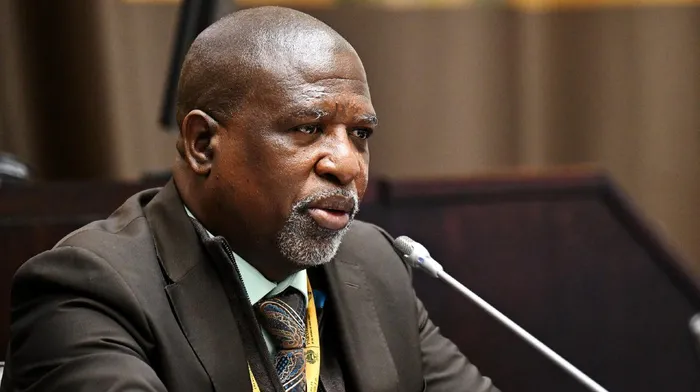
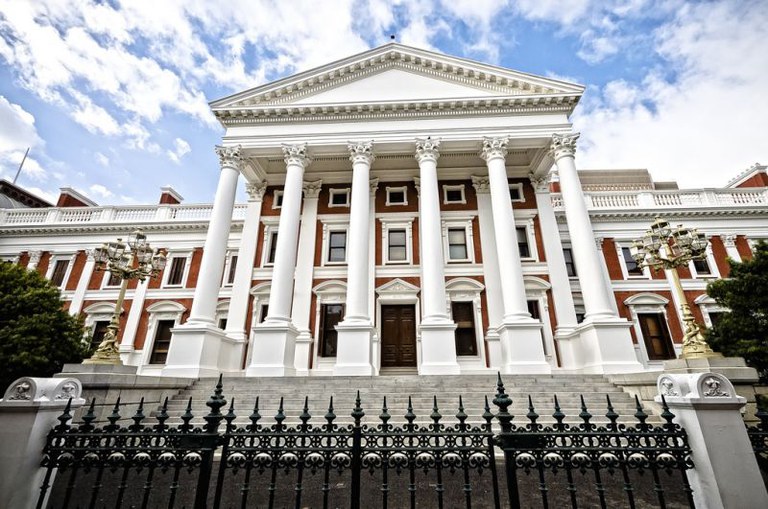
CAPE TOWN, Thursday 3 September 2026 — The MK Party has asked National Assembly Speaker Thoko Didiza to remove Rise Mzansi MP Makashule Gana as chair of Parliament’s Section 89 inquiry into President Cyril Ramaphosa, arguing that his party’s political relationship with the Government of National Unity raises questions about his impartiality.
MK parliamentary leader John Hlophe has written to Didiza requesting that Gana’s 1 June election as chair be set aside and that the 31-member committee hold a fresh election for its presiding officer, according to correspondence reported by Eyewitness News on Thursday.
The request adds another dispute to Parliament’s first Section 89 impeachment inquiry involving a sitting South African president, at a time when the committee is also reconsidering its choice of evidence leader and Ramaphosa is pursuing litigation linked to the process.
Hlophe argues that the chairperson should come from a party that is neither part of nor politically aligned with the GNU.
He contends that Rise Mzansi’s relationship with parties supporting the national governing arrangement makes Gana unsuitable to preside over an inquiry that could ultimately result in a recommendation affecting Ramaphosa’s presidency.
The assertion is the MK Party’s political and legal argument. Parliament has not found Gana to be conflicted or incapable of chairing the committee.
Parliament’s official record shows that Gana was elected at the committee’s inaugural meeting on 1 June after receiving 19 votes, compared with 12 for United Africans Transformation MP Lehlohonolo Mahlatsi.
Parliament said at the time that Gana would be responsible for overseeing proceedings and ensuring the inquiry was conducted in accordance with the Constitution, National Assembly rules and the committee’s Section 89 mandate.
The MK Party opposed Gana’s election from the outset.
Hlophe said after the June vote that he did not regard Gana as sufficiently independent and accused the ANC of backing his candidacy to influence the process. Those claims were disputed by other parties and have not been established as findings of fact.
The ANC previously said it deliberately supported a chairperson from outside its own ranks because having an ANC MP preside over an inquiry into the party’s president could itself create perceptions of bias.
Gana has publicly maintained that his responsibility is to conduct the inquiry fairly and according to due process.
In remarks issued by Parliament on 1 September, he said the committee’s work had to meet two requirements simultaneously: accountability and fairness.
The latest challenge comes as another controversy has interrupted preparations for the substantive inquiry.
The committee this week decided to reopen nominations for its evidence leader after concerns were raised about Advocate Thandazani Madonsela SC’s previous legal work for the ANC.
Political parties have been given until Friday to submit new nominations.
Parliament had previously confirmed that ANC secretary-general Fikile Mbalula informed Didiza that Madonsela had provided legal advice to the party on matters relating to Section 89 rules and processes.
The ANC said that disclosure was not intended as an objection to Madonsela’s appointment or a challenge to his integrity. Didiza referred the information to the impeachment committee for consideration.
The committee subsequently opted to restart the nomination process rather than continue with the original recommendation.
The disputes are unfolding alongside Ramaphosa’s legal challenge to the independent panel report that forms the basis of the parliamentary inquiry.
Gana said earlier this week that the committee would continue preparing for the inquiry while allowing the courts to determine the legal challenges before them.
He said the committee was more than 80% through the process of finalising its terms of reference and intended to be ready to proceed if no court order prevented it from doing so.
The Section 89 process stems from questions arising from the theft of foreign currency from Ramaphosa’s Phala Phala farm and the subsequent handling of the matter.
An inquiry by the committee does not itself remove a president.
The committee must investigate the allegations and report to the National Assembly, where further constitutional thresholds would apply if MPs ultimately sought to remove the president.
Didiza’s response to the MK Party’s request will now determine whether the challenge to Gana remains a political objection or develops into a further procedural dispute over the composition of the impeachment inquiry.
Any attempt to change the committee’s leadership could also affect its timetable as MPs attempt to settle the evidence-leader process and complete their procedural preparations.