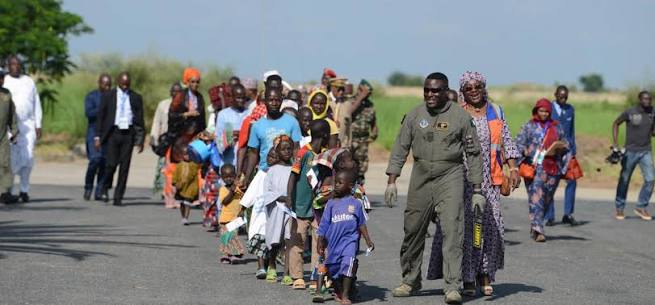
PRETORIA, Friday 4 September 2026 — Nigeria says it has now evacuated 1,640 of its citizens from South Africa amid continuing concerns over xenophobic and anti-migrant violence, while a further 500 one-way tickets will be funded by the Redeemed Christian Church of God for Nigerians seeking to return home.
Nigeria’s Ministry of Foreign Affairs disclosed the updated evacuation figure in a statement released on Thursday and publicised on Friday, saying 1,385 of the returnees had been transported with federal government funding and another 255 with philanthropic support.
The new total represents a further increase from the 1,490 Nigerians the Nigerian government said had been evacuated by 15 July.
At that stage, Abuja said the repatriation programme had been undertaken in response to security concerns arising from attacks against foreign nationals in South Africa and through cooperation involving both governments.
Nigeria’s latest statement says the Redeemed Christian Church of God has donated US$265,854 to fund 500 additional one-way tickets.
The donation does not mean those 500 people have already been evacuated. It provides funding for further voluntary departures by Nigerians who choose to leave South Africa.
The Nigerian government also said another 202 citizens were undergoing final immigration screening in South Africa before they could leave.
Nigeria’s High Commission in Pretoria and Consulate General in Johannesburg are continuing to assist people seeking repatriation, according to the statement.
The renewed evacuation update comes against a backdrop of continuing anti-migrant mobilisation in South Africa.
In Durban on Thursday, police used rubber bullets, pepper spray and other public-order measures while separating members of anti-immigration group March and March from migrants gathered outside Home Affairs offices.
The migrants in that confrontation included people who had been displaced during previous anti-immigration actions.
There is no evidence linking Thursday’s Durban confrontation specifically to the Nigerians covered by the latest evacuation announcement.
The two developments nevertheless form part of the wider political and diplomatic dispute over migration, public safety and attacks on foreign nationals in South Africa.
Nigeria has repeatedly raised the issue with Pretoria.
During bilateral talks in July, Nigerian officials called for stronger action against attacks on Nigerians and other African migrants, while questioning whether South African law-enforcement authorities were doing enough to prevent violence.
South Africa has rejected any suggestion that xenophobic violence is government policy.
President Cyril Ramaphosa has repeatedly condemned xenophobia and Afrophobia and said migration enforcement must be carried out within the law rather than through vigilantism.
He told Parliament in June that security agencies had been instructed to protect foreign nationals and take action against people involved in violence or intimidation.
South African officials have also disputed broader descriptions of the country as inherently xenophobic.
Presidential spokesperson Vincent Magwenya said earlier this year that individual acts of intimidation and anti-migrant violence should not be used to characterise the entire country, while arguing that African governments also needed to address factors driving large-scale migration.
Nigeria has maintained a more critical position.
Its government says repeated attacks against Nigerians and other African nationals require a stronger response and has described the evacuation programme as part of its obligation to protect citizens abroad.
In July, Nigeria said its foreign ministry, High Commission, South African authorities and other institutions had worked together on the screening and departure process.
The latest statement suggests that voluntary departures have continued after the larger evacuation flights carried out in June and July.
The issue has also reached continental diplomatic forums.
Nigeria said President Bola Tinubu raised concerns about recurring xenophobic and Afrophobic attacks in South Africa during an African Union meeting in Luanda on 30 August.
That elevates the dispute beyond bilateral diplomatic exchanges between Abuja and Pretoria.
Migration has meanwhile become increasingly prominent in South Africa’s domestic politics ahead of the 4 November local government elections.
Several political parties and civic organisations are campaigning for stricter immigration enforcement, while government and civil-society organisations have warned that immigration policy cannot be enforced through intimidation or violence.
Ramaphosa told Parliament in August that authorities were also investigating indications that some anti-migrant mobilisation could have links to actors outside South Africa, although he did not identify those actors or provide evidence publicly.
The investigation has not resulted in any publicly announced findings establishing foreign involvement.
The political challenge for government is therefore twofold: enforcing immigration laws while preventing legally or illegally resident foreign nationals from being targeted through vigilantism.
The growing number of Nigerian departures adds a diplomatic dimension to that challenge.
Nigeria and South Africa are two of Africa’s largest economies and maintain extensive political, business and multilateral relationships, making prolonged bilateral tensions over the treatment of migrants consequential beyond the immediate evacuation programme.
The next material developments will include whether further evacuation flights are organised using the newly donated funds, whether Pretoria responds to Nigeria’s latest figures and AU-level intervention, and whether law-enforcement action follows Thursday’s renewed confrontation in Durban.