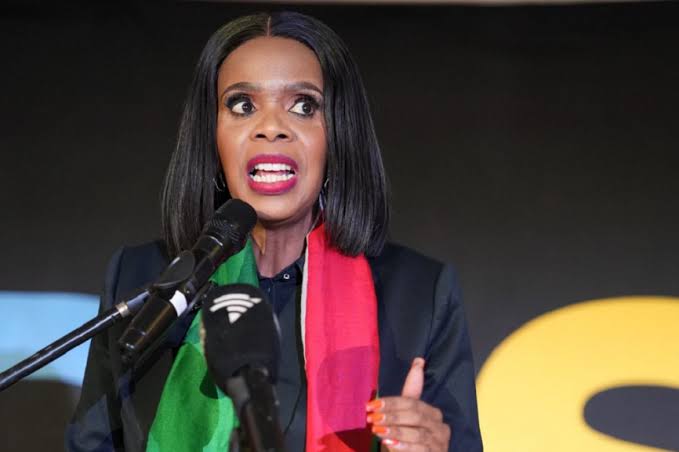
PRETORIA, Saturday 12 September 2026 — The MK Party has named former senior City of Tshwane official Nkele Annie Matime as its mayoral candidate for the capital, filling one of the last major gaps in its metropolitan election slate less than two months before the 4 November local government elections.
The party announced Matime’s candidacy on Saturday evening, saying she would lead its campaign to take control of Tshwane and promote what it described as accountable, people-centred governance. SABC News independently confirmed the announcement.
Matime previously served in senior positions within the City of Tshwane, including as deputy director for policy formulation and implementation, and also worked in local economic development with a focus on job creation and community programmes.
Her selection gives the MK Party a named contender in one of the country’s most competitive metropolitan races, where the DA, ActionSA, EFF, Freedom Front Plus and several smaller parties are also campaigning for control.
Matime brings municipal-government experience
The MK Party says Matime has more than two decades of experience in municipal governance and economic development.
According to the party, she holds an MBA as well as honours qualifications in geography and theology and has held leadership roles in civic, community, church and development organisations.
Her professional background differentiates her from some of the MK Party’s other metropolitan candidates, who have largely emerged from national politics, party leadership or previous elected office.
In Tshwane, the party is presenting a former municipal administrator rather than a current councillor or national political figure.
Appointment fills another metro vacancy in MK slate
The MK Party had left both Tshwane and Cape Town without announced mayoral candidates when it unveiled most of its metropolitan slate earlier this month.
Matime’s appointment leaves Cape Town as the only metro for which the party has not yet announced a mayoral contender, according to IOL.
The latest move also comes only days after the party replaced its initial eThekwini candidate, Zandile Hlophe-Mkhwanazi, with Mxolisi Phakathi amid a wider internal investigation into alleged irregularities in its municipal candidate lists.
That eThekwini change was a separate development and was covered previously by Mzansi Political Safari.
The Tshwane announcement therefore represents an expansion of the MK Party’s slate rather than another replacement.
Tshwane race already crowded with prominent candidates
Matime enters a contest that includes several established municipal figures.
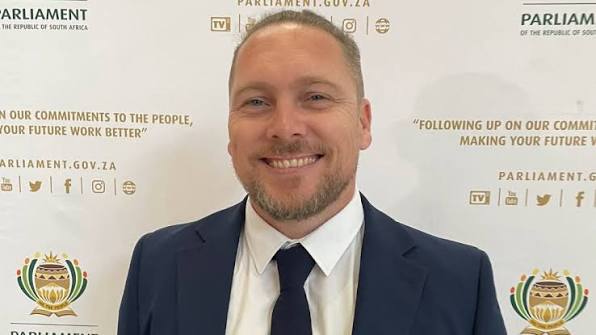
The DA is campaigning with former mayor Cilliers Brink, while incumbent mayor Nasiphi Moya is seeking another term under the ActionSA banner.
The Freedom Front Plus has selected former MP and current councillor Willie Spies as its candidate.
The EFF has named Omphile Maotwe, while the ANC has been considering a shortlist that includes Aaron Maluleka, Tlangi Mogale and Kgosi Maepa.
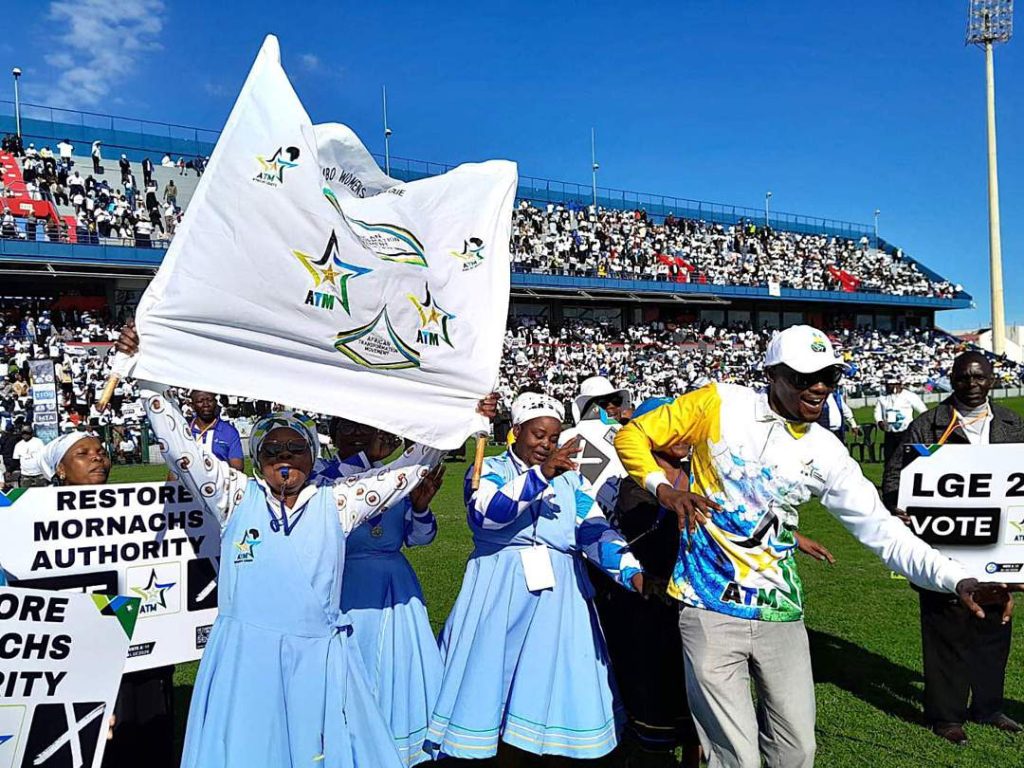
Afrika Mayibuye has separately selected Prince Mokotedi to contest the metro.
The size and breadth of the field reinforces expectations that control of Tshwane may again depend on coalition negotiations.
Tshwane has experienced repeated coalition upheaval
The capital has been governed through multiparty arrangements for much of the period since the ANC lost its outright majority in 2016.
Brink’s DA-led administration was removed through a motion of no confidence in September 2024.
Moya became mayor the following month after ActionSA entered a governing arrangement involving the ANC and EFF.
That coalition configuration has remained politically contentious, particularly between ActionSA and the DA, which have each argued that the other is responsible for the metro’s governance and financial problems.
The November result could once again produce a fragmented council rather than a single-party majority.
Current polling points to competitive but fluid race
Recent public polling has placed the DA ahead in Tshwane, although estimates vary significantly depending on methodology and likely-voter assumptions.
An Ipsos poll released earlier this month put the DA on 31% and the ANC on 22% in the metro, while a separate Social Research Foundation survey placed the DA substantially higher.
Those surveys were conducted before all parties had completed their mayoral announcements and should not be treated as forecasts of the final result.
The MK Party’s support in Tshwane is also less established than its strength in KwaZulu-Natal.
Its choice of a candidate with direct municipal-government experience may therefore be intended partly to strengthen its local credibility in a metro where it is competing against parties with well-known incumbents and former mayors.
MK seeks foothold beyond KwaZulu-Natal
Tshwane is strategically important to the MK Party because its strongest electoral base remains KwaZulu-Natal.
The party has nevertheless been attempting to establish itself as a significant municipal force in Gauteng.
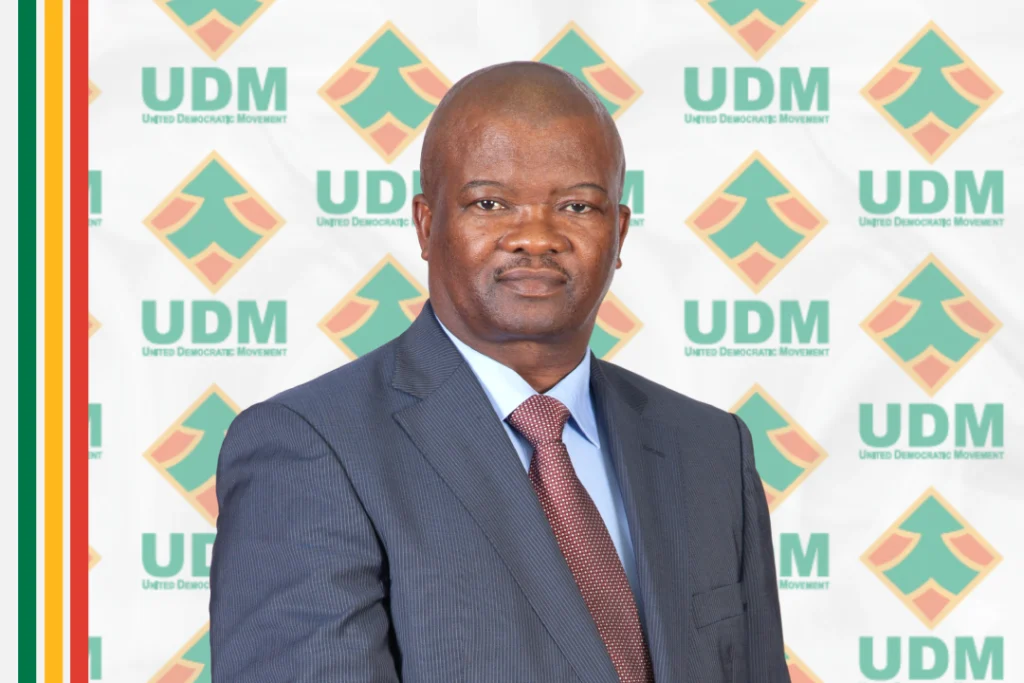
It has already selected former Midvaal mayor Bongani Baloyi as its Johannesburg candidate and has ruled out working with the DA in a possible Johannesburg coalition after the election.
Gauteng’s metros offer the party an opportunity to demonstrate whether it can convert its national profile into municipal representation outside its strongest province.
Tshwane, Johannesburg and Ekurhuleni are all expected to produce highly fragmented results.
Even comparatively modest support could therefore give smaller and newer parties influence over coalition formation.
Candidate-list turmoil remains separate internal challenge
Matime’s announcement comes while the MK Party continues investigating claims that some councillor candidates who emerged from internal nomination processes were removed or replaced before lists were submitted to the IEC.
The party has said it intends establishing the facts and taking disciplinary action where warranted.
Those allegations have not been proven.
Because the statutory nomination deadline has already passed, the party cannot simply substitute councillor candidates on lists unless changes fall within the limited circumstances permitted under electoral law.
The controversy has already contributed to significant internal restructuring, including changes to structures involved in the party’s election preparations.
Matime’s selection does not itself resolve those disputes.
Mayoral candidate does not guarantee mayoralty
As with other parties, the MK Party’s designation of Matime as its mayoral candidate is politically important but does not place her directly on a mayoral ballot.
South Africans elect municipal councillors on 4 November.
The newly constituted council then elects the executive mayor from among its councillors.
Matime would therefore need to secure a council seat and then obtain majority support in the Tshwane council if the MK Party wants her elected mayor.
If no party wins an outright majority, that could require a coalition or other voting agreement.
Tshwane slate now largely complete
The immediate significance of Saturday’s announcement is that another major party has now put a named candidate into the Tshwane contest.
Matime joins an unusually crowded field containing an incumbent mayor, a former mayor, experienced councillors and several newer political formations.
For the MK Party, her background in Tshwane’s own administration allows it to campaign on claims of municipal experience while it attempts to build support in Gauteng.
The larger test will come after 4 November, when the party’s seat total will determine whether Matime remains principally a campaign figure or becomes part of negotiations over who governs the capital.