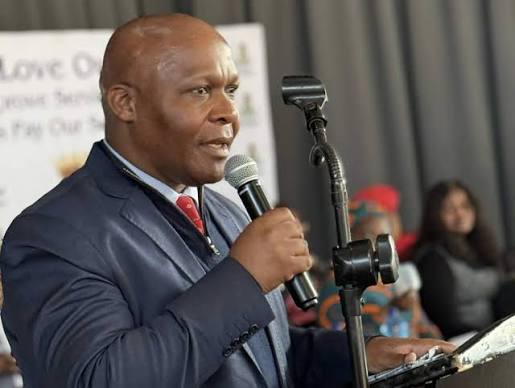
PRETORIA, Thursday 1 October 2026 — The government will begin implementing a revised national framework for local government aimed at professionalising municipal administrations and reducing political interference in appointments, Cooperative Governance Minister Velenkosini Hlabisa said on Thursday, weeks before newly elected councils take office following the 4 November municipal elections.
Cabinet has approved the final Revised White Paper on Local Government, replacing the policy framework that has underpinned South Africa’s municipal system since 1998.
The new framework proposes changes to municipal governance, administration, funding, intergovernmental coordination and accountability as government attempts to address persistent financial and service-delivery failures across the country’s municipalities.
Hlabisa said implementation would begin immediately, with President Cyril Ramaphosa expected to formally launch the framework on 22 October.
A time-bound transition body will oversee the reform programme.
Hlabisa says municipal appointments must be based on merit
A central element of the reforms is the professionalisation of municipal administrations.
Hlabisa told SABC News on Thursday that municipal officials should be employed on the basis of capability and relevant experience rather than political relationships.
He said the revised framework was intended to bring politically driven deployment of municipal officials to an end.
The policy developed by the Department of Cooperative Governance and Traditional Affairs calls for merit-based recruitment, depoliticised appointments, continuous skills development and stronger digital governance.
It also proposes measures intended to ensure senior municipal officials possess appropriate qualifications and are appointed through processes insulated from political interference.
The reforms do not themselves amount to the immediate dismissal of politically affiliated municipal employees.
Their practical effect will depend on implementation measures, legislation and appointment processes flowing from the White Paper.
Cabinet approves transition body
Cabinet approved the final White Paper at its meeting on 23 September, after a consultation process that included political parties, municipalities, traditional leaders, provincial governments, business and civil society.
The decision was formally announced in the Cabinet statement published this week.
Cabinet also approved a time-bound Transition Management Body and a phased, whole-of-government implementation programme.
The Department of Cooperative Governance, the Presidency and National Treasury will jointly lead implementation.
Government says the transition mechanism is intended to address a recurring weakness in previous municipal reform programmes: policies being adopted without sufficient planning for implementation.
Minister in the Presidency Khumbudzo Ntshavheni said the reforms would therefore be introduced through a phased and sequenced process.
New system proposes different treatment for different municipalities
The revised framework also moves away from treating every municipality as though it has the same administrative and financial capacity.
Government has argued that the existing system places responsibilities on smaller and weaker municipalities that they may not have the institutional capacity or revenue base to fulfil.
The White Paper therefore proposes a differentiated municipal governance model, under which powers, responsibilities and government support can be aligned more closely with the circumstances and capacity of individual municipalities.
Ramaphosa previewed the approach during his 2026 State of the Nation Address, saying some municipalities were capable of assuming more functions than others.
The revised framework also provides for stronger cooperation between municipalities and traditional and Khoi-San leadership structures.
Municipal funding also targeted for reform
Financial sustainability forms another major component of the overhaul.
The White Paper proposes reforms to municipal revenue, grant arrangements and infrastructure financing, alongside measures aimed at reducing revenue losses and increasing spending on maintenance.
Rural and financially weaker municipalities are expected to receive particular attention under the revised funding approach.
The reforms come against a backdrop of severe financial pressure across parts of the local government system, with municipalities facing growing consumer debt, infrastructure backlogs, water and electricity losses and recurring findings from the Auditor-General over weak financial controls.
Government has also been reviewing the broader local government funding model alongside the White Paper.
Coalition governance forms part of wider reform programme
The local government overhaul is taking place alongside proposed legislation dealing specifically with unstable coalition governments.
CoGTA has been advancing amendments that would regulate coalition agreements and introduce clearer rules for municipalities where no party wins an outright majority.
Hlabisa previously said parties forming coalition governments after the November election would be expected to enter into formal coalition agreements under the proposed new framework.
The White Paper itself also identifies political stability, leadership accountability and clearer coalition arrangements as areas requiring reform.
That issue is likely to become increasingly important after the election, with polling indicating that several major metropolitan municipalities could again produce hung councils.
Framework to launch before election day
Ramaphosa is expected to officially launch the revised White Paper on 22 October, less than two weeks before municipal election day.
Hlabisa said the launch would be accompanied by establishment of the transition management structure responsible for rolling out the reforms.
The timing means councils elected on 4 November will begin their terms as government starts implementing the first major overhaul of South Africa’s local government policy framework in nearly three decades.
The effectiveness of the reforms will ultimately depend on how the White Paper’s policy commitments are translated into legislation, regulations, funding decisions and municipal administrative practice.