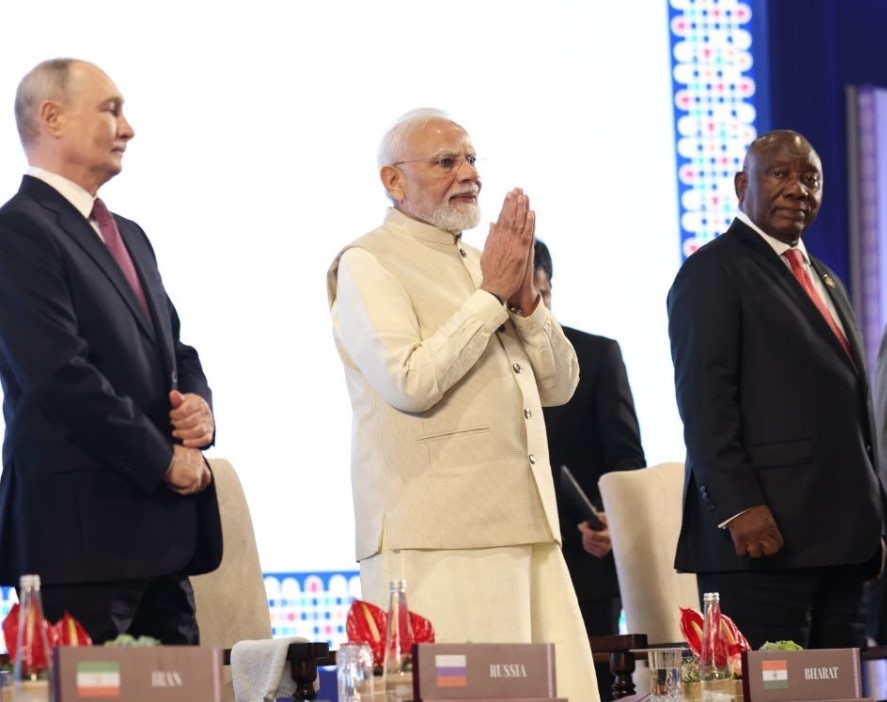
NEW DELHI, Saturday 12 September 2026 — BRICS members have reached agreement on a joint declaration at their New Delhi summit despite divisions over the Middle East conflict, as President Cyril Ramaphosa joins leaders seeking to present the expanded bloc as a stronger voice for developing economies and reform of global institutions.
Four sources familiar with negotiations told Reuters on Saturday that members had settled the declaration after intensive consultations aimed partly at bridging differences between Iran and the United Arab Emirates over the Gulf conflict. The document is expected to condemn unilateral aggression without naming individual countries.
The agreement is a material outcome from the opening day of the summit because BRICS operates by consensus and now contains a substantially more diverse group of states than the original Brazil, Russia, India, China and South Africa formation.
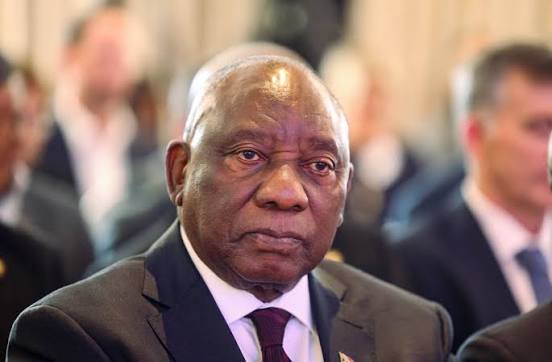
South Africa is represented by Ramaphosa, International Relations and Cooperation Minister Ronald Lamola, Minister in the Presidency Khumbudzo Ntshavheni and Deputy Trade, Industry and Competition Minister Zuko Godlimpi.
Declaration tests unity of expanded BRICS
The summit is taking place against renewed hostilities involving Iran and the United States, continuing war in Ukraine and disruptions to global shipping, energy and trade.
Those conflicts have made common diplomatic language more difficult for a grouping containing countries with markedly different foreign-policy relationships.
Reuters reported that India led sustained consultations to find wording acceptable to member states, including Iran and the UAE, which have held differing positions during the Gulf crisis.
The negotiated declaration is not expected to identify individual states when referring to unilateral military action.
Its significance therefore lies less in assigning responsibility for specific conflicts than in BRICS members demonstrating that they can still reach a consensus position despite internal geopolitical differences.
Modi pushes BRICS to convert unity into influence
Indian Prime Minister Narendra Modi, opening the leaders’ meeting, said BRICS needed to convert its consensus into practical influence over global decision-making.
“The Global South is today in the front row when it comes to global crises, but in the back row when it comes to decision-making,” Modi said, according to Reuters.
He called for changes to institutions including the United Nations Security Council and reiterated India’s demand for expanded representation of emerging economies.
Institutional reform is also one of South Africa’s stated priorities at the summit.
The Presidency said before the meeting that Ramaphosa would participate in a leaders’ session focused on inclusive global governance and strengthening multilateralism, including reform of the UN system, international financial architecture and multilateral trading system.
South Africa has long backed Security Council reform
Pretoria has consistently argued that Africa and other developing regions remain under-represented in institutions created after the Second World War.
South Africa has specifically supported comprehensive reform of the UN Security Council to give developing states greater representation and influence.
That position predates the current summit, but the expanded BRICS membership gives the debate additional political weight.
The bloc now brings together some of the world’s largest emerging economies and represents more than 40% of the global population, according to Reuters.
South Africa sees that collective weight as a mechanism for pressing reforms that it would have considerably less leverage to pursue alone.
Finance chiefs also push IMF and World Bank reform
The declaration negotiations follow a separate statement by BRICS finance ministers and central-bank governors calling for reform of institutions including the International Monetary Fund and World Bank.
The finance officials said emerging and developing economies should have stronger representation as their share of global output increases.
They also committed to closer coordination between BRICS members and further work on faster and cheaper cross-border payment systems.
The group has been exploring increased settlement in national currencies and greater interoperability between payment systems.
Those initiatives have attracted international attention because of concerns that BRICS is attempting to reduce dependence on financial systems centred on the US dollar.
BRICS has not agreed to create a common currency.
South Africa simultaneously pushes economic agenda
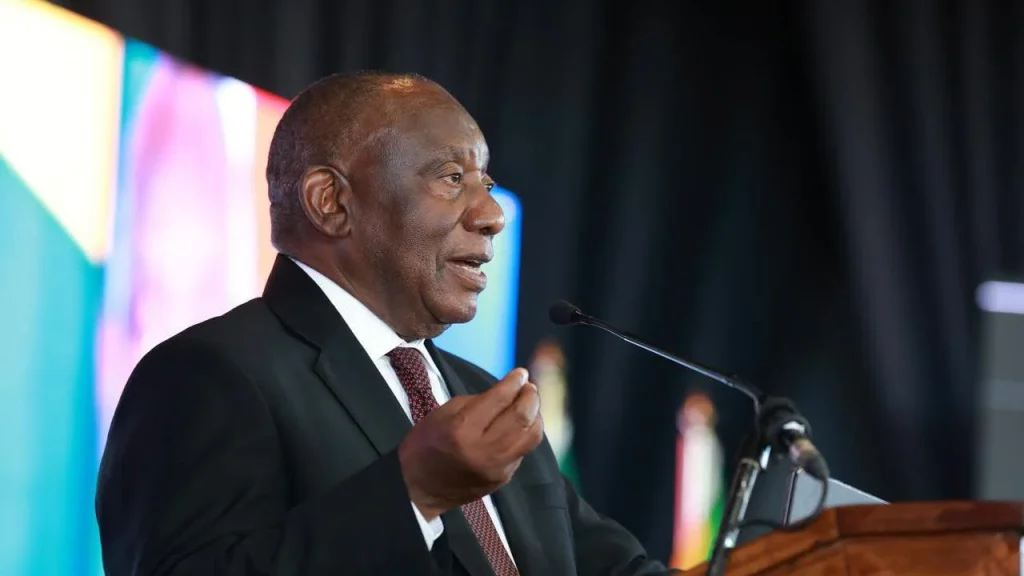
Ramaphosa arrived at the summit after using Friday’s BRICS Business Forum to argue that cooperation between members should produce greater manufacturing and industrial investment in Africa rather than reinforce the continent’s historical role as a supplier of raw materials.
He said African countries should capture more value from critical minerals and other resources through beneficiation and manufacturing.
That economic intervention was covered separately by Mzansi Political Safari and remains distinct from Saturday’s diplomatic negotiations.
South Africa is using the wider summit to pursue expanded intra-BRICS trade, infrastructure investment and industrialisation, according to the Presidency.
India-South Africa investment discussions also scheduled
Ramaphosa is also participating in an India-South Africa Business Leadership Roundtable during the visit.
The Presidency said the engagement is aimed at attracting additional Indian investment in pharmaceuticals, infrastructure, critical minerals and the electric-vehicle battery supply chain.
Those sectors align with Pretoria’s wider industrial strategy, particularly its effort to move African mineral production further into downstream manufacturing.
The summit therefore has parallel tracks for South Africa: diplomatic efforts to reshape international governance and commercial efforts to attract investment.
Consensus does not eliminate BRICS divisions
Agreement on a declaration should not be interpreted as evidence that BRICS members have resolved their wider geopolitical differences.
Members retain divergent relationships with the United States, Europe, Russia and competing Middle Eastern powers.
India and China also continue to manage their own longstanding strategic and border disputes.
The grouping deliberately operates without requiring members to align on every foreign-policy issue.
Its challenge is instead to identify areas where countries with differing strategic interests can still reach collective positions.
Saturday’s agreement suggests that members were able to clear that threshold on the New Delhi declaration despite the particularly difficult diplomatic environment.
Final text will determine strength of commitments
The wording of the adopted declaration remains important.
Broad statements supporting multilateralism or condemning aggression carry different diplomatic weight from specific commitments on institutional reform, conflict resolution, trade or financing.
The Presidency had said before Ramaphosa’s departure that the summit would conclude with adoption of the New Delhi Declaration.
The final public text will therefore provide the clearest indication of where South Africa and its partners reached meaningful agreement and where difficult issues were handled through deliberately broad consensus language.
For Pretoria, the test will be whether BRICS can convert the political weight of its expanded membership into progress on priorities South Africa has pursued for years: greater representation for Africa, reform of global financial institutions and a larger role for developing economies in shaping international rules.