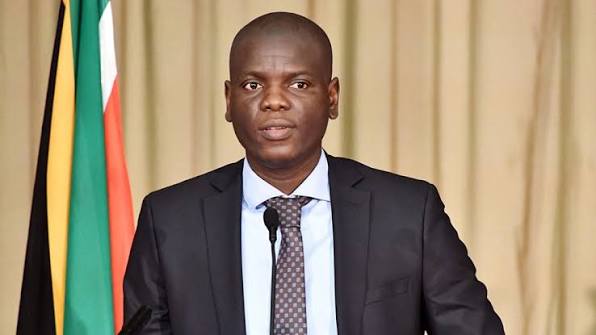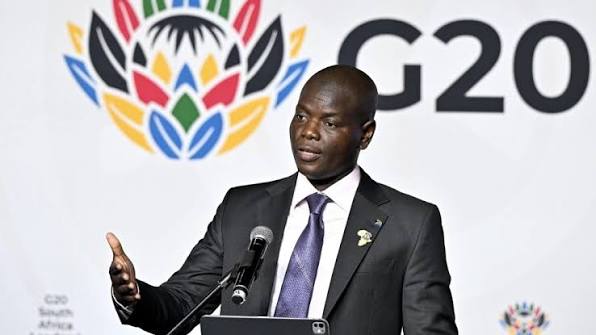
NEW YORK, Thursday 24 September 2026 — International Relations Minister Ronald Lamola has criticised other G20 members for failing to publicly challenge South Africa’s exclusion from meetings under the United States’ presidency of the bloc, while saying Pretoria will not attempt to attend without an invitation or pressure other countries into a boycott.
Speaking at the Council on Foreign Relations in New York, Lamola said South Africa remained prepared to participate if Washington reversed its position.
The remarks sharpen Pretoria’s diplomatic challenge to its exclusion while signalling that the government intends to avoid retaliatory measures that could deepen an already severe breakdown in relations between South Africa and the United States.
Lamola says G20 members should speak out
Lamola said South Africa was disappointed that fellow members of the G20 had not been more vocal about the United States’ decision.
South Africa is a founding member of the forum and argues that membership should not depend on an invitation from whichever country holds the rotating presidency.
The minister nevertheless ruled out attempting to attend meetings without US approval.
South Africa would not “gatecrash” the meetings, SABC reported Lamola as saying, nor would Pretoria pressure other G20 governments to stay away in solidarity.
The government instead remains willing to participate if the United States changes its position.
That approach places South Africa’s challenge primarily on the principle of G20 membership and multilateral practice rather than immediate retaliation against Washington.
US exclusion extends beyond December summit
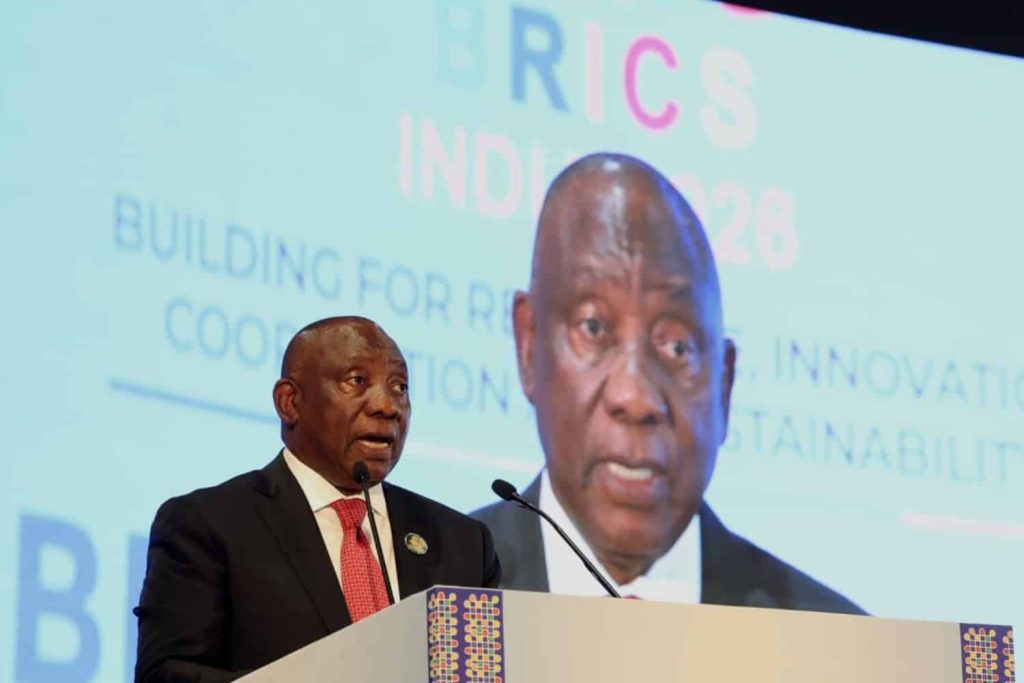
The dispute is not limited to whether President Cyril Ramaphosa attends the G20 Leaders’ Summit in Miami in December.
South Africa was informed by the United States in December 2025 that it would not be invited to participate in G20 meetings during the US presidency, including meetings of sherpas, working groups and ministers.
South Africa was also excluded from the traditional G20 “troika” arrangement linking the previous, current and incoming presidencies.
That has meant South African officials have already missed meetings during 2026 rather than merely facing the prospect of exclusion from the leaders’ summit at the end of the year.
Finance Minister Enoch Godongwana confirmed earlier this year that South Africa had not received accreditation for G20 finance meetings.
The government has continued to maintain that its underlying membership of the G20 has not changed.
Trump announced exclusion after Johannesburg summit
US President Donald Trump announced in November 2025 that South Africa would not receive an invitation to the 2026 summit.
His announcement followed a deterioration in bilateral relations during South Africa’s own G20 presidency.
The United States boycotted the November 2025 Johannesburg Leaders’ Summit, where participating members adopted a declaration despite US objections.
Trump subsequently accused South Africa of refusing to hand the G20 presidency to a senior US representative.
Pretoria disputed that account.
The Presidency said the instruments of the G20 presidency were handed to a US embassy official at the Department of International Relations and Cooperation after the summit because the United States had not sent an appropriate senior representative to receive them at the closing ceremony.
Dispute built on wider breakdown in relations
The G20 confrontation forms part of a broader deterioration in South Africa-US relations.
Trump has repeatedly accused South Africa of discriminating against its white minority and has alleged that Afrikaners are victims of genocide.
South Africa rejects those claims.
Independent reporting and fact-checking have also found no evidence supporting claims of a genocide against white South Africans.
The Trump administration has additionally criticised South Africa’s land-reform policies, transformation legislation and foreign policy, including Pretoria’s case against Israel at the International Court of Justice.
Washington has taken a series of measures against South Africa since Trump’s return to office, including cuts to assistance and the exclusion of Pretoria from the US-led G20 programme.
Lamola rejects genocide claims in New York
Lamola used his New York appearance to directly address the genocide allegations before a US audience.
He described them as false and said South Africa’s constitutional institutions continued to protect the country’s diverse population.
The minister also addressed South Africans who have relocated to the United States through Washington’s refugee programme.
He said they would be welcome to return to South Africa should they choose to do so.
Those remarks reflect Pretoria’s consistent position that the refugee programme is based on an inaccurate portrayal of conditions facing Afrikaners and other white South Africans.
Pretoria has warned about precedent
South Africa has previously raised a broader institutional objection to its exclusion.
In diplomatic communication after Washington first excluded it from G20 meetings, Pretoria argued that a host country’s refusal to invite a permanent member could create a precedent affecting the forum’s future operation
South Africa also urged other members to distinguish between a country voluntarily deciding not to attend and a permanent member being prevented from participating by the presidency.
That distinction mirrors the dispute between Washington and Pretoria.
The United States chose not to participate in South Africa’s 2025 Leaders’ Summit.
South Africa says it is willing to participate in the 2026 process but is being prevented from doing so by the host government.
G20 has no permanent secretariat
The disagreement also exposes an unusual feature of the G20.
Unlike the United Nations and many treaty-based international organisations, the G20 does not have a permanent secretariat with an independent institutional authority capable of resolving a membership dispute between governments.
Its work is coordinated through the rotating presidency, member states and the troika system.
That gives the country holding the presidency considerable practical control over meetings and arrangements.
South Africa’s argument is that this administrative authority should not extend to determining whether an established member can participate at all.
Washington has taken the opposite practical position by excluding Pretoria from its programme.
Other governments have not followed South Africa into boycott
Some international leaders have previously questioned Washington’s approach.
German Chancellor Friedrich Merz said after Trump’s initial announcement that he would ask the US president to reconsider South Africa’s exclusion.
But other G20 governments have continued participating in US-hosted meetings.
No coordinated boycott in support of South Africa has emerged.
Lamola’s latest remarks show that Pretoria is disappointed by that response but does not intend to demand one.
That position allows South Africa to continue arguing that its exclusion is procedurally wrong without forcing partner governments to choose between Pretoria and Washington.
South Africa says door remains open
Lamola’s message in New York therefore contains two distinct elements.
Pretoria is not accepting the legitimacy of its exclusion and wants other G20 members to defend the principle that permanent members cannot simply be removed from participation by a host government.
At the same time, South Africa is signalling that it does not intend to escalate the dispute through an attempted appearance at US meetings or an organised diplomatic boycott.
The government says it remains ready to return immediately if Washington changes course.
That possibility appears increasingly time-sensitive.
The US presidency still has several significant meetings ahead, culminating in the G20 Leaders’ Summit in Miami in December.
Unless Washington reverses its position, South Africa is on course to spend the remainder of the US presidency outside a forum of which it maintains it remains a full member.
Lamola’s intervention makes clear that Pretoria wants the diplomatic record to reflect that distinction: South Africa says it did not withdraw from the G20 — it was excluded.