PRETORIA, Monday 5 October 2026 — Cabinet has approved a major overhaul of South Africa’s local government framework that will seek to professionalise municipal administrations, strengthen financial accountability and allow municipalities to exercise different powers according to their capacity.
The final Revised White Paper on Local Government will guide changes to the municipal system after the 4 November local government elections, with government preparing a 90-day transition plan and an initial 18-month implementation programme.
The reforms follow years of deteriorating municipal finances, governance failures and unreliable service delivery across parts of the country.
Cabinet said the new framework was designed to address persistent institutional, governance, financial and service-delivery weaknesses rather than introduce another isolated municipal intervention.
Government targets political interference in appointments
One of the central reforms concerns the appointment and professionalisation of municipal officials.
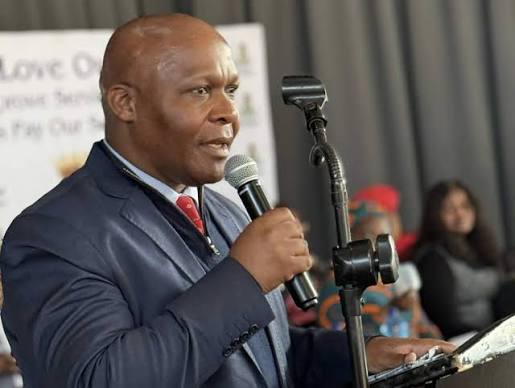
Cooperative Governance and Traditional Affairs Minister Velenkosini Hlabisa said on Monday that government wanted to intervene earlier in recruitment processes to ensure municipalities appointed appropriately qualified senior officials.
He said CoGTA intended to monitor advertisements for positions such as chief financial officers to determine whether recruitment processes complied with requirements before appointments were made.
Hlabisa linked poor appointments to financial and governance failures in municipalities and said political deployment, including the employment of friends and associates, had contributed to dysfunction in the municipal system.
The principle was also set out by President Cyril Ramaphosa during the State of the Nation Address in February.
Ramaphosa said government intended to ensure senior local government officials possessed the required qualifications and were appointed through independent processes free from political interference.
Implementing those proposals will require further administrative and, in some areas, legislative changes.
Different municipalities could have different responsibilities
The White Paper also moves away from treating all municipalities as though they have the same institutional and financial capacity.
Government wants a differentiated municipal system in which powers, responsibilities and support are more closely aligned with the capacity and circumstances of individual municipalities.
That could have particular significance for smaller and rural municipalities that currently carry responsibilities similar to those of significantly larger and better-resourced councils.
The revised framework is built around five broad areas: a more integrated local government system; capable political and administrative governance; differentiated municipal powers and functions; stronger partnerships between government and communities; and financial and service-delivery reform.
The approach reflects an acknowledgement by government that the existing model has often imposed responsibilities on municipalities that lack the administrative or financial capacity to perform them effectively.
Transition programme to follow November election
The timing of the reform is closely linked to the municipal election.
CoGTA will develop a 90-day Local Government Transition Plan setting out immediate responsibilities, implementation timelines and workstreams across government.
Implementation will be jointly coordinated by CoGTA, the Presidency and National Treasury.
Cabinet has also endorsed a time-bound transition-management mechanism to coordinate the reforms across national, provincial and local government.
The first 18 months after the election will be used to implement priority reforms and projects, with responsibilities linked to departmental annual performance plans and budgets.
Newly elected councillors will also receive induction on the revised framework as they begin the next five-year municipal term.
Hlabisa said the intention was for incoming councils to understand the new policy direction from the start of their terms.
Ramaphosa is expected to formally launch the revised White Paper on 22 October, less than two weeks before voting.
Municipal finances remain major concern
The reforms arrive against the backdrop of substantial financial problems across local government.
Hlabisa said on Monday that unauthorised, irregular, fruitless and wasteful expenditure recorded across municipalities stood at R268.13 billion.
He argued that weak political and administrative leadership contributed directly to failures in financial management and consequence management.
Municipalities across the country are also struggling with debt, infrastructure backlogs and difficulties collecting revenue.
Some councils have required provincial or national intervention, while others have been placed under mandatory financial recovery plans.
The White Paper identifies financial sustainability as one of the areas requiring structural reform.
It also proposes changes intended to ensure that municipal responsibilities are matched more closely with the financial resources available to perform them.
Reform follows review of 1998 framework
South Africa’s existing local government model is largely based on the White Paper adopted in 1998.
Government began a formal review of that framework in October 2024 before conducting consultations with municipalities, provincial governments, traditional leaders, political parties, civil society, business and other stakeholders.
A discussion document was published in April 2025, followed by further consultation and a revised draft.
Cabinet approved the final Revised White Paper at its meeting on 23 September 2026.
The policy does not itself immediately change every municipal law or administrative process.
Its significance is that it establishes the government’s policy framework for the next phase of local government reform, from which regulatory, administrative and legislative changes can follow.
Election will determine councils implementing reforms
The November election means the reforms will begin as municipalities undergo their largest political transition in five years.
Voters will elect new councils in all 257 municipalities, after which coalition negotiations are expected in several metros and other councils where no party secures a majority.
Those councils will inherit both existing municipal problems and the first phase of the new reform programme.
The effectiveness of the White Paper will therefore depend not only on national government implementation but on whether newly elected councils, provincial governments and municipal administrations apply the changes.
Government has said the 90-day transition process is intended to prevent the White Paper becoming another policy document without measurable implementation.
The first indication of whether that approach succeeds will come during the opening months of the new municipal term after the 4 November election.