KOMGA, Monday 5 October 2026 — Eastern Cape Premier and ANC provincial chair Oscar Mabuyane has opened the door to the ANC and SACP forming municipal governing arrangements after the 4 November local government elections, despite the two alliance partners contesting against each other for the first time.
Mabuyane said electoral competition should not permanently damage the relationship between the African National Congress and the South African Communist Party and that the parties should consider governing together where election results create the opportunity.
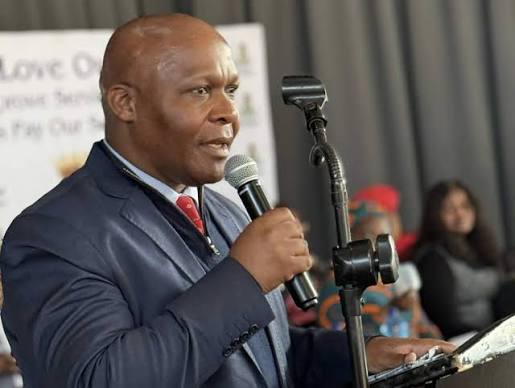
He made the remarks at the SACP’s Red October campaign launch in Komga in the Eastern Cape on Sunday, where he delivered a message of support on behalf of the ANC.
The position is significant because the SACP is contesting the municipal elections independently of the ANC for the first time, creating direct electoral competition between organisations that have historically campaigned together under the ANC banner.
Cooperation would depend on governing programme
Mabuyane said any post-election arrangement should be based on a shared programme rather than the allocation of political positions.
Where election results allow the parties to cooperate in municipal government, he said, the first question should be whether they could agree on how to govern.
He identified rebuilding municipalities, employment, corruption, service delivery and strengthening public institutions among the issues around which such cooperation could be constructed.
Mabuyane cautioned against reducing coalition negotiations to decisions about who becomes mayor, speaker or chief whip and how portfolios are distributed.
The remarks amount to one of the clearest indications yet from a senior ANC provincial leader that the party could enter formal municipal governing arrangements with the SACP after the election.
First direct ANC-SACP election contest
The SACP decided to contest the 2026 local government elections under its own banner after decades in which Communist Party members generally stood for public office through ANC candidate lists.
The decision has produced tensions within the tripartite alliance but the SACP has maintained that independent electoral participation does not mean it has withdrawn from the alliance.
Mabuyane said the ANC continued to regard the SACP as a strategic ally despite the electoral competition.
He said both organisations would continue confronting the same problems after election day, including unemployment, poverty, inequality and failing municipal infrastructure.
The SACP has said its municipal campaign will focus heavily on basic services, including water, sanitation and roads.
Eastern Cape could test new relationship
The Eastern Cape could become an important test of the changed relationship between the two parties.
The ANC is attempting to retain control of municipalities across the province while also trying to regain an outright majority in Nelson Mandela Bay, which has been governed through coalitions since 2016.
The party is simultaneously dealing with a candidate-registration dispute affecting four Eastern Cape municipalities.
Its failure to complete candidate submissions in Ingquza Hill, Port St Johns, Walter Sisulu and Sundays River Valley forms part of the wider dispute involving 181 excluded ANC candidates that is now before the Constitutional Court.
Mabuyane acknowledged that the candidate-list failures reflected organisational weaknesses within the ANC and said they should not simply be dismissed as administrative mistakes.
Alliance relationship could be reconfigured
Mabuyane also raised the possibility that the post-election political environment could accelerate a restructuring of the tripartite alliance.
The relationship between the ANC and SACP has been under increasing pressure since the Communist Party confirmed its decision to contest elections independently.
The SACP has also developed political relationships beyond the traditional alliance, including engagement with the EFF and other organisations through its Conference of the Left.
Mabuyane nevertheless argued that electoral competition between the ANC and SACP should remain disciplined and should not turn the organisations into permanent opponents.
His comments do not constitute a coalition agreement and no municipality has yet been identified for a formal ANC-SACP arrangement.
The composition of municipal councils will only become known after votes are counted following the 4 November election.
But the comments establish that cooperation between the parties remains an option if neither can govern alone in particular councils.
That possibility could become increasingly important in municipalities where fragmented election results require parties to negotiate coalitions after polling day.